


The 2026 FIFA World Cup in the USA raises serious moral, financial, and logistical concerns. From political interference in football and tough immigration policies to sky-high ticket prices and poor public transport, there is a lot to worry about. Until things change, the USA should not host another World Cup.
The world’s biggest sporting event is heading to North America. By the time the 2026 FIFA World Cup kicks off across the United States, Canada, and Mexico, billions of fans will be watching with the same excitement that has always surrounded the tournament. But despite all the buzz, more and more fans, journalists, and football figures are asking a difficult question: should the USA really be hosting this at all?
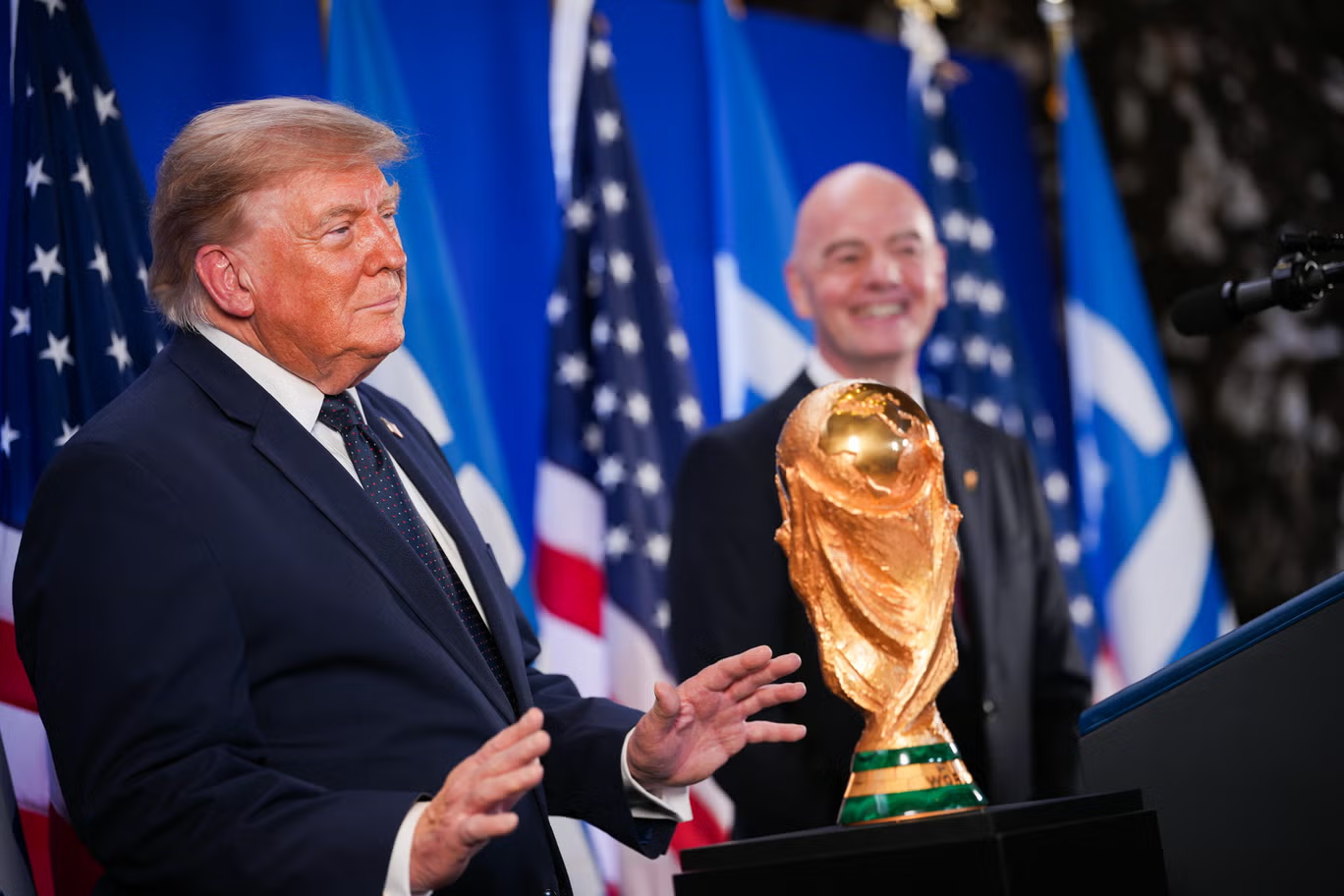
Donald Trump has made himself a very visible part of USA 2026, even showing up to the draw. His involvement goes beyond simple enthusiasm. It puts a strong political stamp on a tournament being run by an administration whose views on immigration, diversity, and international relations clash sharply with what football is supposed to stand for. You can feel that clash at every level of this tournament, from how visiting nations are treated to the shocking cost of a matchday ticket.
This is not about being anti-American. The US has brilliant football fans, impressive stadiums, and real love for the game. But love for football is not enough to make a good host. When you look closely at USA 2026, you find serious problems on moral, financial, and logistical grounds. FIFA needs to face up to these before even thinking about giving the USA another World Cup.
The Moral Case Against Hosting in the USA
Political Interference in Football: The Folarin Balogun Controversy
FIFA’s own rules clearly ban political interference in football. The organisation has punished national associations for far less. So the case of Folarin Balogun, the American-born forward who switched allegiance to represent Nigeria, deserves much more attention than it has been given.
Reports suggest that Balogun faced pressure over his decision to play for a country other than the USA. This happened at a time when the Trump administration has been openly hostile to dual national identity and international loyalty. The full picture is still not clear, but the situation looks very uncomfortable. Football must be free from political pressure. If there is any suggestion that the host nation’s government is trying to influence player decisions, FIFA must investigate immediately.
Tough Entry Policies and Their Impact on Visiting Fans
The US immigration system under the current administration has created real uncertainty for fans trying to travel from certain countries. Iranian fans, for example, face serious problems. They have every right to follow their national team, just like any other supporters, but they face a difficult and often unwelcoming visa process when trying to enter the US.
This is not just a minor inconvenience. It is a real barrier. A World Cup that stops large numbers of fans from watching their own team play is simply not a proper World Cup. Football works because it is for everyone. Hosting the tournament in a country with travel bans and restrictive entry rules goes against everything the game is supposed to represent.
A Clash of Values FIFA Cannot Ignore
The current US administration has, through both its policies and its language, moved away from many of the values FIFA claims to stand for: inclusion, diversity, and anti-discrimination. FIFA’s own Human Rights Policy says the organisation must “respect and support human rights in all of its activities.” Giving a World Cup to a country whose government is rolling back protections for LGBTQ+ people, minorities, and immigrants is a serious contradiction. And so far, FIFA has chosen to look the other way.

The Financial Case Against Hosting in the USA
Ticket and Parking Prices That Shut Out Real Fans
Let’s look at the numbers. Group stage tickets for USA 2026 are far more expensive than anything seen at recent European tournaments. Premium seats at some venues are running into thousands of dollars, and that is before you even think about hotels, travel, and food. For a tournament that claims to be “for everyone,” the cost is simply out of reach for most fans.
Parking at some US host venues has been reported at over $100 per car for a single match. That amount is more than many football fans in poorer countries earn in a week. The whole setup of USA 2026 assumes fans have plenty of money. Most do not.
FIFA’s Record Earnings vs. the Cost to Fans
FIFA is expected to make record money from the 2026 World Cup, with some estimates putting the total at over $11 billion across the whole cycle. At the same time, ordinary fans are being squeezed at every turn. Overpriced hospitality packages. Inflated food and drink costs inside grounds. Compulsory official merchandise areas. The commercial setup of a US-hosted tournament is very good at taking money from supporters.
There is a real ethical question here: at what point does a sport stop serving its fans and start taking advantage of them? FIFA’s financial model, made even bigger by American sports culture, seems to have already crossed that line.
Tourism Losses When Fans Cannot Get In
The main economic argument for hosting a World Cup is usually the boost it gives to tourism. But that argument falls apart when fans are put off by visa problems, travel bans, or simply the worry of entering a country that does not feel welcoming. Fans from Muslim-majority nations, countries on US travel restriction lists, or regions with complicated relations with the US may decide not to come, or find that they simply cannot.
The tourism boost that normally comes with a World Cup could be much smaller in 2026. And the damage to the USA’s reputation as a footballing host could last a long time.
The Logistical Case Against Hosting in the USA
Huge Distances Between Host Cities
Eleven hosted cities. Three time zones. Thousands of miles between venues. The sheer size of USA 2026 creates logistical headaches that good intentions alone cannot fix. A fan following their team through the group stage could easily have to travel from Seattle to Miami to Kansas City in just ten days.
In Europe, a journey like that might mean a two-hour flight at most, or a comfortable train ride between well-connected cities. In the USA, it means expensive domestic flights, long layovers, and exhausting travel that takes all the fun out of the tournament.
Weak Public Transport Links
American cities, with a few exceptions, are built around the car. The public transport networks in many USA 2026 host cities are simply not ready for the huge crowds a World Cup brings. Unlike London, Paris, or Berlin, which have dense underground systems that can move hundreds of thousands of people quickly and easily, cities like Dallas, Houston, and Kansas City depend on roads that already struggle during normal rush hour, never mind a World Cup.
Fans without a car, or without enough money for repeated taxi or ride-share journeys, will genuinely struggle to get around.
Stadiums Miles Away From City Centres
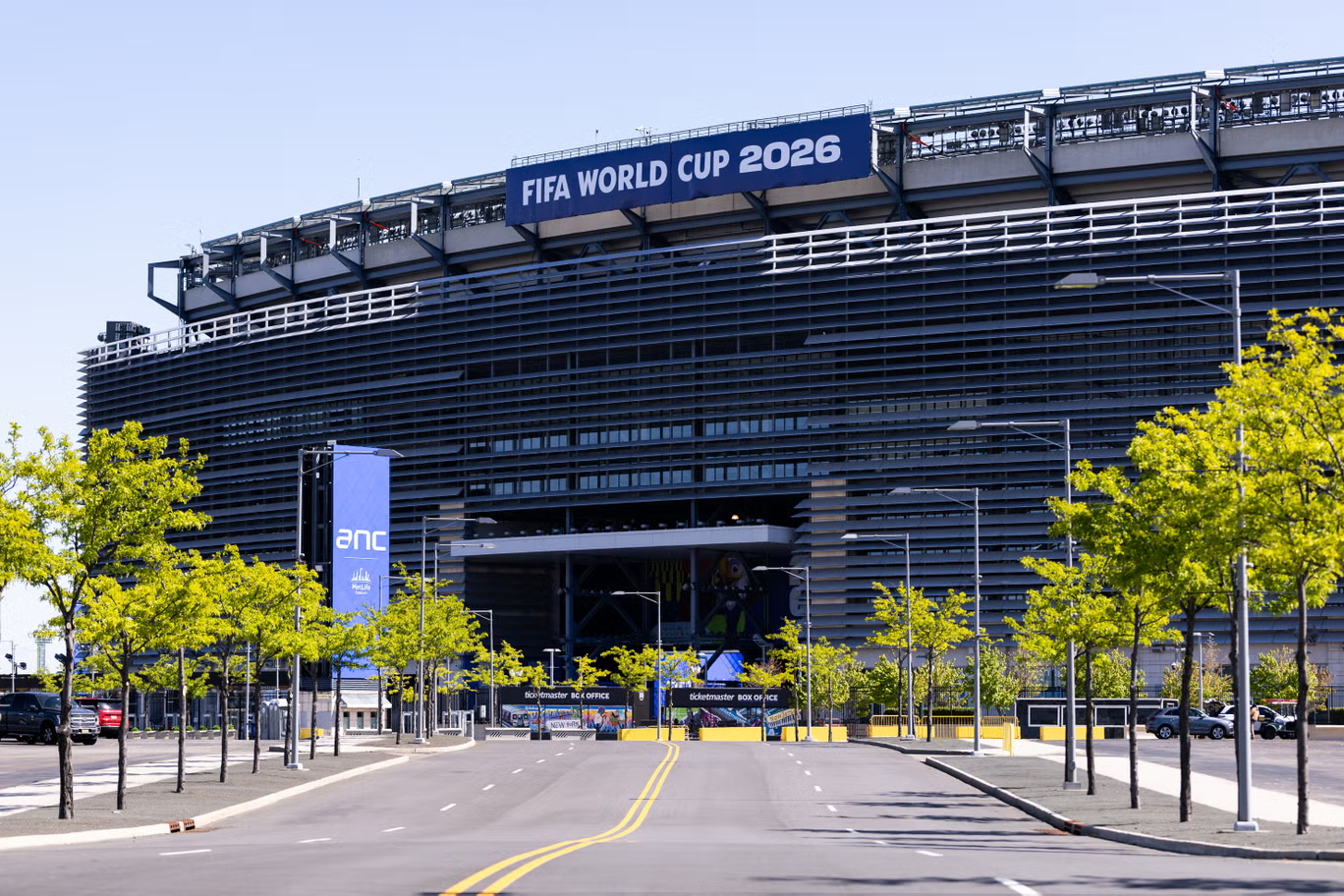
Many of the grounds chosen for USA 2026 are in out-of-town or suburban areas, far from the lively heart of their cities. That matters a great deal because the World Cup experience is about so much more than the match itself. Fan zones, local restaurants, bars, and the brilliant street atmosphere of a tournament city are all part of what makes it special. When the stadium is a 45-minute drive from the city centre and there is no reliable public transport, all of that disappears.
Euro 2024 in Germany: What a Good Tournament Looks Like
Compare USA 2026 with Euro 2024 in Germany and the difference is striking. German host cities like Berlin, Munich, Dortmund, and Hamburg had compact, walkable city centres and excellent public transport. Fans could arrive by train, get to their hotels without a car, walk to buzzing fan zones, and reach stadiums by tube or tram. The easy logistics made the whole experience better.
USA 2026, for all its size and ambition, risks doing the opposite: making the logistics so frustrating that they actually get in the way of enjoying the tournament.
What FIFA Should Learn from USA 2026
Choose Accessible Venues, Not Just Profitable Ones
FIFA’s venue selection process for 2026 has been criticised for picking big, money-making stadiums over ones that are actually good for fans. A stadium’s size and commercial value should never come before how easy it is to reach, what transport links it has, and whether it sits in a lively city. Future bidding rules must give these factors much more weight.
Cut Out the Unnecessary Entertainment
American sports culture tends to over-produce everything. Big pre-match shows, halftime performances, commercial breaks, and loud DJ sets are part of the NFL or NBA experience. They do not sit well with football culture, which values the atmosphere created by fans rather than by production crews. FIFA should not try to Americanise the World Cup’s matchday experience any further.
The USA Can Host a Great Tournament, But Not Like This
None of this means the United States is unable to put on a brilliant World Cup. The passion is there. The infrastructure could be improved with investment. The growing fan culture is real. But the 2026 tournament is arriving under the wrong political conditions, at the wrong price, and with the wrong setup.
Until the United States can promise free and open access to all fans regardless of where they are from or what they believe, until ticket prices actually reflect a commitment to making football accessible, and until host cities can show they have proper public transport in place, giving America another World Cup would let down the global game.
Football belongs to everyone. The World Cup should feel that way, too.
FAQs
There are plenty of reasons why the 2026 World Cup is controversial. The political climate of the Trump administration is in stark contrast with FIFA’s stated values of inclusion and diversity. Restrictive US immigration policies may stop fans from certain countries from attending. And ticket prices have been widely criticised as too expensive for ordinary supporters.
The 11 US host cities are New York/New Jersey, Los Angeles, Dallas, San Francisco Bay Area, Seattle, Miami, Atlanta, Boston, Kansas City, Houston, and Philadelphia. The spread across multiple time zones creates significant travel challenges for fans following their teams.
The USA 2026 tournament will see some of the most expensive ticket prices for the World Cup ever, with premium seats for the group stage going for thousands of dollars. This is a far cry from Euro 2024 in Germany where tickets were much more affordable for fans of all income levels.
Iranian nationals face significant difficulties entering the United States because of current US immigration policies and travel restrictions. That would deny many Iranian fans the chance to see their national side, something many would regard as against the spirit of the tournament.
FIFA rules forbid interference by governments in football. But critics say FIFA has not done nearly enough to address the political issues surrounding the 2026 World Cup in the USA, especially over immigration restrictions and the involvement of political figures in the tournament.






No Comments