

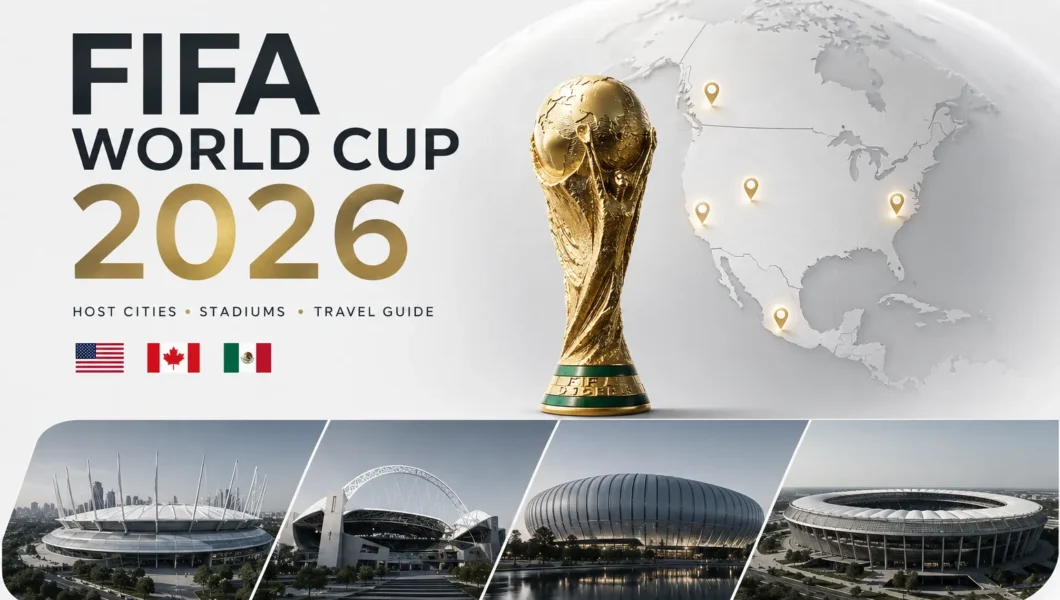
The FIFA World Cup 2026 runs from 11 June to 19 July 2026, across 16 host cities in the United States, Canada and Mexico. There are 104 matches at 16 stadiums. The Mexico City Stadium (capacity 80,824) hosts the opening match, and the New York New Jersey Stadium (capacity 80,663) hosts the final. Fans need entry papers for each host country.
The World Cup is coming to North America, and the size of it is amazing. For the first time ever, three countries are hosting together: the United States, Canada and Mexico. That means 16 host cities, 16 stadiums, 48 teams and 104 matches in just over five weeks.
It’s more cities, more matches and more chances to enjoy the magic than ever before. Whether you want to follow your team across cities, watch one knockout match, or just soak up the buzz in one city, this guide has you covered.
We’ve listed every host city and stadium, picked out the key matches, and gathered the most useful travel tips so you can plan with ease.
The opening match kicks off on 11 June 2026 at the Mexico City Stadium, and the final wraps up on 19 July 2026 at the New York New Jersey Stadium in East Rutherford. That’s 38 brilliant days of football, and the clock is already ticking!
Let’s dive in.
What Are the 16 FIFA World Cup 2026 Host Cities?
The 16 host cities are spread across all three host nations: 11 in the United States, three in Mexico and two in Canada.
Here’s the full list:
United States Host Cities and Stadiums
The US hosts the most matches, with 11 venues spread from coast to coast.
| City | Stadium | Capacity |
|---|---|---|
| Atlanta, GA | Atlanta Stadium | 68,239 |
| Boston, MA | Boston Stadium | 64,146 |
| Dallas, TX | Dallas Stadium | 70,649 |
| Houston, TX | Houston Stadium | 68,777 |
| Kansas City, MO | Kansas City Stadium | 69,045 |
| Los Angeles, CA | Los Angeles Stadium | 70,492 |
| Miami, FL | Miami Stadium | 64,478 |
| New York/New Jersey | New York New Jersey Stadium | 80,663 |
| Philadelphia, PA | Philadelphia Stadium | 68,324 |
| San Francisco Bay Area, CA | San Francisco Bay Area Stadium | 68,827 |
| Seattle, WA | Seattle Stadium | 66,925 |
That’s a lot of huge venues! The New York New Jersey Stadium is the biggest US venue at 80,663 seats, which is why FIFA picked it for the final on 19 July.
Dallas (70,649) and Los Angeles (70,492) come close behind, so they’re likely picks for big knockout matches.
Mexico Host Cities and Stadiums
Mexico is very special here. It hosted before in 1970 and 1986, so 2026 is its third time on football’s biggest stage. Even better, Mexico City’s stadium starts the whole tournament on 11 June.
| City | Stadium | Capacity |
| Guadalajara | Guadalajara Stadium | 45,664 |
| Mexico City | Mexico City Stadium | 80,824 |
| Monterrey | Monterrey Stadium | 51,243 |
Canada Host Cities and Stadiums
Canada is hosting the men’s World Cup for the first time in 2026 (it co-hosted the 2015 Women’s World Cup). Two cities will welcome fans:
| City | Stadium | Capacity |
| Toronto, ON | Toronto Stadium | 43,036 |
| Vancouver, BC | BC Place Vancouver | 52,497 |
Key Matches and Dates to Know
With 104 games at 16 venues, knowing where to start can feel a bit much.
Here are the main dates to keep an eye on:
- Opening Match: 11 June 2026, Mexico City Stadium, Mexico City
- World Cup Final: 19 July 2026, New York New Jersey Stadium, East Rutherford, NJ
After these dates, the group stage runs through late June. The new Round of 32 (added thanks to the 48-team format) leads into the knockout rounds all through July.
The semi-finals are likely in the days before the final, at venues that are not confirmed yet.
The bigger format is one of the main talking points for 2026. Going from 32 to 48 teams means more nations, more underdog stories, and more group-stage matches in more cities.
So if your team qualifies, there’s a better chance they’ll play near you.
What You Need to Know Before Traveling to FIFA World Cup 2026
Do I Need Separate Visas for Each Host Country?
This is the most common question fans ask, and it matters.
Because the tournament covers three countries, fans going to matches in more than one nation must meet the entry rules for each country on its own.
Here’s a quick overview:
United States
Nationals of Visa Waiver Programme (VWP) countries can enter for up to 90 days without a visa. Fans from countries outside the VWP require a B-2 tourist visa and a consular interview (U.S. Embassy & Consulates in Canada). DS-160 nonimmigrant visa application form required.
Canada
International fans require a visa or an Electronic Travel Authorisation (eTA), depending on nationality. Fragomen says 2025 Key papers include a valid passport, proof of where you’ll stay and match tickets.
Mexico
Most international visitors can enter without a visa for short tourist trips. Even so, check the rules for your passport well in advance.
Practical tip: Apply for any visas as early as you can. Waits can take weeks, and with fans from 48 nations arriving, demand for US visa slots will be very high.
How Should I Plan Transportation Between Host Cities?
North America is massive, and the gaps between host cities are big.
This is a key thing for fans visiting more than one city.
Here’s how to think about your options:
- Domestic flights are the easiest way to cross the US, especially for long trips like Dallas to Seattle or Los Angeles to Boston. Book early, as match-day flights sell out and prices shoot up.
- Amtrak or regional rail works well for shorter trips, mostly on the US East Coast (e.g. Philadelphia to New York/New Jersey).
- Cross-border travel to Canada or Mexico by land is possible, but allow time for border crossings during busy periods.
One expert tip: instead of cramming lots of cities into a short trip, pick one or two and build your trip around them. You’ll spend less time travelling and more time enjoying the football and local life.
Where to Stay: Booking Accommodation Early
Host-city hotels are filling up fast, especially in New York/New Jersey, Los Angeles and Mexico City.
Keep these in mind:
- Book near transport hubs, not just near the stadium.
- According to Trip.com, hotels close to metro, train or shuttle stops give you more freedom on match days.
- Check if your match ticket includes free public transport. Many big events offer this, and FIFA has done so before.
- Think about nearby cities. For example, fans at New York/New Jersey matches could stay in Manhattan, Jersey City or Newark and travel to MetLife Stadium by NJ Transit.
What to Do in Each Host City Beyond the Football
A multi-city World Cup lets you see places you might never have visited.
Here’s a quick taste of each region:
Mexico City
A great cultural capital. See Frida Kahlo’s casa, the ruins of Teotihuacán, and the street food of Roma Norte.
Los Angeles
Beach life, Hollywood history, and superb outdoor dining. Don’t overlook Santa Monica, Venice Beach or a walk in Griffith Park.
New York/New Jersey
The famous skyline, top museums, Broadway, and Central Park. The final is here, so give it a few days.
Atlanta
The birthplace of the civil rights movement, with great Southern food and a lively music scene.
Vancouver
Stunning mountain-and-ocean views, fantastic Asian food, and a walkable centre. Stanley Park alone is worth the trip.
Seattle
Famous for coffee culture, Pike Place Market, and the nearby Pacific Northwest nature.
Fan Tips for Making the Most of World Cup 2026
1. Get to the stadium early
Security checks are strict and queues can be long. Try and get there at least 90 mins before kick off, especially for big games.
2. Always bring your match ticket and passport
Border officials and stadium security may ask for both..
3. Download the official FIFA app
It has live schedules and stadium maps and ticket info all in one place.
4. Respect local laws and customs
Rules differ from one host country to the next when it comes to public drinking, photography and conduct. Do a quick check first.
5. Budget beyond tickets
Hospitality, food, merchandise and inter-city travel add up fast. Build in a buffer.
Your World Cup 2026 Journey Starts Now
There’s never been a World Cup like this.
Sixteen cities, three countries, 48 nations and 104 matches make 2026 the biggest edition ever.
From the opening roar at the Mexico City Stadium on 11 June to the final whistle at the New York New Jersey Stadium on 19 July, these weeks will create moments fans talk about for decades.
The planning might feel a lot, but it doesn’t have to be.
Take it step by step: sort your visa first, book your stay second, and plan transport third.
Then you can focus on what matters most: the football.
Now get planning.
Your World Cup story is waiting.
FAQs
The FIFA World Cup 2026 opens on 11 June 2026, with the opening match at the Mexico City Stadium. The final takes place on 19 July 2026 at the New York New Jersey Stadium in East Rutherford, New Jersey.
There are 16 host cities across three countries: 11 in the United States, 3 in Mexico and 2 in Canada. Each city has one dedicated stadium for World Cup matches.
The New York New Jersey Stadium (MetLife Stadium), at 1 MetLife Stadium Drive, East Rutherford, NJ, will host the final on 19 July 2026. The stadium holds about 80,663 seats.
Yes. Because each host country has its own immigration rules, fans travelling across all three must meet the entry rules for each country on its own. US fans should check Canadian and Mexican rules, and the other way round too. Apply early, as processing can take a while.
The opening match will be held at the Mexico City Stadium on 11 June 2026. The stadium holds 80,824, making it the biggest venue in the tournament.





No Comments