

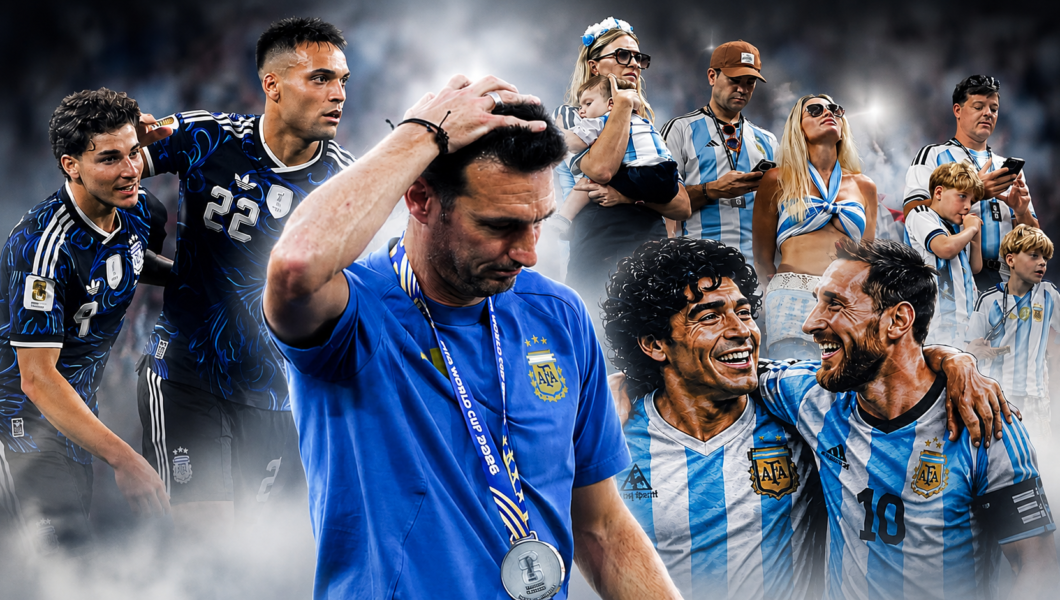
Argentina lost the 2026 World Cup final to Spain, and it is widely expected to be Lionel Messi’s last game on football’s biggest stage. With Messi likely retiring at 38, an ageing squad, and no clear heir to the No. 10 shirt, Argentina face a big rebuild before the 2030 World Cup. Messi will be 43 by that summer.
For 36 years, Argentina waited for a World Cup. They had the talent, the passion, and plenty of heartbreak along the way. Then, in 2022, Lionel Messi finally delivered. Qatar felt like a fairy tale, a whole nation breathing a sigh of relief after so many near-misses and painful exits.
Four years on, things have taken a different turn. Argentina went into the 2026 World Cup final full of hope, only to lose to Spain in a match people will talk about for years. Defeat was hard enough. But the bigger question now is: what comes next?
Argentina did not just lose a World Cup final. They may have played their last match with the greatest footballer the world has ever seen. Messi, now 38, carried this team through six World Cups, 34 matches, and moments that were simply breathtaking. His time at the top, it seems, is finally up. For a country that has built its whole footballing identity around him, that is not just a change. It is a turning point.
This article looks at what Argentina face next and whether they can build something special before 2030.
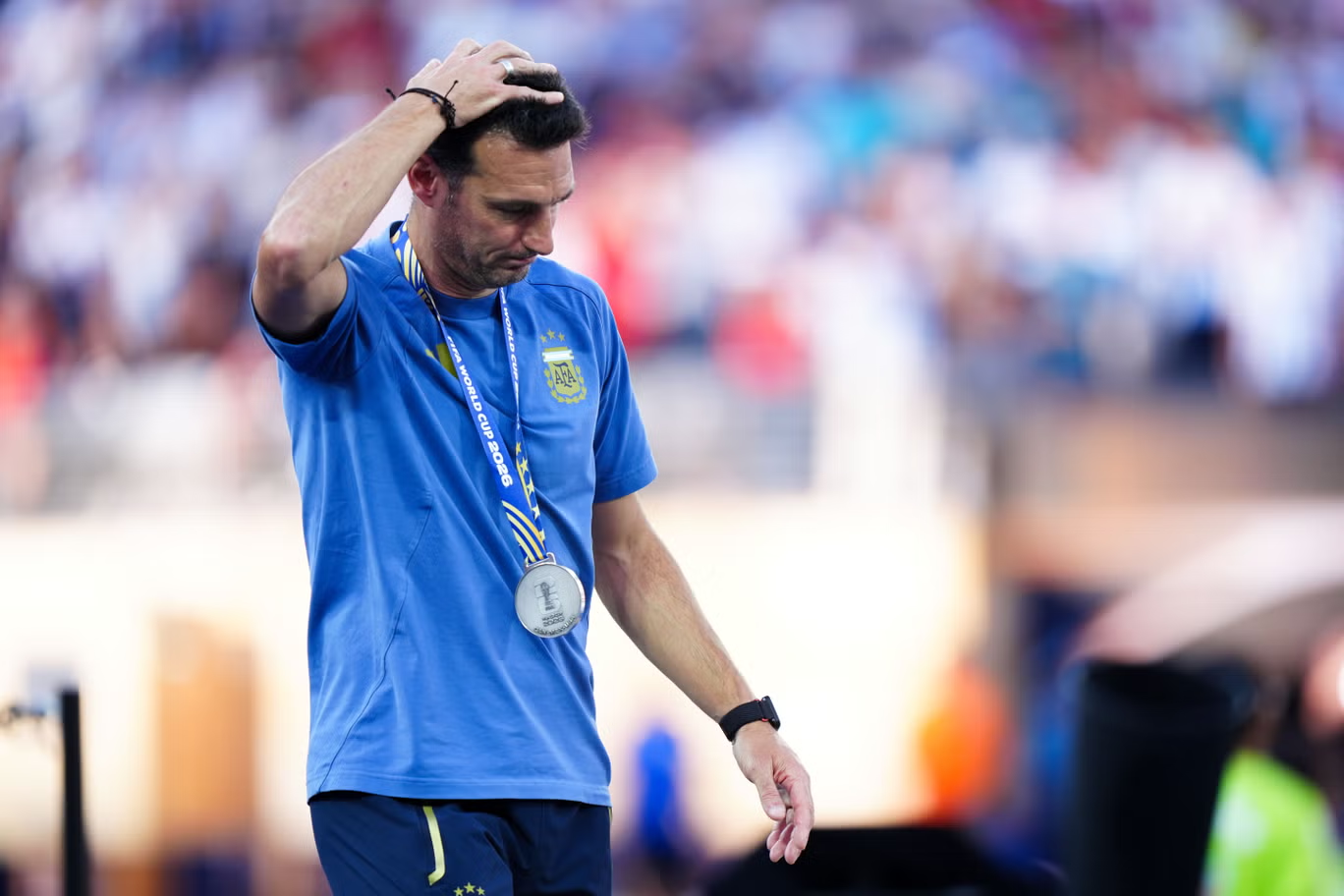
Scaloni’s Emotional Reaction and What It Means for His Future
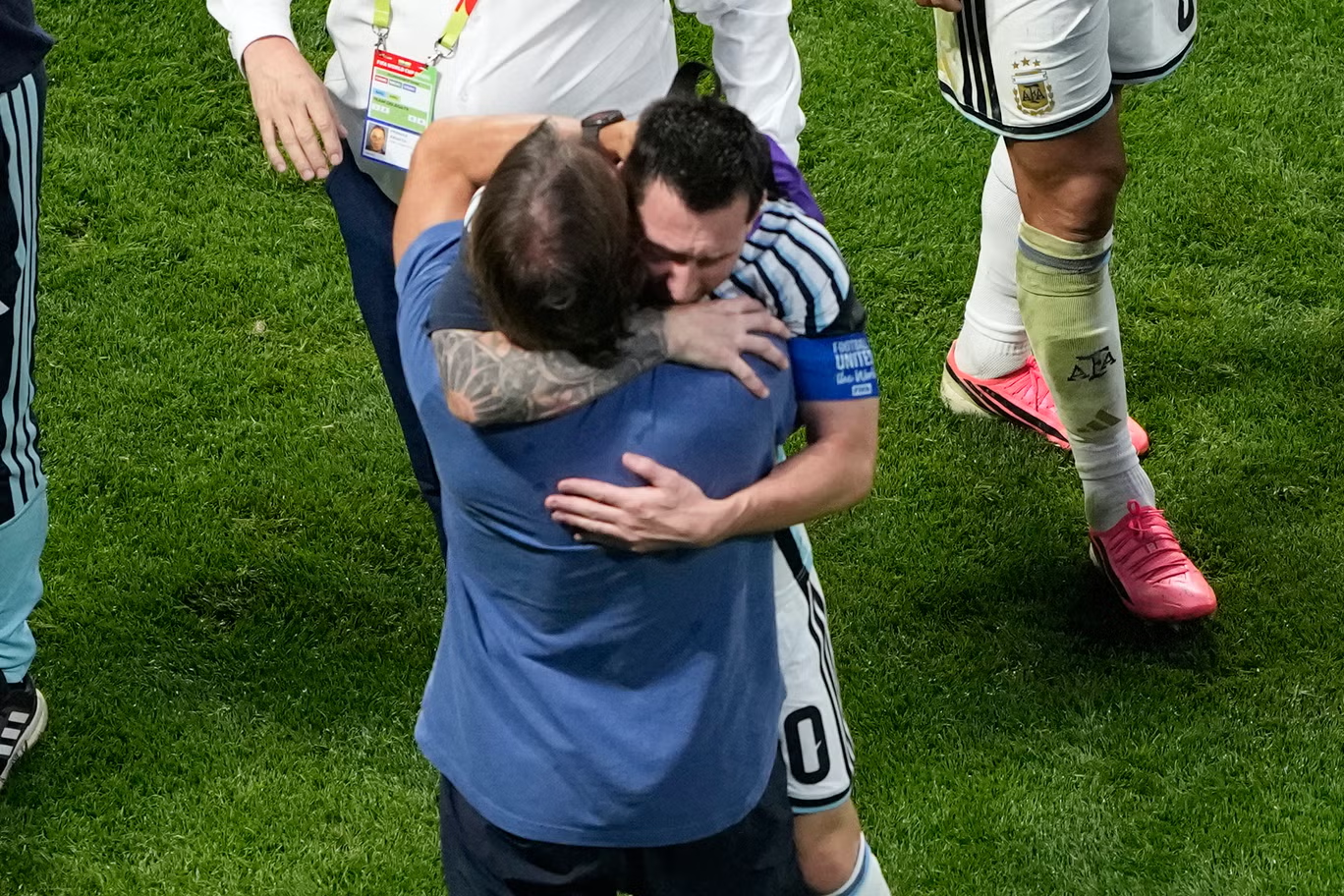
Lionel Scaloni, the man who turned Argentina’s troubled post-2018 period into two major trophies, was clearly struggling after the final whistle. His post-match interviews showed a manager full of pride but also grief. You could see it on his face. He knew he might have just coached his greatest player for the very last time.
Scaloni’s future as Argentina boss is now genuinely up in the air. He has done remarkable things in this job. He won Argentina’s first Copa America in 28 years and their first World Cup in 36 years. By any measure, that is a brilliant record. But whether he wants to lead a post-Messi rebuild is another matter entirely.
If Scaloni leaves, Argentina will be hit twice over. They will lose both their greatest ever player and the coach who knew exactly how to get the best from him. That is a tough spot to be in. If he stays, he will need to completely rethink how Argentina play. Either way, there is a lot of hard work ahead.
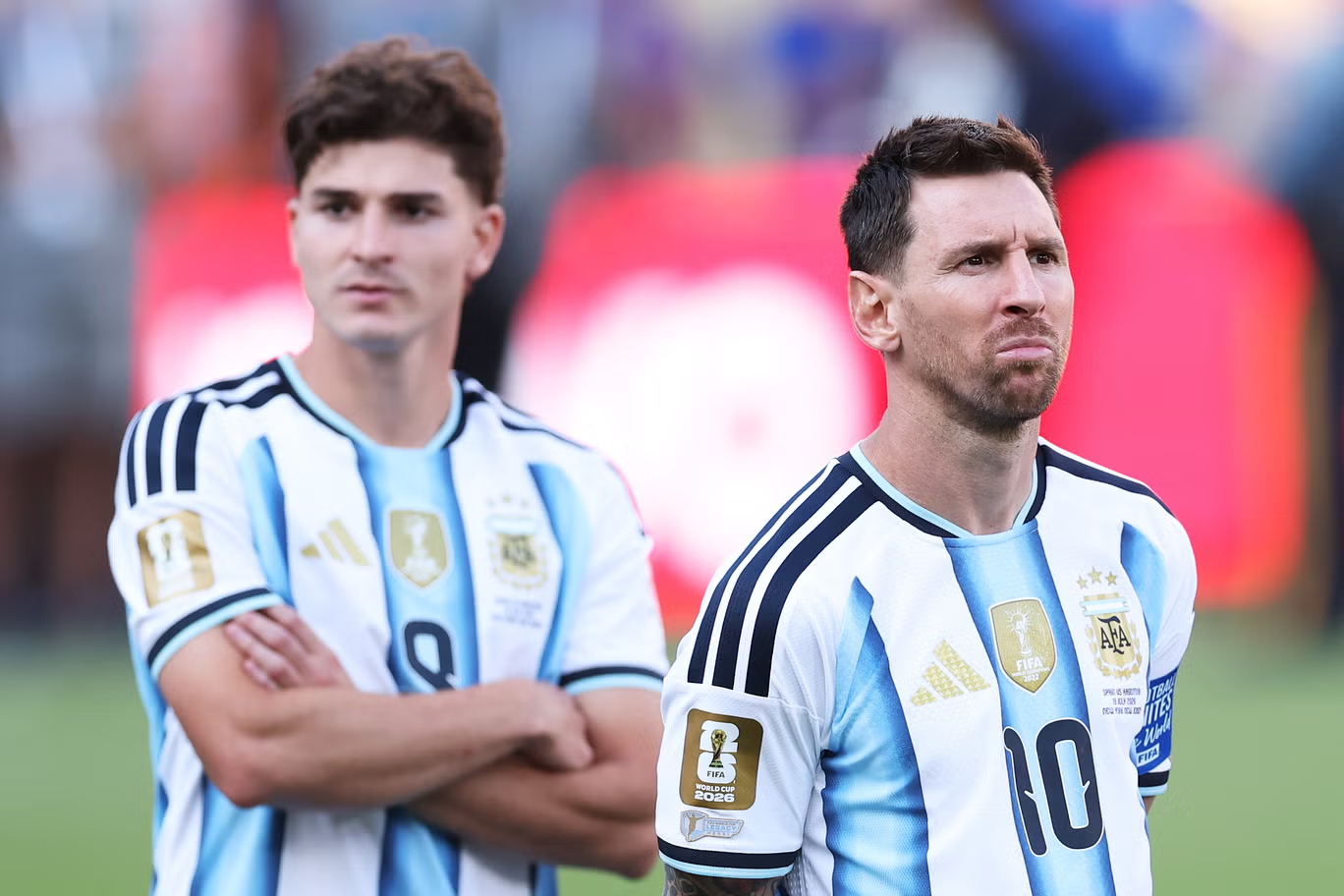
Messi’s World Cup Legacy: A Record That May Never Be Broken
Let us take a moment to appreciate what Messi has given to this tournament, because the numbers are truly remarkable!
Messi played in six World Cups, which is a joint record, and appeared in 34 matches, a record all on its own. He set up 12 goals, another World Cup record, and scored 21, which stood as a record until Kylian Mbappe went past him. He lifted the trophy in Qatar in 2022. He drove Argentina to another final in 2026. He gave absolutely everything, every single time.
The last World Cup without Messi was back in 2002, when Argentina went out in the group stage. For a whole generation of football fans, Argentina and Messi are the same thing. It feels almost strange to think of one without the other.
His retirement from international football feels very likely now. At 38, having just played in a World Cup final, Messi has nothing left to prove. The curtain is almost certainly coming down.
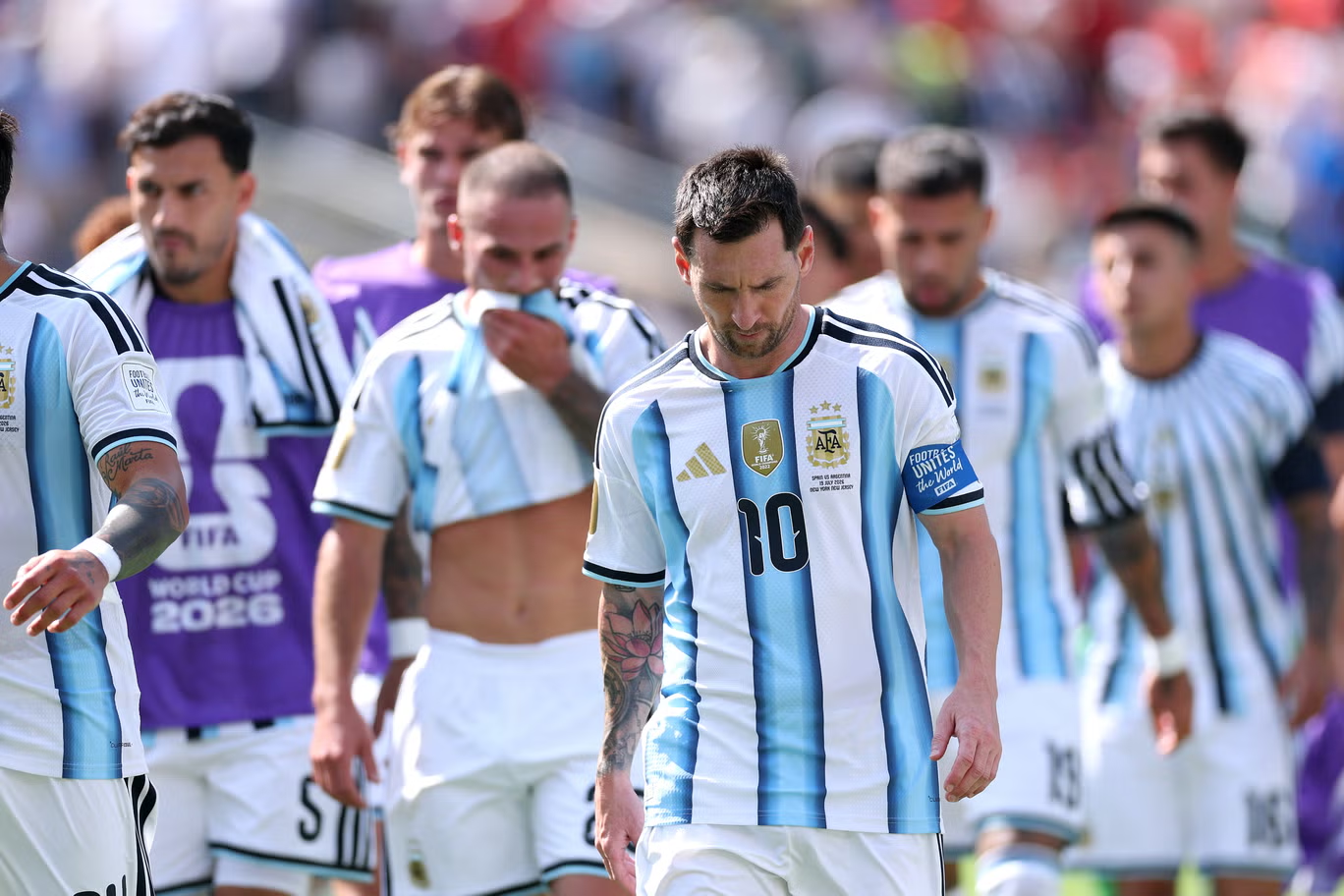
How Tactically Dependent Was Argentina on Messi?
More than most fans would like to admit, if we are being honest! Scaloni built Argentina’s whole system around Messi’s unique ability to drop deep, pick up the ball, and create chances out of nothing. The famous “Messi free role” meant that players like Julian Alvarez and Lautaro Martinez got a huge amount of help from his vision and movement.
Messi’s clever positioning made space for others. His dribbling pulled defenders out of position. His passing opened up even the most stubborn defences. No other player in the Argentina squad, or arguably in world football, does all of those things at the same time.
When Messi had a quiet game or was well marked, Argentina’s creativity dropped off sharply. The team could defend well, break quickly, and score from set pieces. But the real magic? That was almost always down to Messi.
The Ageing Squad: Who Will Not Be Around for 2030?
Argentina will not just be missing Messi in four years’ time. The 2026 squad felt, in many ways, like a farewell for several big names who gave everything during this golden period.
Nicolas Otamendi, one of the most reliable defenders in Argentina’s recent history, will be well past his best by 2030. Nicolas Tagliafico, a solid and experienced left back, is in the same boat. Rodrigo De Paul, who has been the heartbeat of Scaloni’s midfield, will be 32 by then. He might still be available, but he will not be quite the same player. Leandro Paredes, his midfield partner, faces a similar situation.
Then there is Emiliano Martinez. The Aston Villa goalkeeper, known as “Dibu” by Argentina fans, was one of the stars of Qatar 2022 and remained important in 2026. But by the 2030 World Cup, he will be 37 years old. Picking him then would be a big decision. Argentina need to start thinking about his replacement right now.
This is not a squad going through a gentle transition. This is a squad that needs a near-complete overhaul.
Replacing the Irreplaceable: Alvarez, Martinez, and the Next Generation
Nobody can replace Messi. That is simply the truth. But Argentina can still build a strong team around the players who are ready to step up and make their mark.
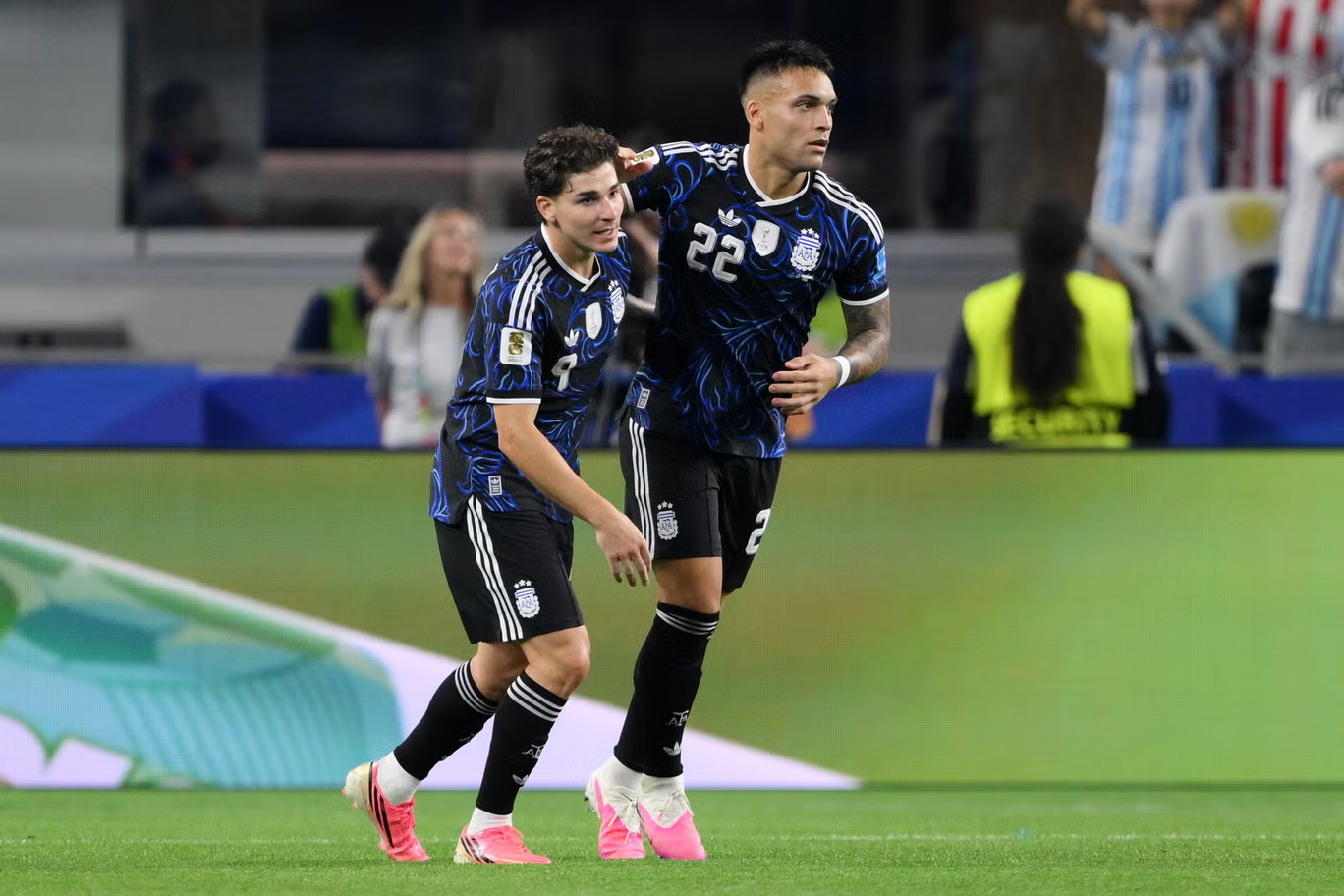
Julian Alvarez is the obvious choice to be Argentina’s main man up front. By 2030 the forward will still be in his mid-twenties, with pace, intelligence and a great knack of scoring in big moments. He is going to be Argentina’s most important player going forward and the way he handles that pressure is going to define his whole career.
Lautaro Martinez, Argentina’s captain, brings something different. He is physical, combative, and deadly in the box. He has already shown he can perform even without Messi pulling the strings, and his leadership qualities are not in doubt.
Further down the line, young midfielders and attackers are starting to come through in the Argentine club system. The country has never been short of talent. The challenge now is bringing that talent together in a clear, organised way without relying on one genius to make it all work.
Argentina’s Lack of Wide Players and the Di Maria Gap
One of the biggest problems the next Argentina manager will need to fix is the lack of proper wide threats. Angel Di Maria’s retirement took away one of the best wide forwards of his generation, and that gap has never really been filled.
Di Maria’s ability to cut inside, whip in crosses, and score in key moments was special in its own right. His goal in the 2022 World Cup final is something Argentine fans will never forget. Since he left, Argentina have tried various options on the wings without finding someone who can consistently cause problems at the highest level.
Finding exciting, confident wide players who can create chances without Messi at the centre of everything is probably the most pressing job on Argentina’s list. It is a problem that can be solved. But it will take time, patience, and the right approach to developing young talent.
The No. 10 Shirt and the Weight of a Nation’s Expectations
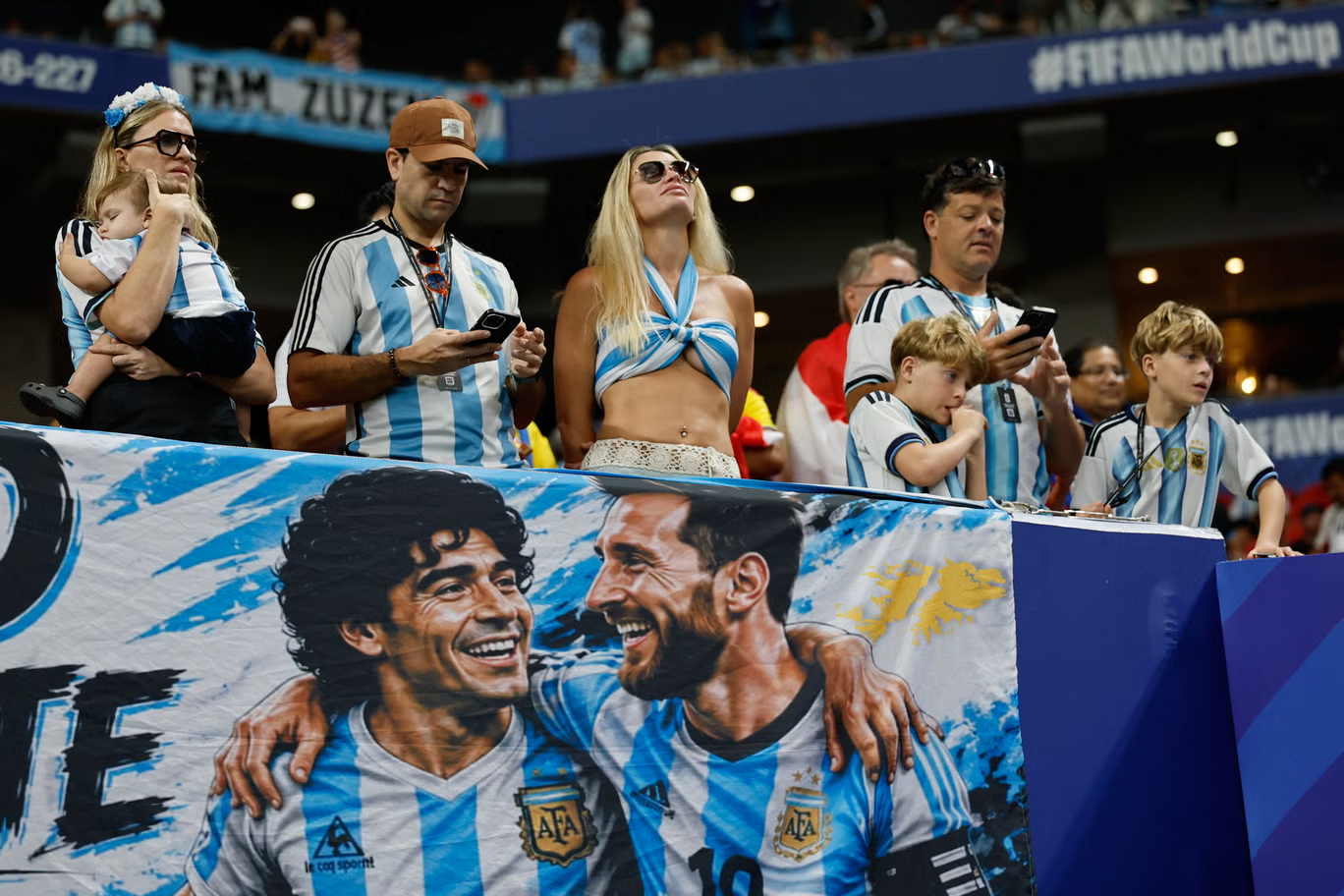
Very few shirts in football carry as much weight as Argentina’s No. 10. Diego Maradona wore it. Messi wore it for two decades. And now, someone new will have to pull it on.
Whoever gets that shirt will not just inherit a number. They will inherit an enormous expectation, one that has derailed careers before they ever really got going. Argentine fans are passionate, and they demand a lot from the player in that shirt. The next No. 10 will need not just quality, but real mental strength.
There is no obvious candidate right now. And honestly, that might be a good thing. Argentina should not rush to find a “new Messi.” That is a trap. The next No. 10 should be free to develop their own style and identity, without being compared to someone who was truly one of a kind.
Can Argentina Rebuild for 2030 Without Their Greatest Ever Player?
Argentina’s footballing history is strong enough to survive even the retirement of Lionel Messi. They were world champions before him, and the country keeps producing top-quality talent year after year. The foundations are solid.
But 2030 will not come around quickly, and rebuilding will mean making some honest choices about tactics, players, and what Argentina want to stand for. Who are Argentina without Messi? What does their football look like? These are not easy questions to answer.
What is clear is that Julian Alvarez, Lautaro Martinez, and a new generation of players have the tools to make the 2030 World Cup something to be proud of. The talent will not be the issue. Getting the mindset right will be the real challenge.
Argentina need to stop chasing the ghost of Messi and start building something fresh. Something that respects the golden era without being stuck in it. That is the only way forward. And if there is one thing you can say about Argentina, it is that they always find a way to make football exciting!
FAQs
Messi has not officially announced his retirement. But at 38 years old, having played in his sixth World Cup and a record 34 World Cup matches, it is widely expected that he will step away from international football. He would be 43 by the time the 2030 World Cup comes around.
Messi appeared in six World Cups: 2006, 2010, 2014, 2018, 2022, and 2026. This ties the all-time record for most World Cup appearances by a single player.
No one player can replace what Messi brought to the team. Julian Alvarez and Lautaro Martinez are the most likely to lead Argentina’s attack in 2030, with a new generation expected to take the place of veterans like Otamendi, Tagliafico, De Paul and Paredes.
Scaloni led Argentina to their first Copa America in 28 years and their first World Cup in 36 years at Qatar 2022. His future as manager after the 2026 final defeat is not yet clear.
The last World Cup without Messi was 2002, when Argentina went out in the group stage. Every World Cup from 2006 to 2026 included Messi in the Argentina squad.


No Comments