

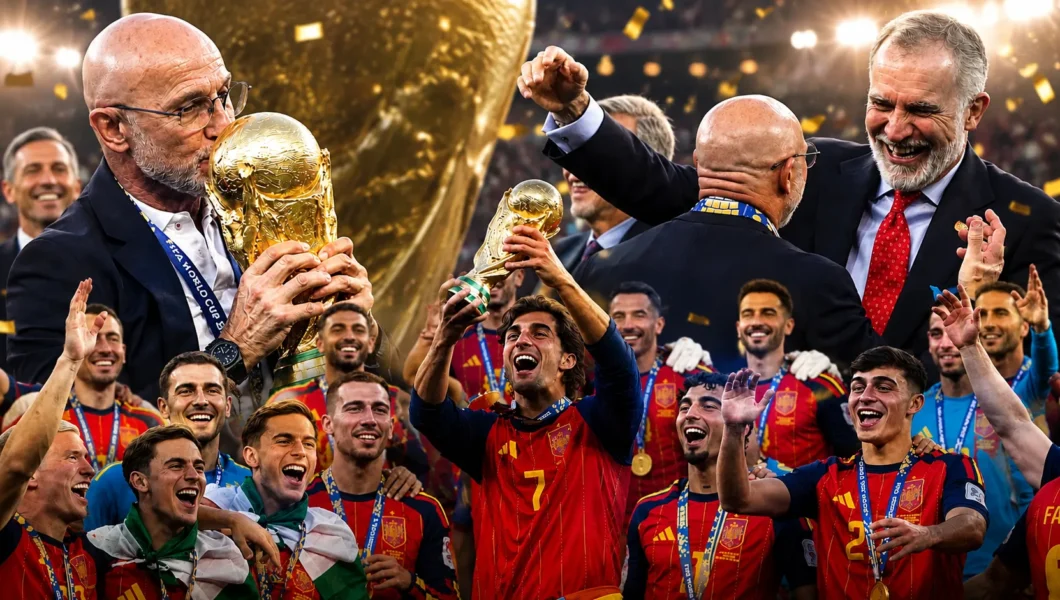
Spain beat Argentina in the 2026 World Cup final in New York! Ferran Torres scored the winning goal in extra time, set up by the brilliant Nico Williams. Rodri won the Golden Ball. This was a team built over years of brilliant grassroots coaching, and the result felt absolutely deserved.
Spain don’t win World Cups by luck. They don’t produce world-class players by chance either. Their 2026 World Cup win in New York was the result of years and years of hard work, smart planning, and a clear idea of how football should be played. When Ferran Torres fired home a Nico Williams assist in extra time, it felt like the perfect ending to a brilliant story.
So how did they do it? Let’s break it all down, from the tactics to the players, the manager, and what England can take away from it all!
How Did Spain Beat Argentina in the 2026 World Cup Final?
What a final it was! Two brilliant footballing nations going head to head under the New York lights. Argentina had Emiliano Martínez in goal, one of the best shot-stoppers in the world, and they made Spain work very hard for every bit of space on the pitch. It was tight, physical, and at times quite tense.
But Spain had something Argentina couldn’t match: calm. They passed the ball around with real confidence, pressed smartly, and never panicked. They kept waiting for the right moment.
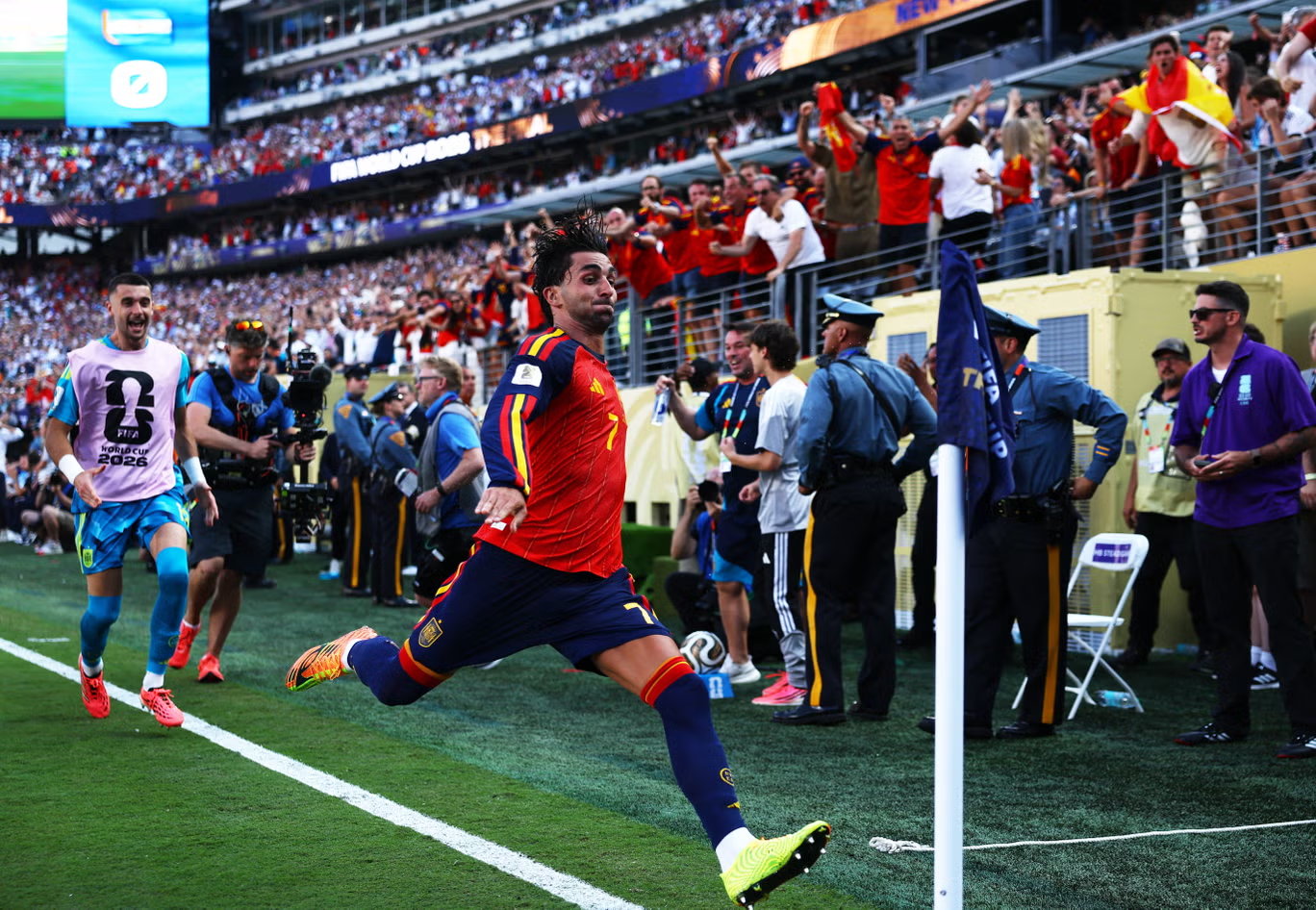
That moment came in extra time. Nico Williams was fantastic all tournament, and here he drove at the Argentina defence before pulling the ball back perfectly for Ferran Torres. Torres did the rest. Cool, sharp, and right in the back of the net!
Shortly after, Enzo Fernandez was sent off, leaving Argentina with ten men. Martínez made some incredible saves, but Spain held on. They had their goal. They kept their nerve. They won!
Rodri: Why the Golden Ball Was Never Really in Doubt
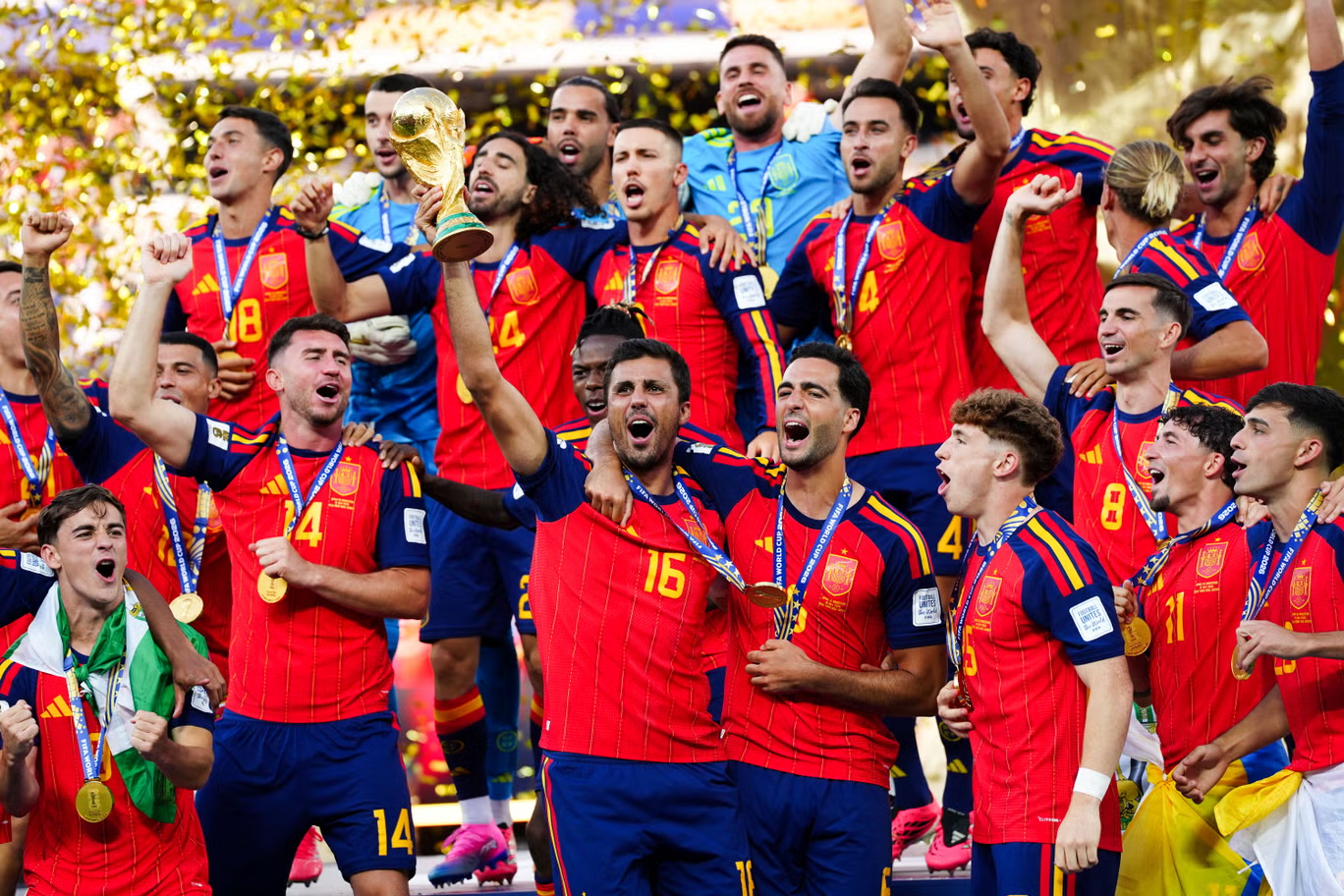
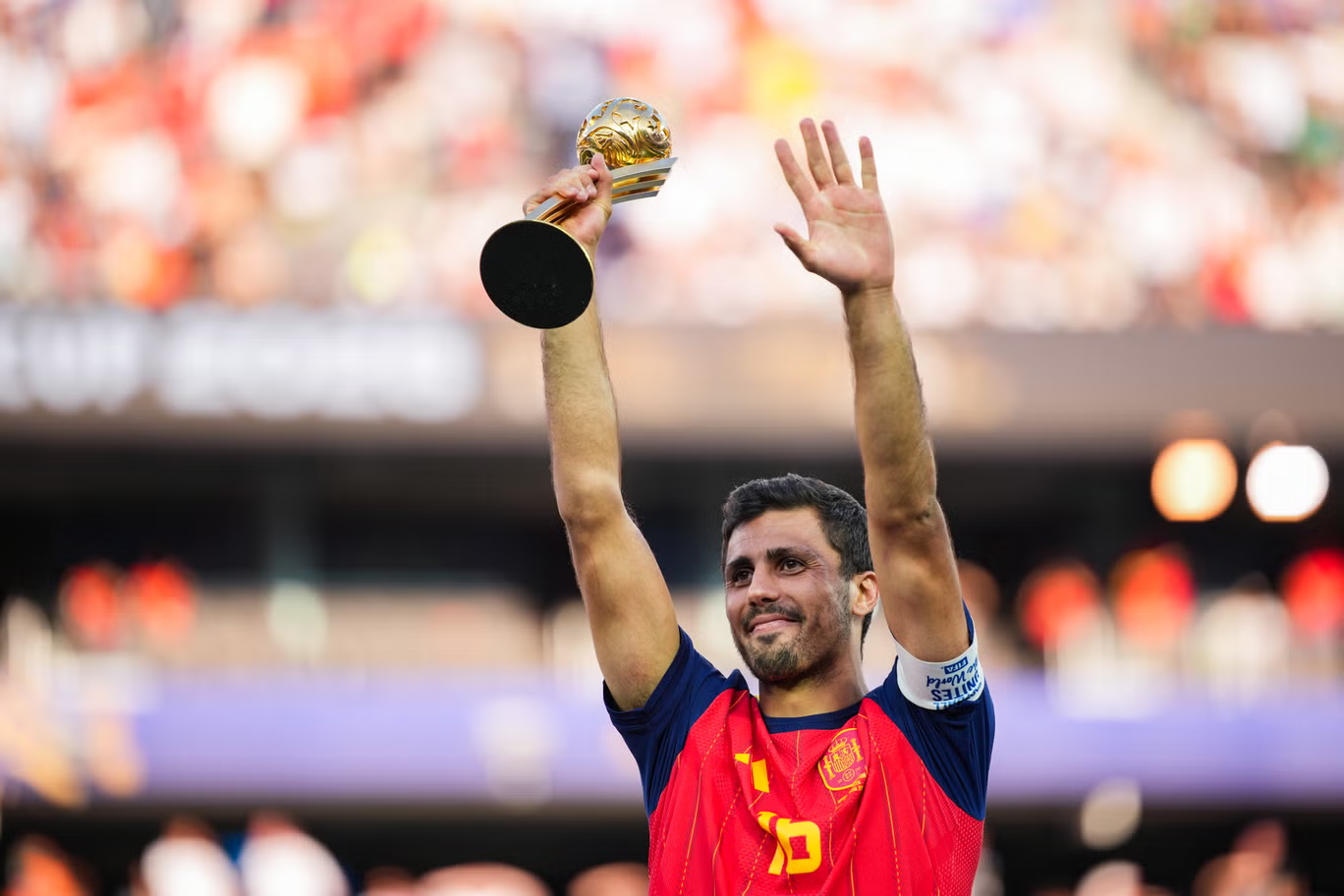
If you were watching Spain’s games closely, you already knew Rodri was going to win this award. He was simply outstanding from start to finish.
Rodri is the player who keeps everything ticking. He wins the ball back, picks smart passes, and gives the rest of the team the freedom to express themselves. He’s not the flashy type, but every single teammate knew how important he was.
His Golden Ball win says a lot about how Spain see football. They don’t just celebrate the goal scorers. They value the players who make the team work properly. The progressive passes, the clever interceptions, the quiet leadership. Rodri had it all!
It’s also worth saying that Lamine Yamal was brilliant throughout the tournament. The teenage Barcelona star caught the eye of fans everywhere. But when it came to the big moments, Spain were a team effort, not a one-man show. Yamal has an exciting future ahead. In 2026, though, this was Rodri’s World Cup!
Why Spain’s Grassroots System Is the Best in Europe
Want to know the real secret behind Spain’s success? Start at the very bottom.
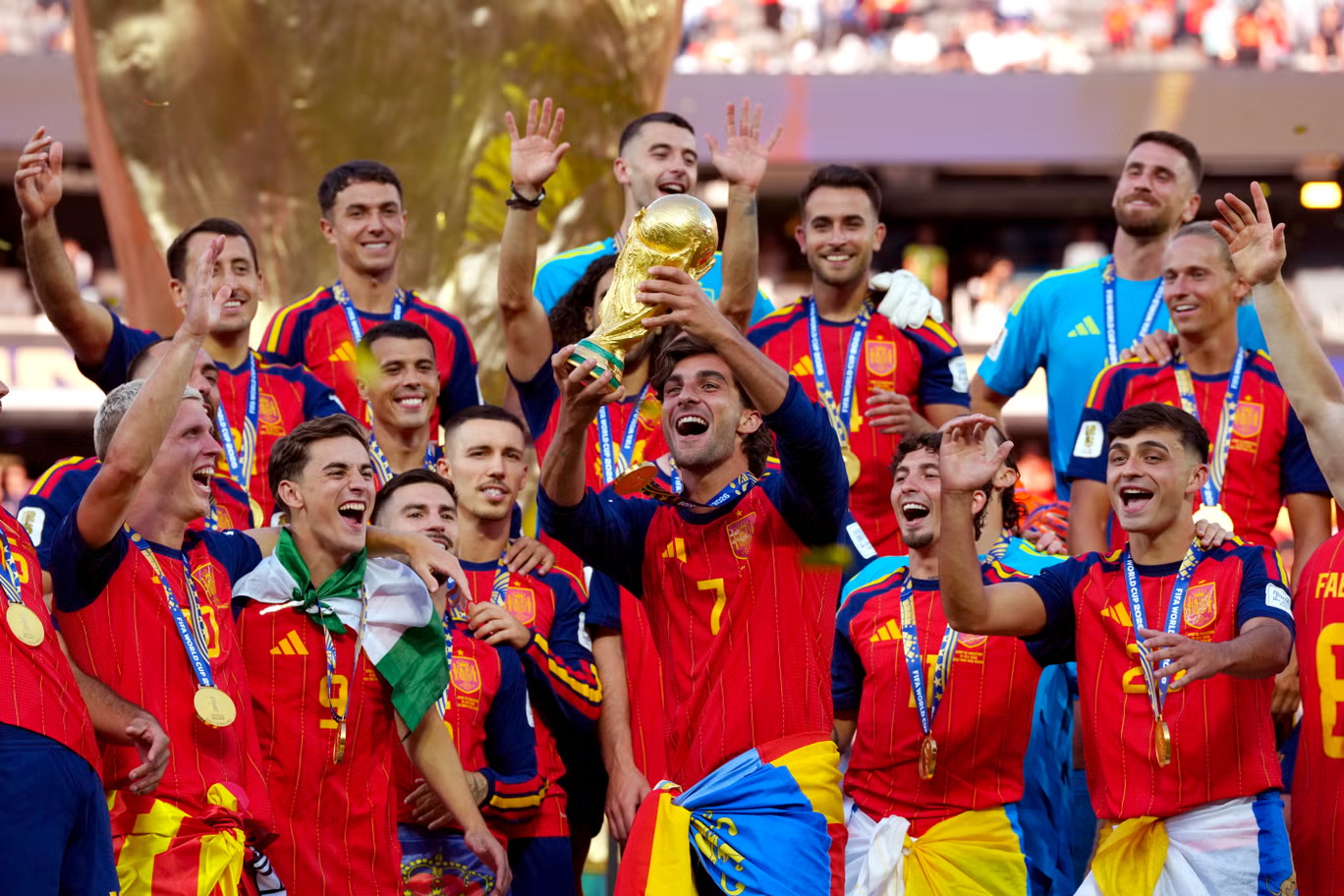
Spain’s youth football set-up is the best in Europe, and it’s not particularly close. From a very young age, Spanish kids are taught to be comfortable on the ball, to understand space, and to trust their teammates. First touch, positioning, staying calm under pressure. These things are drilled in long before players ever reach a professional club.
By the time these players join top academies, all of that is second nature. They don’t have to think about it. They just do it.
And it keeps working! Spain recently won the under-19 European Championship in Wales. Another tournament, another generation of talented players coming through. The pipeline just doesn’t stop!
Luis de la Fuente: The Manager Who Knew These Players Before They Were Famous
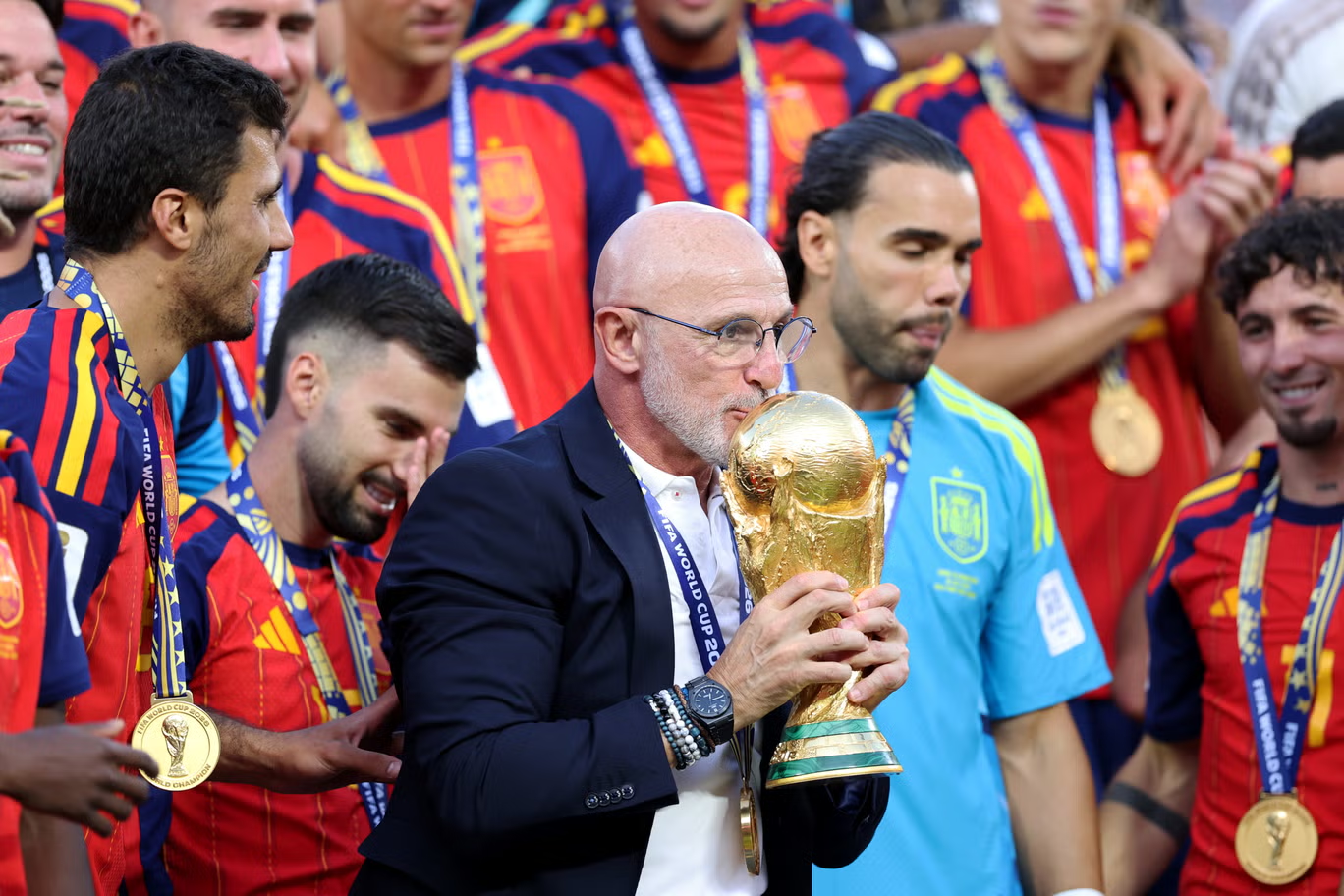
One of the most underrated parts of Spain’s success is their manager, Luis de la Fuente. He didn’t just inherit a good squad. He helped build it.
De la Fuente coached many of these players when they were teenagers. Unai Simon, Mikel Merino, Rodri. He worked with all of them through Spain’s youth and under-21 sides. He knows how they think, how they react under pressure, and what they need to perform at their best.
That kind of trust between a manager and his players is very hard to build quickly. With De la Fuente, it developed over many years. When he speaks in the dressing room, the players aren’t listening to a stranger. They’re listening to someone who believed in them long before the rest of the world did!
That makes a massive difference in tournament football, where big moments can hinge on tiny margins.
A True Team, Not Just a Squad: How Spain United Across Regional Divides
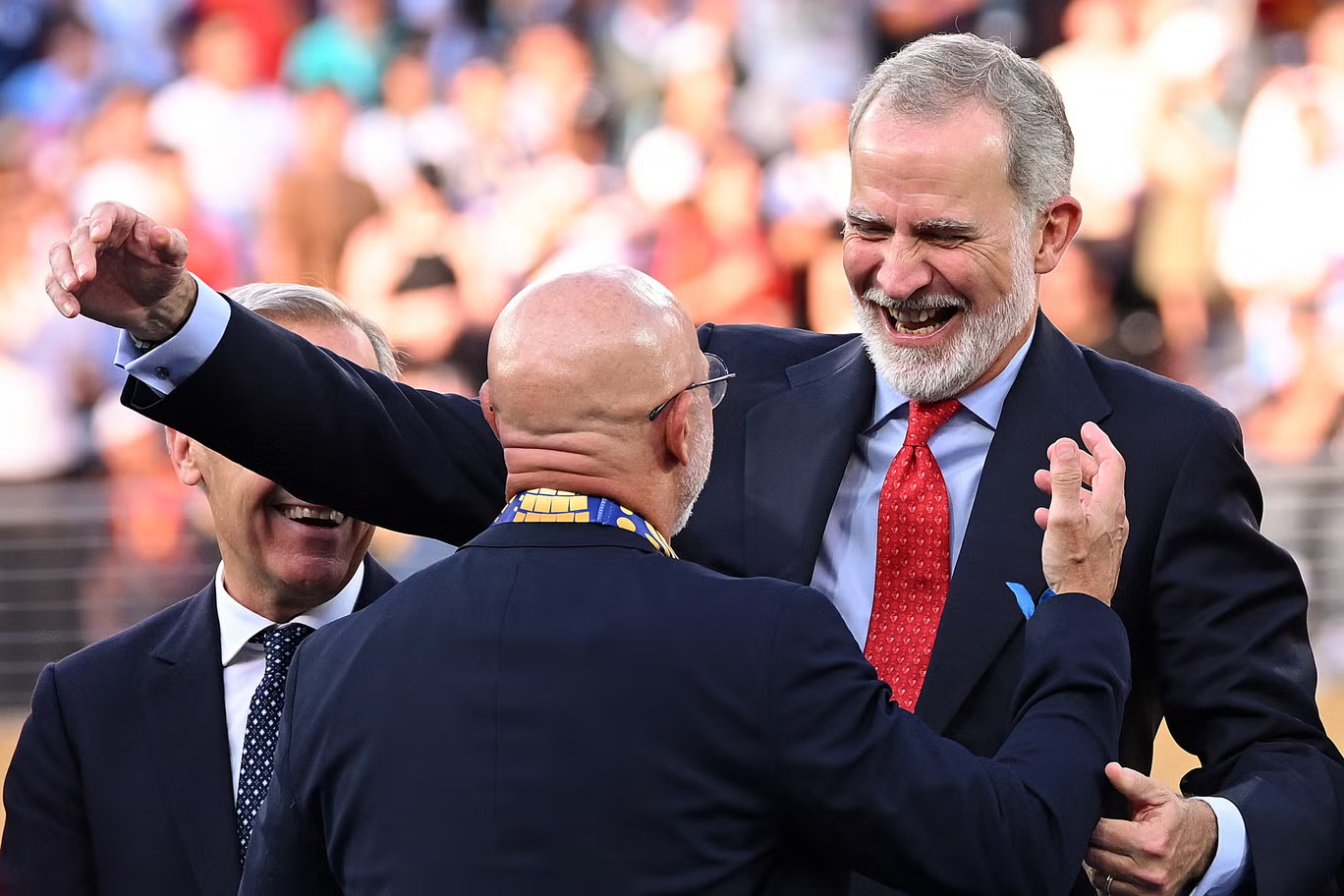
Spanish football hasn’t always been smooth sailing. The country has strong regional identities, and at times that has caused tension within national squads. Catalan players, Basque players, players from Madrid. Getting everyone pulling in the same direction hasn’t always been easy.
This Spain side felt different, though. Really different!
Nico Williams, who is proud of his Basque roots, combined brilliantly with players from across the country. De la Fuente has always pushed for real team spirit, with shared meals, open conversations, and a genuine bond between the lads. When they celebrated in New York, you could see it wasn’t forced. These players genuinely like each other. And that matters more than people think.
What Can England Learn from Spain’s 2026 World Cup Success?
England’s tournament ended in the semi-finals, knocked out by Argentina. It hurt. A lot of fans had real hope for this England generation, and rightly so. But there are clear differences between how the two countries develop their players, and they won’t be fixed overnight.
Spain start teaching technical skills at under-8 level. England’s youth system has improved a great deal in recent years, but there is still a tendency to favour size and strength over touch and technique at younger ages. By the time English players reach the senior game, they often have to work twice as hard to close that technical gap.
There’s also the question of style. Spain know exactly how they want to play. That identity runs from the grassroots all the way up to the senior squad. England’s footballing identity has shifted under different managers, and the question of what England football really stands for is still one that people debate.
The good news? England have real talent, and the infrastructure is genuinely improving. But Spain’s success is a reminder that patience pays off. Building something properly takes time. It’s worth it in the end!
Spain’s Legacy: What Retaining the World Cup Would Mean for Football History
Here’s something remarkable. Spain are currently world champions in both men’s and women’s football at the same time. No other country can say that right now. It tells you everything about the depth of their football culture.
Could they retain the men’s World Cup in 2030? It’s a real possibility! Rodri will be in his early thirties but still at a high level. Yamal will be in his prime. Williams will be at his peak. The youth system is already producing the next wave.
Of course, other nations will study Spain closely and try to find ways to stop them. The challenge will get harder. But the foundations are solid, and Spain’s football institutions seem fully committed to keeping it that way.
FAQs
Ferran Torres scored the winning goal for Spain in extra time of the 2026 World Cup final against Argentina in New York. The goal was set up by Nico Williams.
Rodri, Spain’s central midfielder, won the Golden Ball at the 2026 World Cup. He was recognised as the best player of the tournament.
England were knocked out in the semi-final by Argentina who went on to face Spain in the final.
Enzo Fernandez received a red card during the final. This left Argentina with ten men during extra time and made it much harder for them to get back into the match.
Yes! Spain currently hold world championship titles in both the men’s and women’s games at the same time. It’s a truly unique achievement in international football history.
Luis de la Fuente has been in charge of many of the Spain players bound for the 2026 World Cup since their youth and Under-21 days, including Rodri, Mikel Merino and Unai Simon. That long history together built a real sense of trust and understanding within the squad, which was hugely important in the big moments.



No Comments