

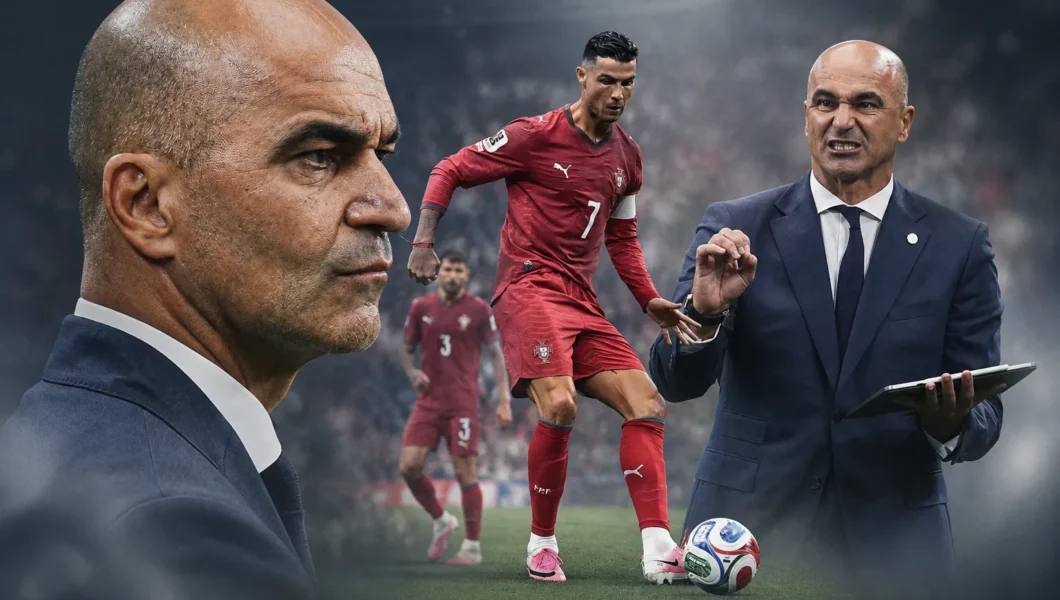
Portugal went out of the 2026 World Cup in the round of 16, losing 1-0 to Spain with Mikel Merino scoring in the 91st minute. Roberto Martinez quit straight after the game. His choice to keep Ronaldo on for the full 90 minutes, rather than bringing on in-form striker Gonçalo Ramos, was heavily criticised. Portugal’s exit means an entire generation of brilliant players ends their best years without reaching a World Cup semi-final.
Not many countries rocked up to the 2026 World Cup with as much talent and expectation as Portugal. Their midfield had Vitinha, João Neves, and Bruno Fernandes. Their defence was packed with some of Europe’s most trusted players. The whole squad was full of Champions League winners from Paris Saint-Germain. And yet, on the biggest night of the tournament, a round of 16 clash with Spain in Dallas, Portugal lost because of a substitution that never happened.
Mikel Merino scored in the first minute of injury time. Cristiano Ronaldo, 41 years old and clearly not at the level needed for knockout football at a World Cup, had been on the pitch the whole time. Gonçalo Ramos, the man who came off the bench to win the round of 32 tie against Croatia, sat and watched. Martinez resigned less than an hour later. And a nation was left asking a question that had been building for weeks: how did it all go so wrong?
This article looks at Portugal’s 2026 World Cup campaign. It covers the tactical mistakes, the over-reliance on Ronaldo, the big names who failed to deliver, and the reasons why there is still plenty to be hopeful about.
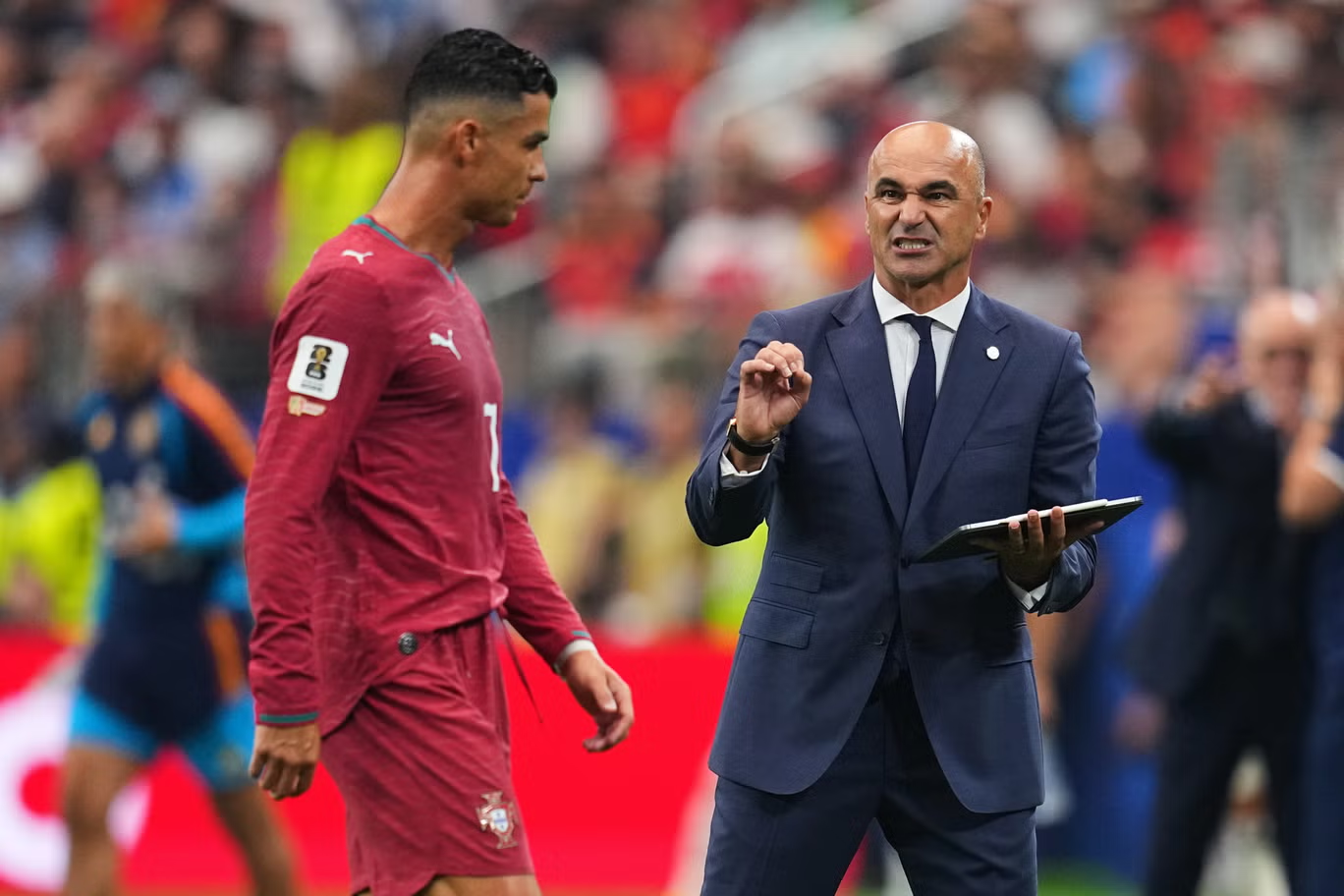
Strong in Qualifying, Poor When It Mattered
On paper, Portugal looked sharp heading into the 2026 World Cup. Under Martinez, they topped European Group F with four wins, one draw, and one loss, and scored 20 goals along the way. Their standout result was a 9-1 win over Armenia on the final matchday, which showed just how good they could be when everything clicked. Ronaldo finished as their top scorer in qualifying with five goals.
Martinez also led Portugal to Nations League glory in 2024/25, which showed he could get the best out of this squad on a good day. Reports during the tournament suggested he was the first manager in Portuguese football history to win his first nine games in charge. Things looked promising.
The World Cup told a very different story. Portugal were placed in Group K with Colombia, DR Congo, and Uzbekistan. They should have sailed through. Instead, they drew 1-1 with DR Congo, hammered Uzbekistan 5-0, then drew 0-0 with Colombia. They went through as group runners-up, not as the dominant side their squad suggested they should be.
A tight 2-1 win over Croatia in the round of 32, with Ramos coming off the bench to turn the game around, kept their campaign alive. But convincing? Not really. The cracks were there long before Spain came along.
The Ronaldo Problem: Martinez’s Biggest Mistake
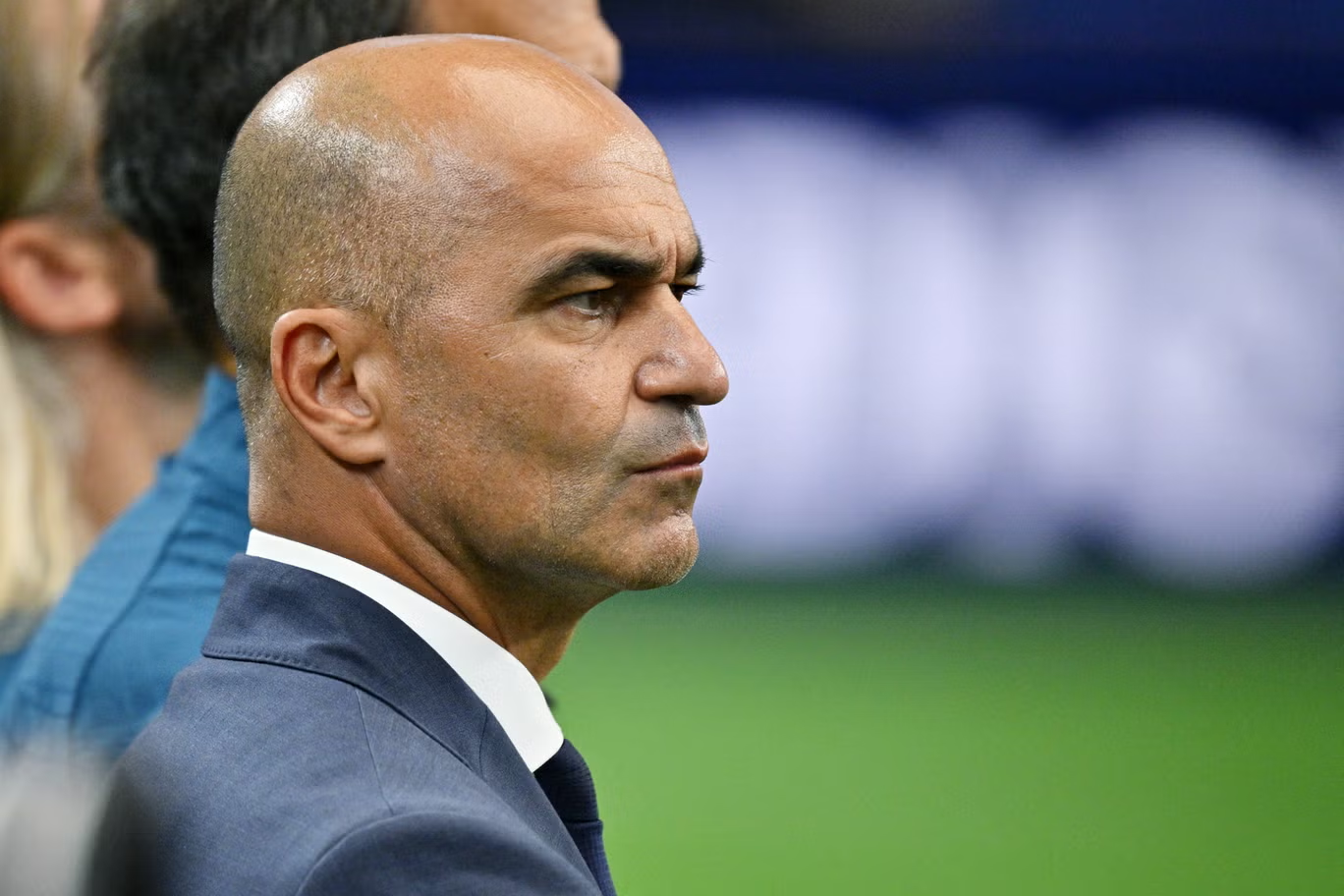
Any honest look at Portugal’s exit has to focus on how Martinez handled Cristiano Ronaldo. The captain, now 41 and playing club football in Saudi Arabia, was given protection that went far beyond loyalty. It crossed into poor management.
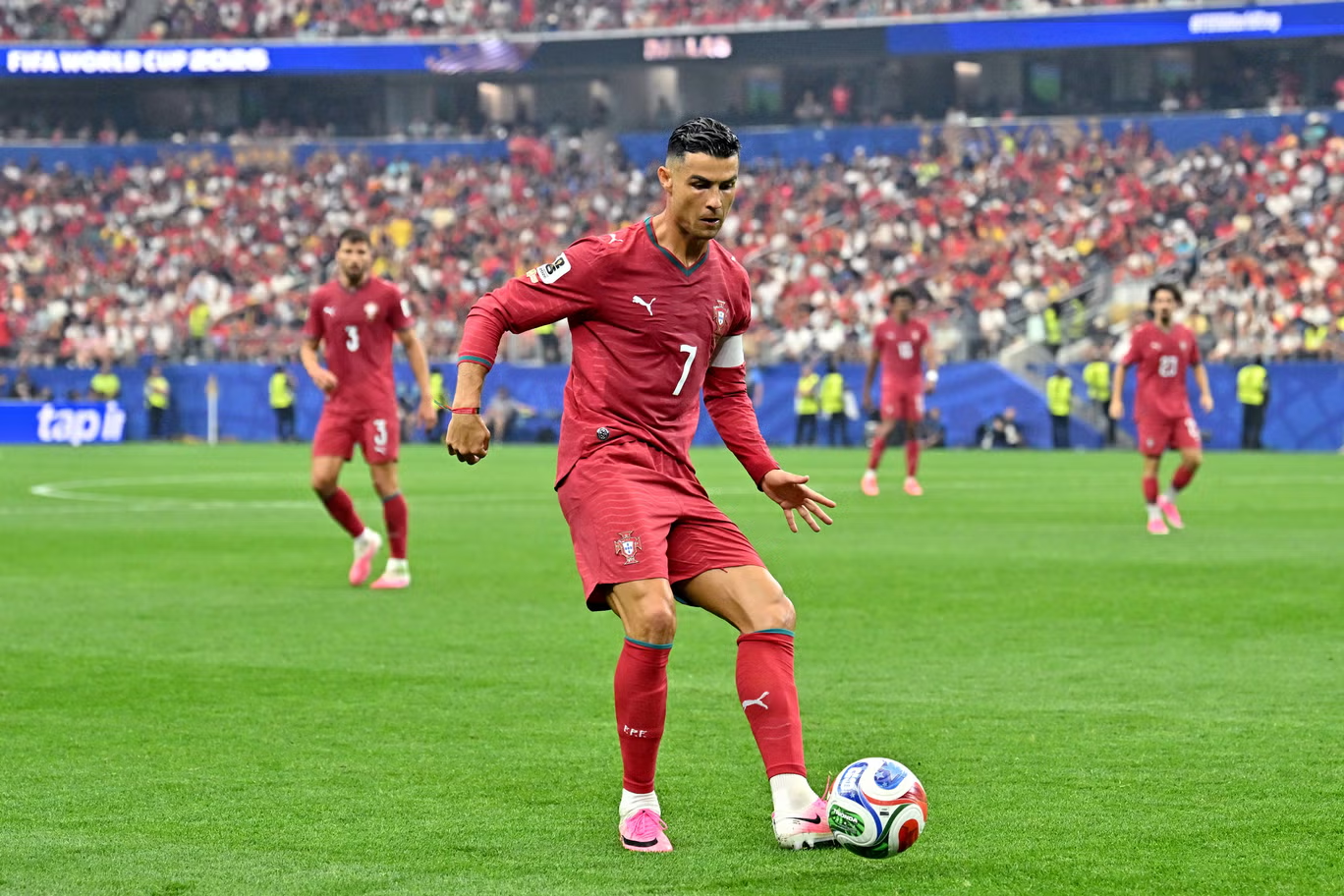
Against Spain, Ronaldo barely made an impact. He was booed and cheered by the 70,649 fans inside AT&T Stadium in Dallas. He had one decent moment, a shot that the goalkeeper got down to save, but he never really threatened a Spain defence that did not concede a single goal across the whole tournament.
Martinez made substitutions at 71 minutes and 83 minutes. Ronaldo stayed on both times. When Ferran Torres put Merino through to score the winner, the sight of Ronaldo standing still in the middle of the pitch felt like the image that summed up the entire era.
“There’s only one man to blame for this, the gutless manager,” former England striker Chris Sutton said on BBC Radio 5 Live. “Gonçalo Ramos came off the bench to win the game against Croatia, and yet you see him staying on the bench. Just bowing down to Cristiano Ronaldo.”
Sports journalist Miguel Delaney was just as blunt, writing: “Ronaldo’s egotism and Martinez’s absurd indulgence have cost a brilliant Portugal generation a trophy, and even a proper chance at one. Not even a semi-final since 2016.”
After the match, Martinez defended his decision. “When you’re a team and you need a goal, you can’t take Cristiano Ronaldo off. He can play 90 minutes, no problem. He’s a presence, he opens space, with a dead-ball situation, anything in the box, it would make no sense.” He said he would have brought Ramos on in extra time. But extra time never came.
Most people were not convinced. Ramos had already shown exactly what he could do against Croatia. Keeping him on the bench while Ronaldo drifted through 90 quiet minutes against the best defence in the tournament will go down as one of the biggest calls of this World Cup.
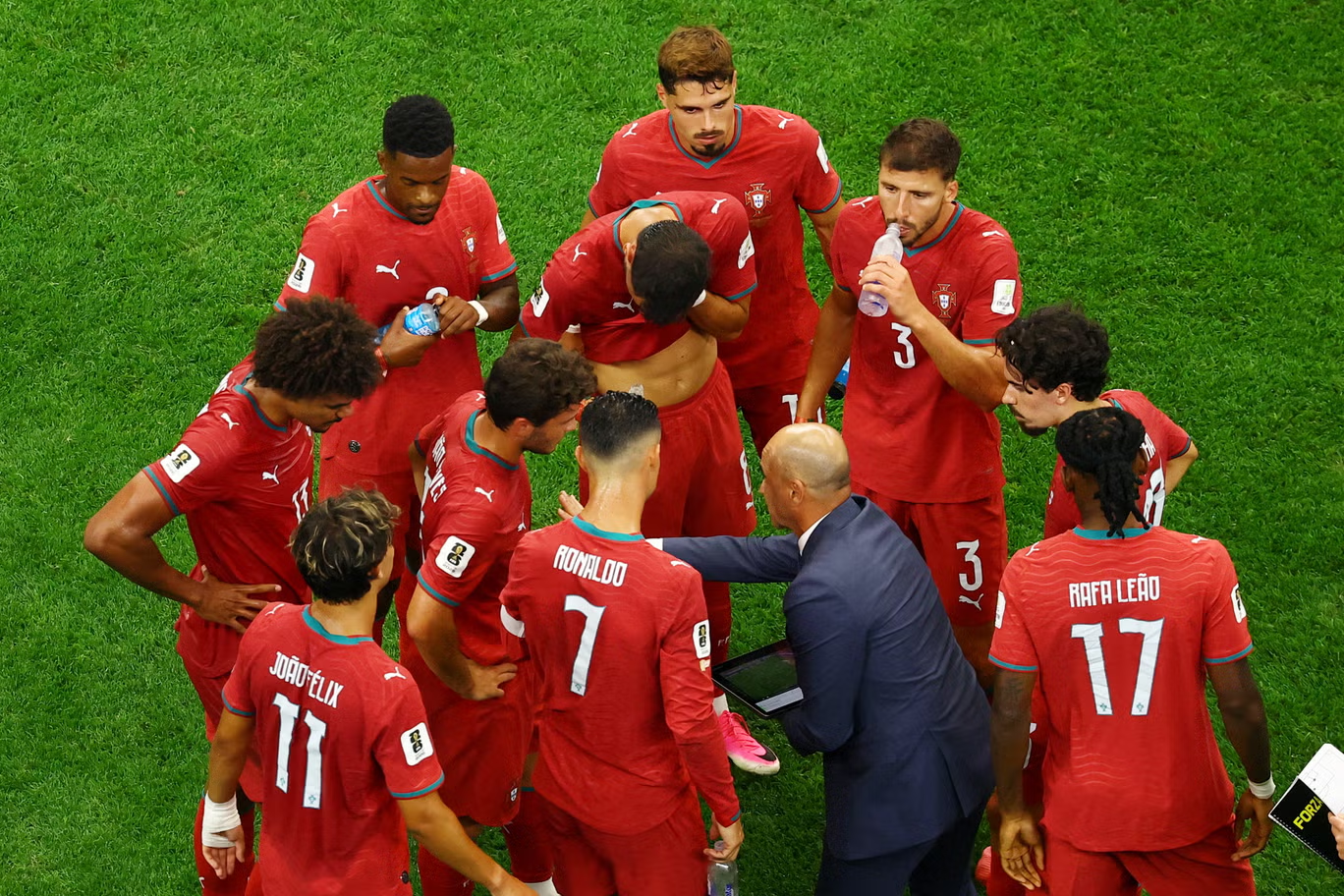
Big Names Who Went Missing
So much of the conversation was about Ronaldo that not enough attention was paid to how poorly some of Portugal’s other top players performed. Bruno Fernandes, one of the most creative midfielders in the Premier League, never got going in the big moments. The midfield trio of Fernandes, Vitinha, and João Neves had their moments, but they went quiet too often when Portugal needed someone to step up.
Bernardo Silva, widely regarded as one of Europe’s best technical players over the past ten years, also failed to have the kind of impact that could have changed a tight knockout game. Portugal’s attacking shape, which was built around keeping Ronaldo at the top and rotating wide players around him, made it harder for their creative midfielders to link up properly.
This is not about knocking brilliant players. But the system Martinez set up, one that always put Ronaldo’s position first, kept limiting the space and chances for the players who were best placed to unlock defences.
Chopping and Changing: No Clear Tactical Plan
One of the biggest complaints about Martinez’s Portugal, going back to Euro 2024 where they went out in the quarter-finals, was that there was no real tactical consistency. Portugal kept changing their wide players and tweaking their shape depending on who they were playing. But the one thing that never changed was Ronaldo starting up front. Nobody ever seriously questioned that.
This rigidity caused real problems. The 5-0 win over Uzbekistan made the system look better than it was. Against a compact, defensive side like Spain, Portugal had very few answers. Without Ramos leading the line, the energy and directness that had caused Croatia problems simply was not there.
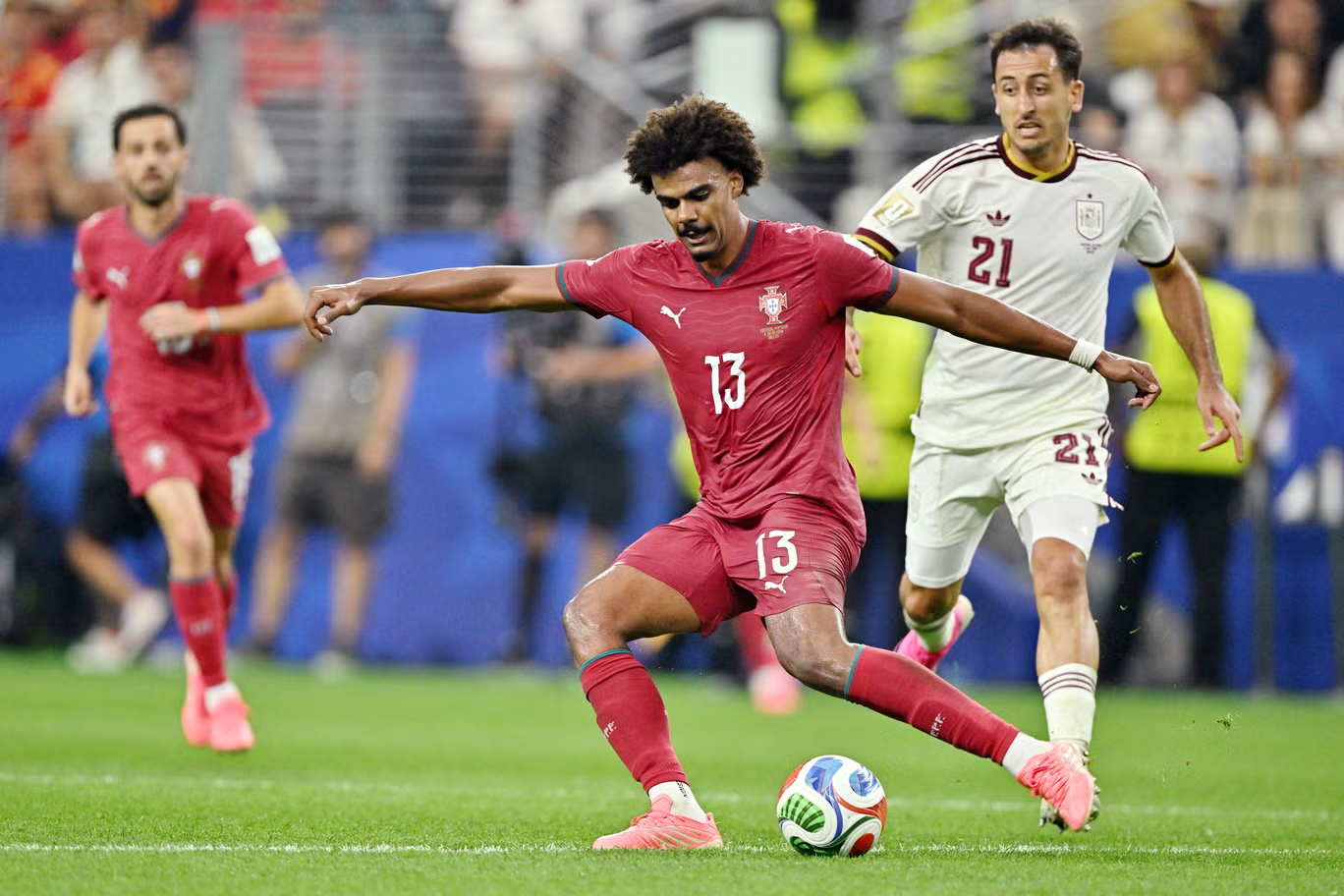
The Spain game showed it clearly. Portugal had chances. Nuno Mendes, one of the brightest players in the tournament at left-back before he got injured after 56 minutes, hit the crossbar with a long-range effort. The talent was there. The system just did not let it breathe.
The Positives: Diogo Costa and Renato Veiga
It was not all bad. Two players came out of this tournament with real credit.
Diogo Costa, Portugal’s goalkeeper, was excellent when it mattered. Against Spain, he kept Portugal in the game with a brilliant fingertip save when Lamine Yamal and Alex Baena both tested him. Costa’s positioning and shot-stopping throughout the tournament confirmed his place among the best goalkeepers in Europe.
Renato Veiga, the Chelsea defender, also caught the eye with his composure and reading of the game. At 22, he looks ready to be a key part of Portugal’s defence for years to come.
Both players give the next Portugal manager something solid to build on. They are not part of the old guard. They are the future.
What Happens Next for Portugal?
The Portuguese Football Federation now needs to find a new head coach after Martinez’s departure. And for the first time in roughly twenty years, whoever takes the job will not have to plan around Ronaldo’s international career. Ronaldo confirmed before the Spain game that this was his final World Cup. After scoring at six World Cups, a record no other player has matched, and finishing as Portugal’s all-time top scorer with 11 World Cup goals, his international chapter is closed.
What is left is genuinely exciting. João Neves, Vitinha, and Gonçalo Ramos are all at PSG and young enough to play in several more tournaments. Nuno Mendes, if he stays fit, is one of the best left-backs in the world. Diogo Costa is in his prime. Rafael Leão has yet to truly deliver at international level, which is a challenge for the next manager. Bernardo Silva, at 31, might have one more big tournament in him if the system is built to give him the freedom he has never fully had with Portugal.
Portugal’s qualifying record, their Nations League win, and the depth of talent available at club level all point to the same thing. This is not a squad in decline. It is a squad that has been let down by poor management at the moments that count most. Get the right manager in, someone brave enough to make tough calls and build a system around the players rather than around a name, and Portugal can be a genuine contender at the 2030 World Cup.
A Generation That Never Got Its Chance
After the Spain defeat, Martinez said: “We didn’t fail.” In a very narrow sense, he had a point. Portugal did reach the last 16 of a 48-team tournament, won a Nations League, and kept themselves professional throughout a difficult campaign.
But there is a much bigger failure to account for. Martinez, Ronaldo, and the Portuguese Football Federation all played a part in it. This generation, full of Champions League winners and Premier League stars, capable of beating anyone on a good day, never had a proper, honest run at a World Cup. Not one where the squad was picked on form and fit for purpose, rather than built around a 40-year-old forward whose best days were behind him.
As journalist Samuel Luckhurst put it after the final whistle: “A suitably spineless end to a waste of three and a half years.”
Portugal’s best World Cup finish is still third place, back in 1966 under Eusébio. For a country that has since produced one of the greatest players of all time and some of its richest squads ever, that remains the most uncomfortable reminder of what has been left on the table.
The next chapter starts now. It has to be different.
FAQs
Portugal lost 1-0 to Spain in the round of 16 on 6 July 2026 at AT&T Stadium in Dallas. Substitute Mikel Merino scored in the 91st minute after Ferran Torres played him in behind Portugal’s defence. Portugal could not break down a Spanish side that did not concede a single goal in the whole tournament. Manager Roberto Martinez’s choice to keep Cristiano Ronaldo on for the full 90 minutes, rather than bringing on Gonçalo Ramos who had scored as a substitute to beat Croatia, was widely criticised after the match.
Yes. Roberto Martinez confirmed his resignation about an hour after Portugal’s 1-0 defeat to Spain on 6 July 2026. In his post-match press conference, he said it would not make sense to stay on, and noted that his contract was due to expire at the end of the tournament anyway. Martinez had been in charge of Portugal since 2023 and managed 45 games in total.
Portugal finished second in Group K. Their results were a 1-1 draw with DR Congo, a 5-0 win over Uzbekistan, and a 0-0 draw with Colombia. The draws were seen as well below what was expected from a squad ranked fifth in the world.
Portugal’s best World Cup finish is third place, achieved at the 1966 tournament in England. They also finished third at the 2006 World Cup in Germany. Their last deep run before 2026 was a quarter-final exit at the 2022 World Cup in Qatar.
As of early July 2026, the Portuguese Football Federation had said it would name a new head coach but had not yet announced who it would be. It will be the first appointment since Ronaldo’s international retirement, giving the new manager a blank canvas to build the team as they see fit.


No Comments