

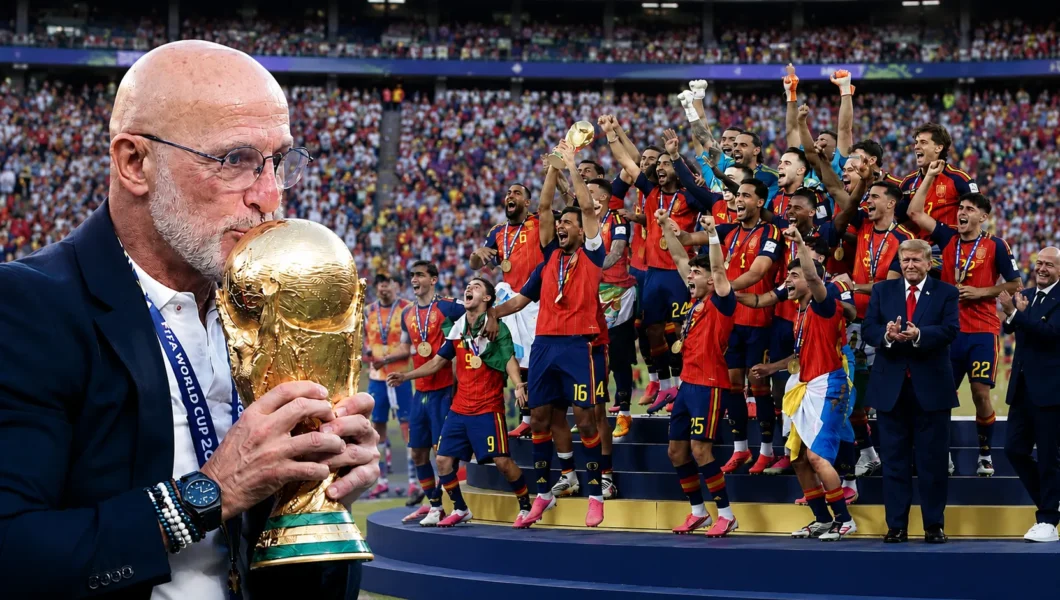
Spain beat Argentina 1-0 in the 2026 FIFA World Cup final in New Jersey. Ferran Torres scored the winner in extra time with a precise half-volley, assisted by Nico Williams. Argentina failed to register a single shot in 90 minutes, and Enzo Fernandez’s red card proved to be the turning point.
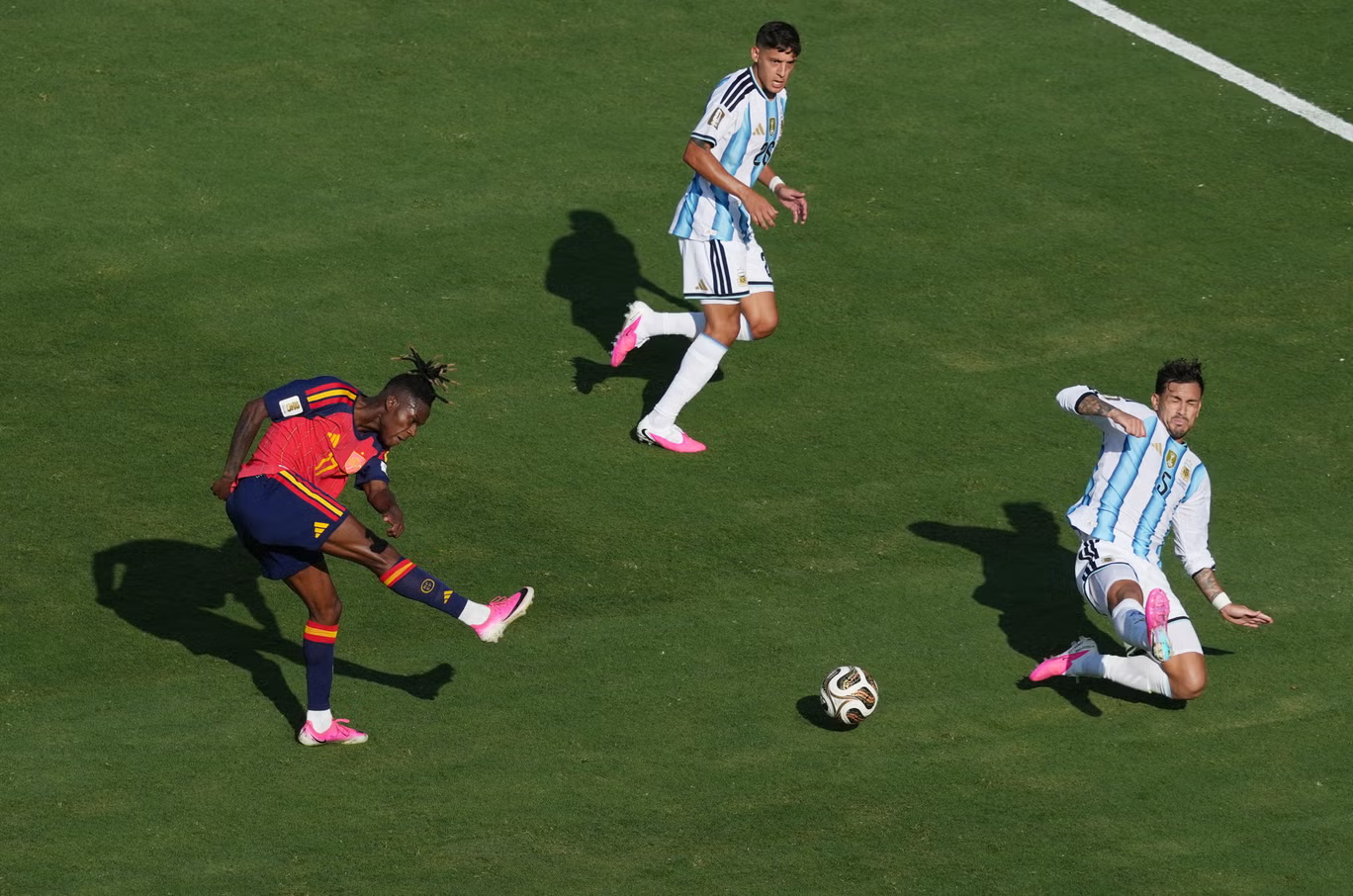
Ferrán Torres met Nico Williams’ delivery in extra time and fired a crisp half-volley into the bottom corner but it was so much more than just a goal. It was the perfect end to one of the most controlled displays ever witnessed in a World Cup final. Spain had just become world champions for only the second time, and the 1-0 scoreline did not even begin to tell the full story of their dominance.
The stage was MetLife Stadium in New Jersey. The occasion was the biggest match in football. And Luis de la Fuente’s Spain put on a show so complete that Argentina, a team built around the greatest player of his generation, could not manage a single shot in 90 minutes. This was no fluke. It was the result of a footballing idea that had been carefully built over many years and then delivered to perfection on the grandest stage of all.
In this tactical breakdown, we look at exactly how Spain took Argentina apart, why Lionel Messi barely got a touch, what Enzo Fernandez’s red card meant for the game, and how De la Fuente’s “Tiki-taka 2.0” has put Spain back on top of world football!
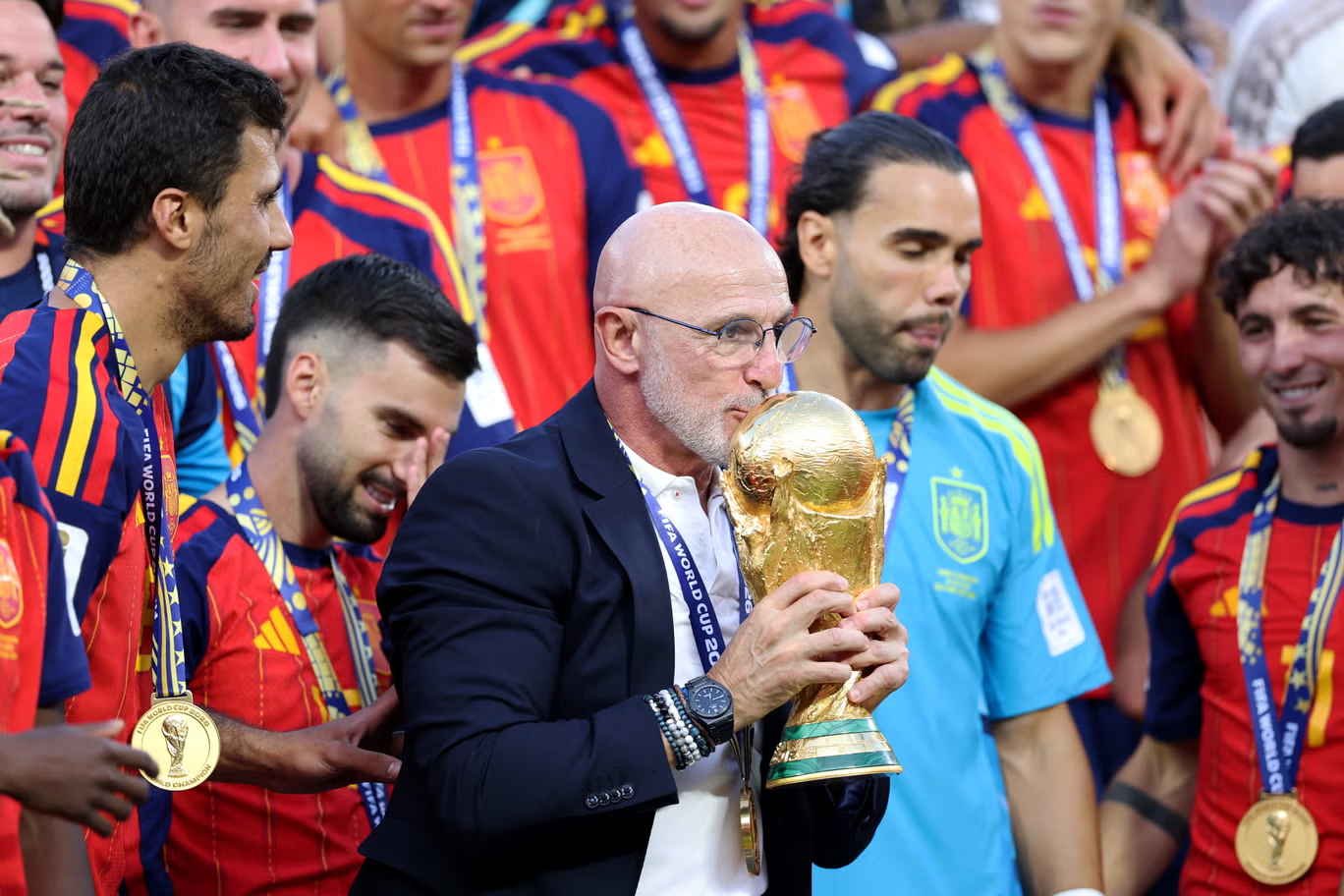
Argentina’s Invisible Performance: No Shots, No Presence
It is almost unheard of at any level of football for a team to finish a match without a single shot on or off target. In a World Cup final, with a player like Messi in your starting line-up, it is truly remarkable.
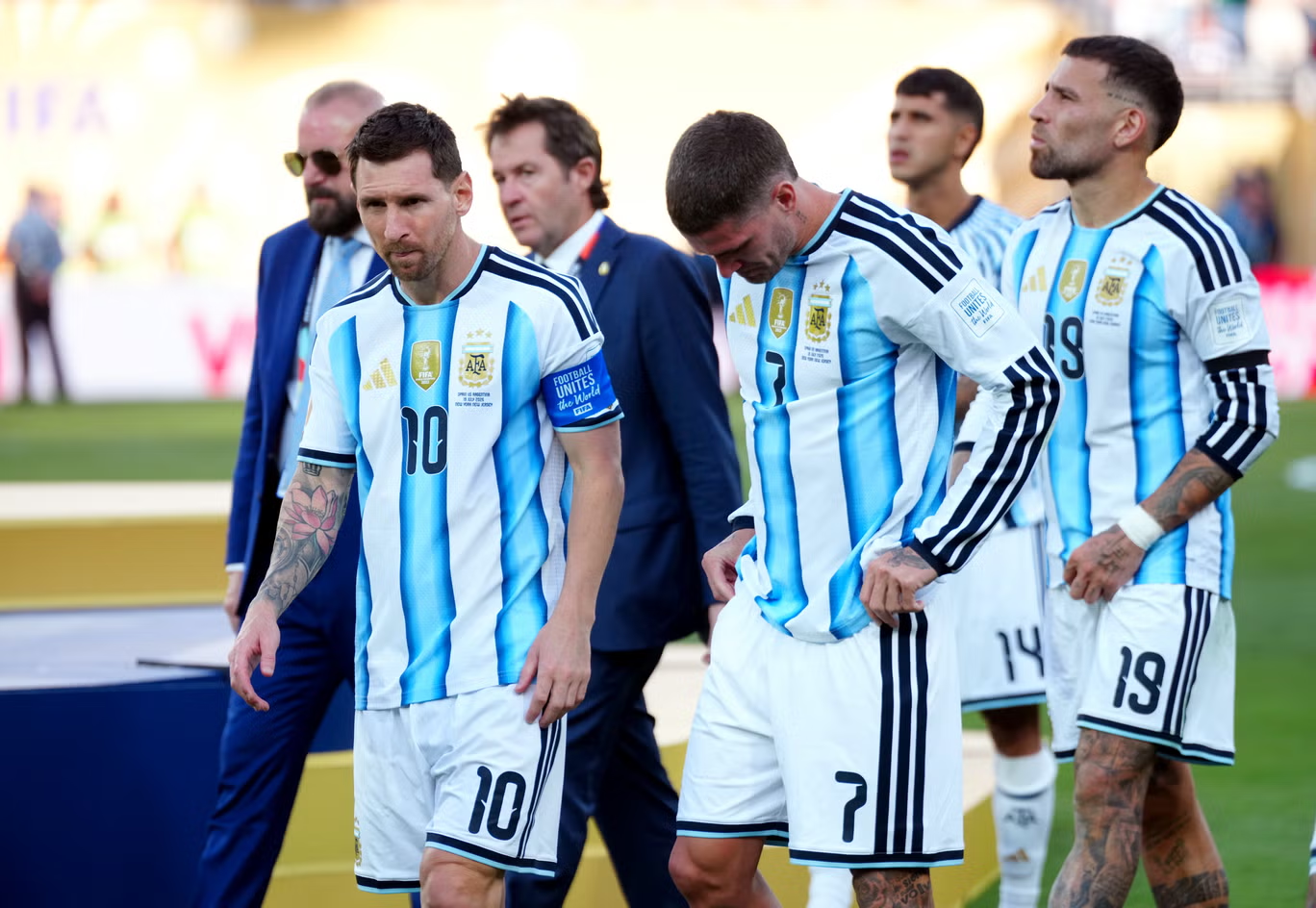
Yet that was exactly what happened to Argentina across those 90 minutes in New Jersey. Lionel Messi, playing what is likely his final competitive tournament at the age of 38, was completely swallowed up by Spain’s press. He struggled to find any space, was tracked closely by a well-drilled midfield, and never really received the ball in a position where he could hurt Spain.
Argentina set up to sit deep and hit Spain on the break, but there was simply nothing to break into. Spain’s possession game was suffocating. Messi can still be brilliant in short bursts, but without the right delivery from his teammates, those bursts never came. It was a brilliant team effort from Spain, and their shape made Argentina’s best player a complete non-factor.
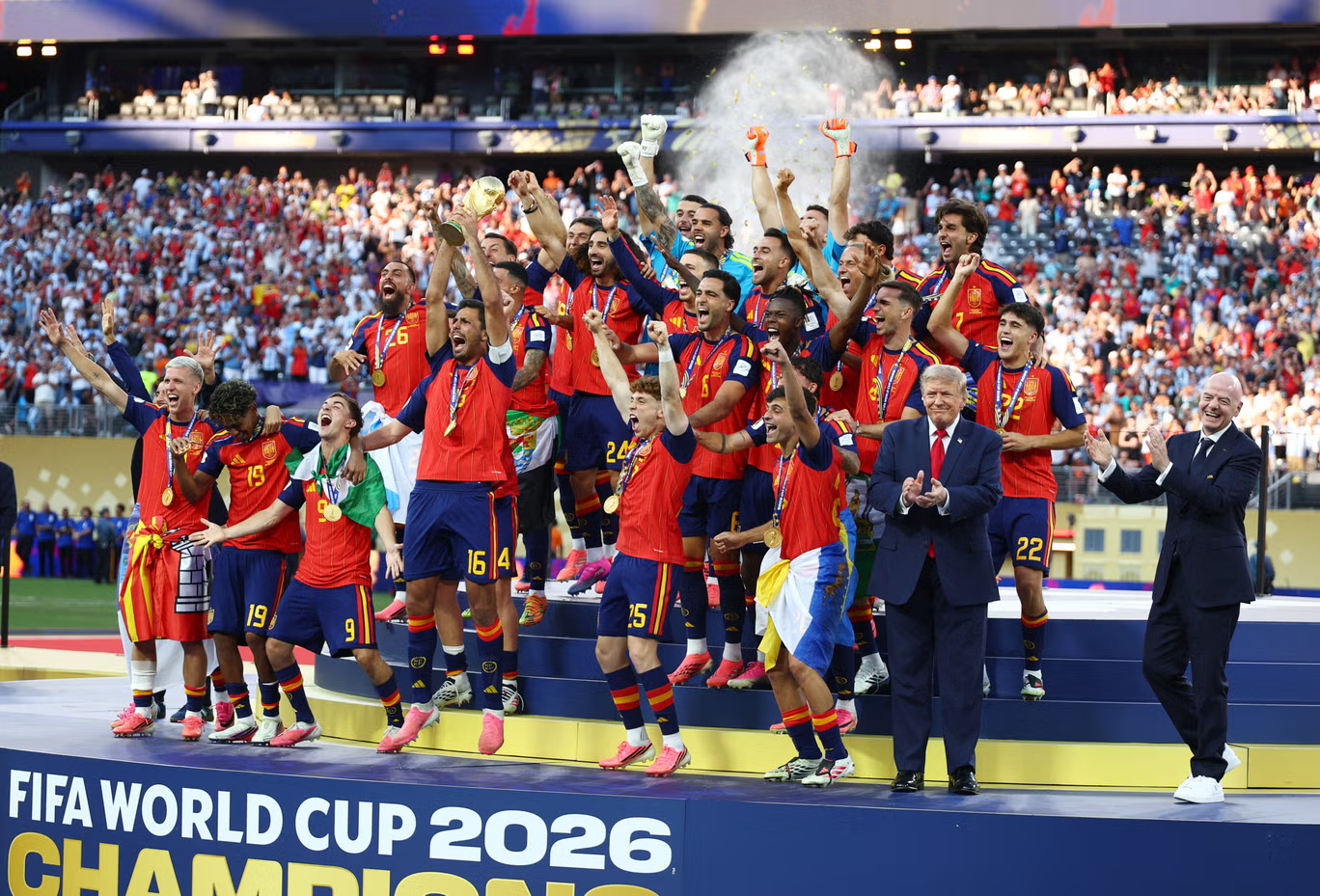
Enzo Fernandez’s Red Card: The Moment That Changed Everything
The key turning point came when Enzo Fernandez was shown a red card, leaving Argentina with just ten men. Before that moment, Argentina had been hanging on, staying tight and hoping to force a penalty shootout.
With the extra man, De la Fuente had a choice to make: be patient or push for the win? He went for both. Spain kept passing calmly through midfield while also adding more runners and stretching Argentina’s shape with extra width. Argentina’s defensive structure, already under strain with eleven men, simply had no answer for the space that opened up on both flanks.
The red card did not change how Spain played. It just gave their style of play more room to work. The winner in extra time felt almost certain from that point on.
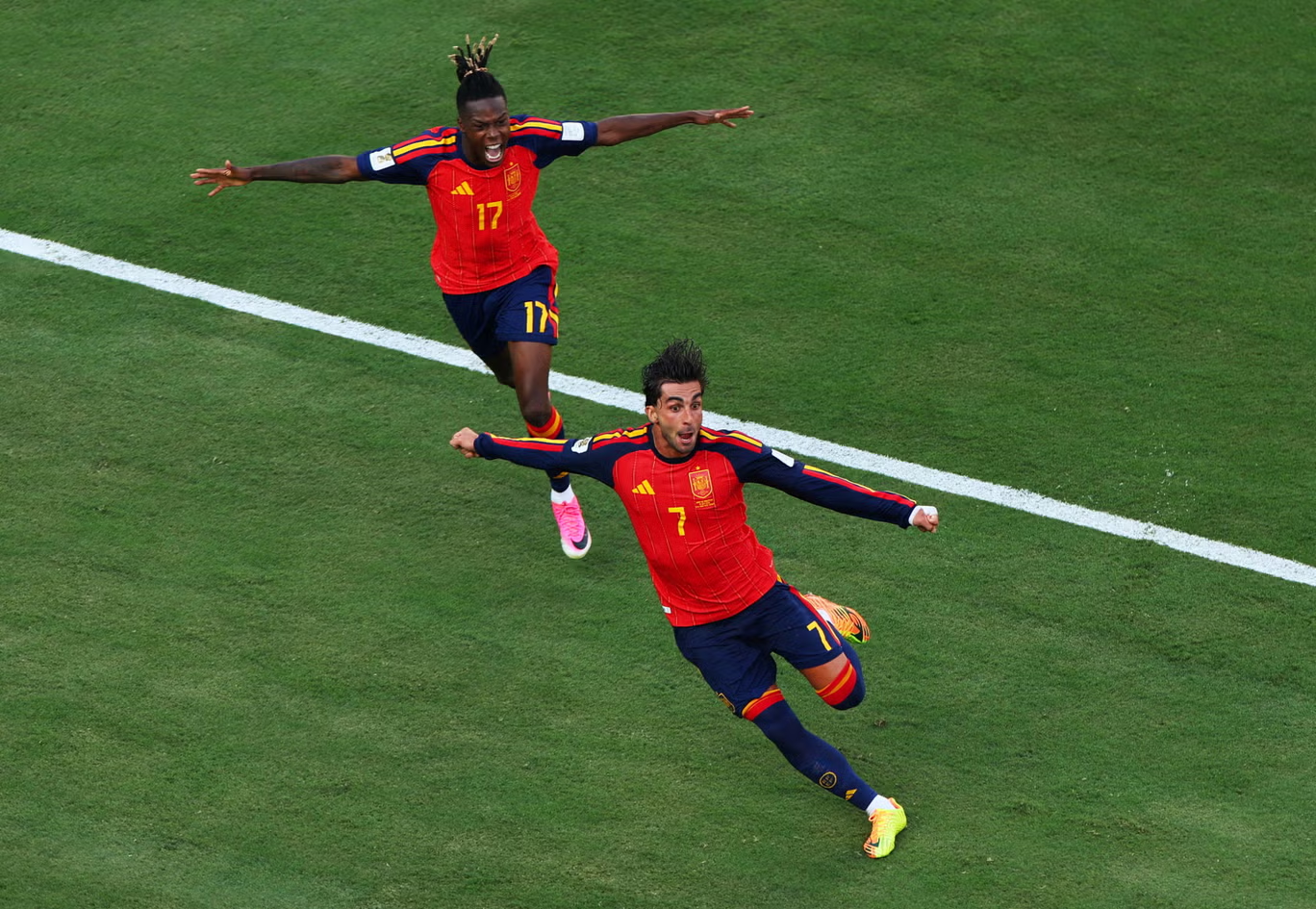
Spain’s Tactical Identity: What Is “Tiki-taka 2.0” Under Luis de la Fuente?
The original Tiki-taka, the style made famous by Pep Guardiola’s Barcelona and Vicente del Bosque’s Spain, was all about short passes, keeping the ball, and controlling position. De la Fuente’s Spain keeps those core ideas but adds directness, physical pressing, and a hunger to move forward quickly that the older version sometimes lacked.
If the original Tiki-taka was sometimes guilty of passing for the sake of it, Tiki-taka 2.0 uses possession with a clear purpose. Spain probe and press, and then strike quickly as soon as space opens up. Against Argentina, they passed at a brilliant rate while always looking to move the ball forwards rather than sideways.
The end result is a team that is both brilliant to watch and very hard to beat. They keep the ball until their opponents slip up, and then they make them pay.
Playing Out from the Back: Laporte, Cubarsi, and the Full-Backs
Everything Spain do starts from the back, and the foundation was rock solid in this final. Aymeric Laporte and Pau Cubarsi formed a central defensive partnership full of composure, technical quality, and a great understanding of when to hold and when to push forward.
Cubarsi was just 17 years old during the tournament, but you would never have guessed it. His ability to carry the ball out under pressure, pulling Argentina out of shape and drawing them into traps, was outstanding. Laporte brought the experience and aerial strength alongside him.
The full-backs also played a huge role. Spain’s wide defenders pushed high up the pitch, acting almost like extra midfielders when in possession. This squeezed Argentina into a narrow shape and opened up the wide channels that Nico Williams and Lamine Yamal eventually used to devastating effect.
Midfield Control: Rodri, Pedri, Fabian Ruiz, and Dani Olmo
If the defence gave Spain the platform, the midfield was where the game was truly won. Rodri was at his very best, setting the tempo and making everything look smooth and unhurried, even when Argentina tried to press. His ability to take the ball under pressure, turn away from a challenge, and release it cleanly kept Spain moving all game long.
Pedri was a constant reminder of just how good he is. His touch in tight areas was superb, his movement pulled Argentina out of position, and his partnership with Rodri in the centre of the park was one that Argentina could simply not break down.
Fabian Ruiz brought power and physicality in the transitions, while Dani Olmo, playing in a more advanced midfield role, was the perfect link between the middle of the pitch and the attack. Olmo’s pressing was just as important as his technical work; he regularly won the ball back in dangerous areas and always offered a passing option to teammates under pressure.
Between the four of them, they created a midfield so comfortable on the ball that Argentina barely touched it in the second half.
Attacking Overloads: Yamal, Nico Williams, and the Winning Goal
Lamine Yamal on the right and Nico Williams on the left gave Spain the most exciting and effective wide partnership at the whole tournament. Both players are quick, skilful, and direct. They take on defenders, they back themselves, and more often than not they come out on top!
Against Argentina, Williams was the most dangerous attacker on the pitch. His ability to beat his man on the outside, get to the byline, and put in a quality delivery gave Argentina’s right side a nightmare. It was Williams who set up the winning goal, with a perfectly weighted cross that allowed Ferran Torres to arrive at the right moment and fire in a half-volley that the keeper had no chance with.
Torres’ goal summed up everything Spain had worked for: a wide overload, a full-back pushing up to create the extra man, Williams finding the right delivery, and Torres reading the flight of the ball perfectly. It was a goal that had been building throughout the entire tournament.
Yamal, meanwhile, kept drifting inside to link up with midfield and drag Argentina’s defensive shape all over the place, creating the space on the left that Williams thrived in. Their partnership was not just exciting to watch. It was tactically brilliant.
Defensive Discipline and Counter-Pressing
Spain’s defensive work often gets overshadowed when the attacking play is this good, but it absolutely deserves credit. De la Fuente’s side defends from the very front. The moment possession is lost, every player presses immediately and in a co-ordinated way.
Against Argentina, that press meant the South Americans had almost no time to play out from the back. On the odd occasion Argentina did get the ball, Spain’s forwards were on them within a couple of seconds, forcing mistakes and winning it back high up the pitch.
At the back, Spain’s four defenders held their shape and concentration throughout. Argentina’s forwards had no space to run in behind, no service coming from midfield, and no chance to isolate wide players in one-v-one situations. It was a complete defensive display: well-organised, disciplined, and relentless from first to last.
Spain’s Football Philosophy, Proved on the Biggest Stage
Spain’s 2026 World Cup win is about more than just a trophy. It shows what football can look like when a clear idea is carried out with total belief and outstanding quality.
De la Fuente ignored calls to be more direct, to leave out technical players in favour of more physical ones, or to drop the possession-based approach when things got tough. He trusted his way of playing. He trusted his players. And he arrived at the final with the most tactically organised and technically gifted squad at the whole tournament.
Argentina came into this match as the reigning champions. They had Messi. They had experience, resilience, and the know-how to win big games. Spain made them look ordinary.
The generation of Yamal, Cubarsi, Pedri, and Williams is only just getting started. If the 2026 final is as good as it gets for now, there is every reason to think it will not be the last time Spain lift the World Cup trophy!
FAQs
Spain’s game winning goal came in extra time through a sharp half-volley from Ferran Torres, who was assisted for the goal by Nico Williams. The goal gave La Roja a 1-0 victory.
Spain’s disciplined press, shape and control in midfield through Rodri, Pedri, Fabian Ruiz and Dani Olmo meant Argentina never got going. Spain’s well-drilled defence kept Messi well away from dangerous areas.
The red card left Argentina with ten men and gave the Spanish attackers more room, especially Nico Williams on the left. From there Spain could go further forward with freedom and the winning goal came in extra-time.
Rodri, Pedri and Nico Williams were head and shoulders above everyone else. Rodri controlled the tempo in midfield, Pedri tore apart Argentina’s structure and Williams created the winner from a superb assist for Ferran Torres.
Tiki-taka 2.0 keeps the possession-based principles of the original style but adds more directness, a stronger press, and a clear desire to move forward quickly. Unlike the original, which was sometimes criticised for being too slow and patient, De la Fuente’s version uses possession as a proper attacking weapon.


No Comments