

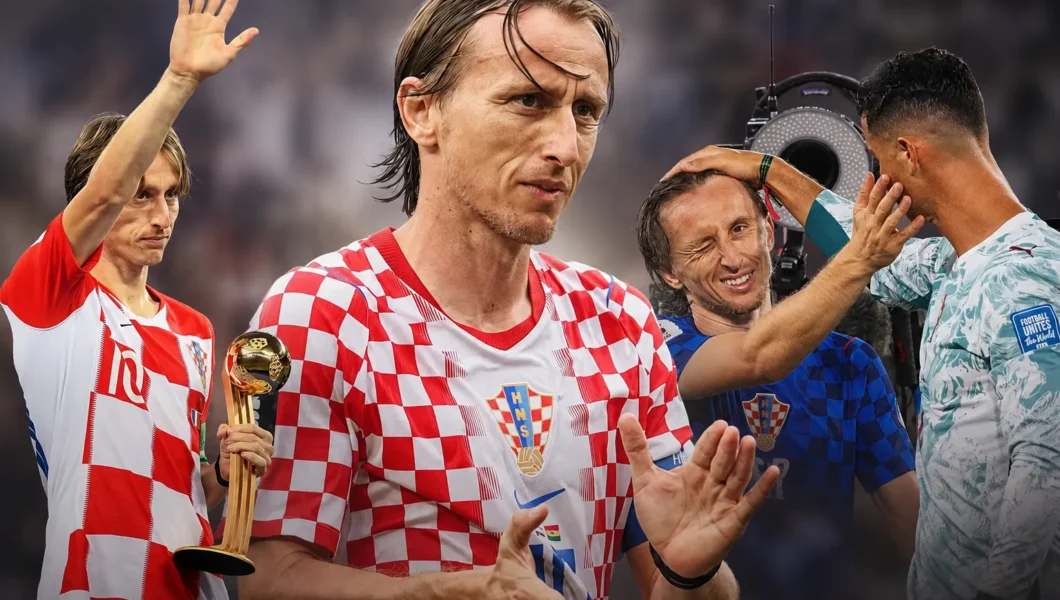
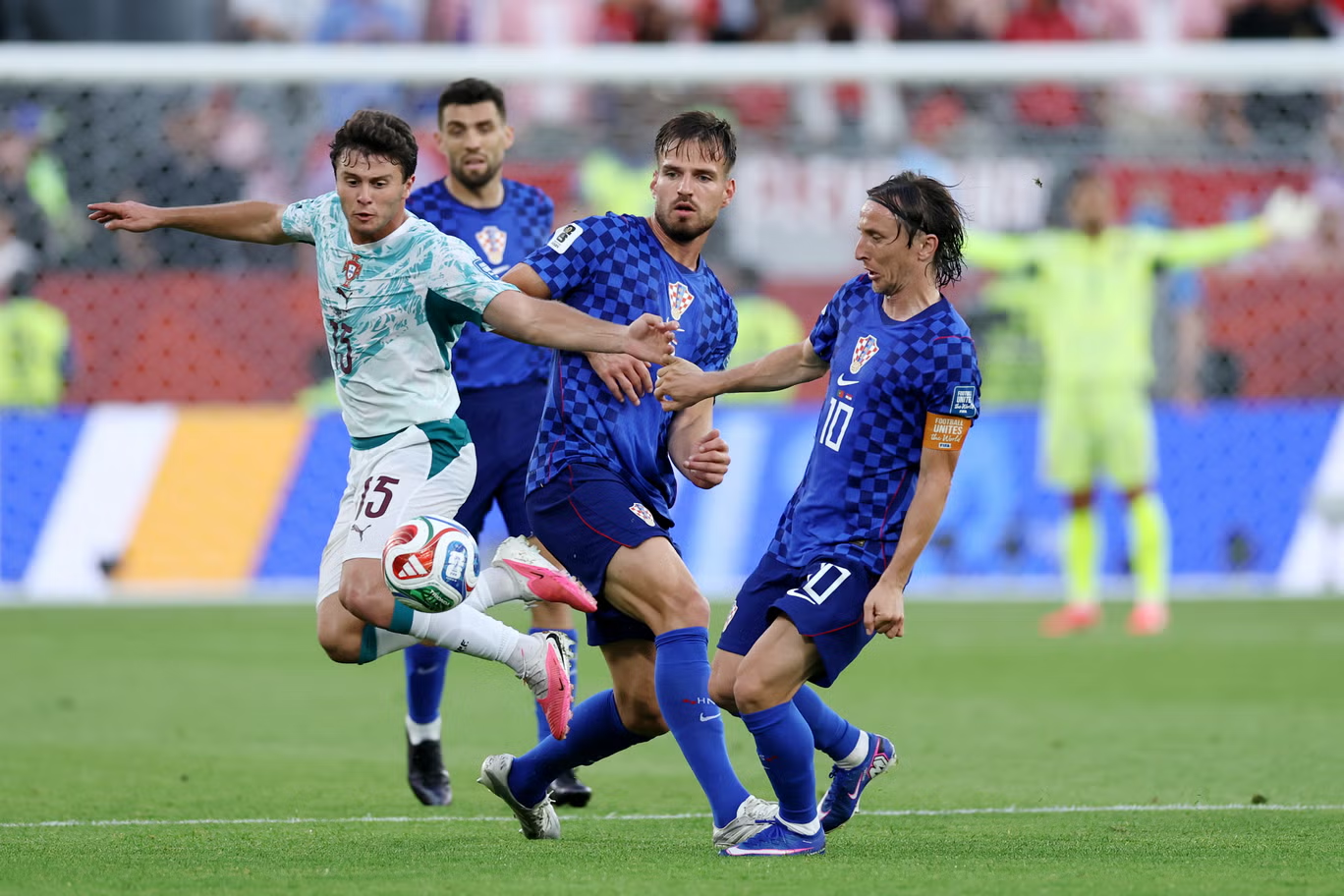
Luka Modric World Cup ended in real heartbreak. Croatia lost 2-1 to Portugal in the Round of 32, and a last-minute equaliser that could have saved them was chalked off by VAR. At 40 years old, with 202 caps to his name, Modric walked off the world’s biggest stage for what looks like the very last time. He left the way he always played: with dignity, with fight, and with the full respect of everyone watching.
There is a moment in sport when you just know. The final whistle goes. A great player leaves the pitch. And something changes. You feel it in the crowd. The players feel it. Everyone watching feels it too. That moment came in Toronto on 3 July 2026. Croatia’s captain and heartbeat played his last World Cup match, and it ended in real pain.
This was not just a game ending. It was the close of one of the most brilliant international careers football has ever seen. And fittingly, cruelly, it ended in controversy.
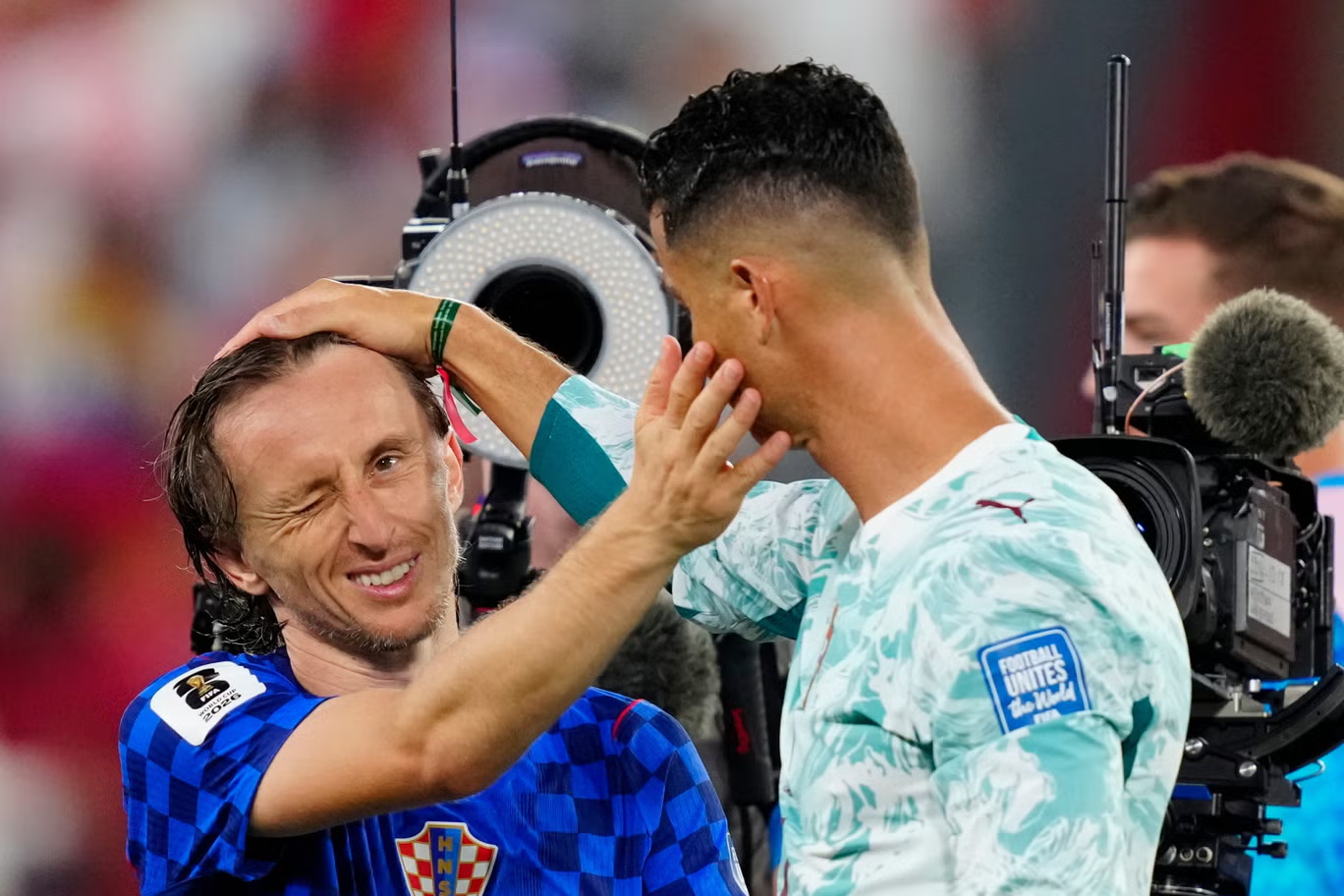
The Moment That Broke Croatian Hearts
Croatia were on their way out. You could tell. They were losing 2-1 with the clock deep into stoppage time. Hope was nearly gone.
Then Josko Gvardiol slid in and forced the ball home. The equaliser arrived just when it seemed all over. Croatian fans went wild. Extra time, a stage Croatia know very well, looked certain.
It did not last.
VAR stepped in. After a review, the goal was ruled out for offside during the build-up. The margins were tiny. But the decision was final. Portugal went through. Croatia went home.
For Modric, his World Cup story ended not with a cheer, but with quiet disbelief. He stood there and took it in. A man who had given his country everything, watching a screen decide his fate.
That is the hard truth about modern football. Technology now settles moments that once lived in raw emotion and celebration. On this night, it worked against a legend on his final appearance. That hurts. But it does not erase what he built over 20 years.
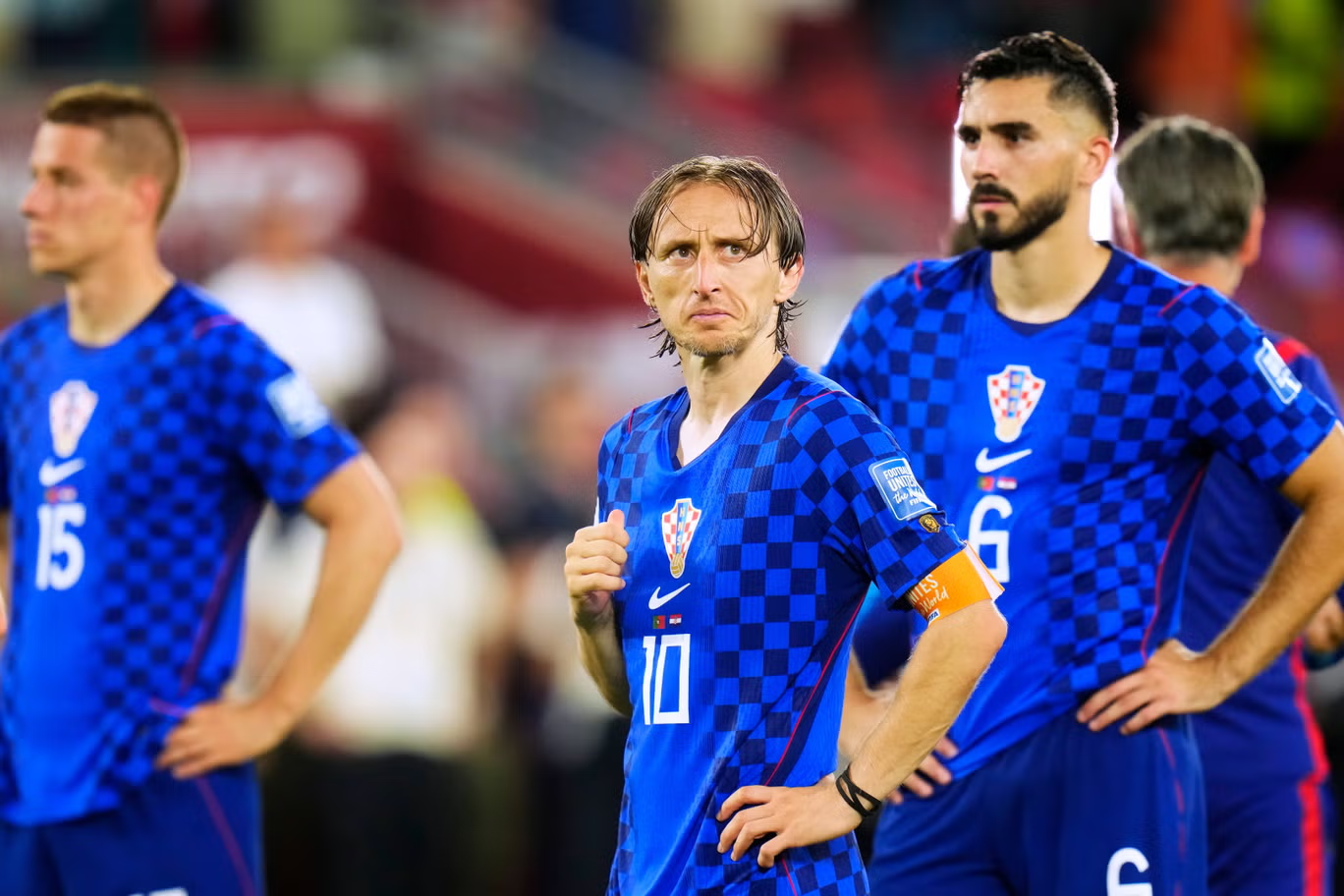
A Defiant Performance at 40
Age is meant to slow footballers down. Nobody told Modric that.
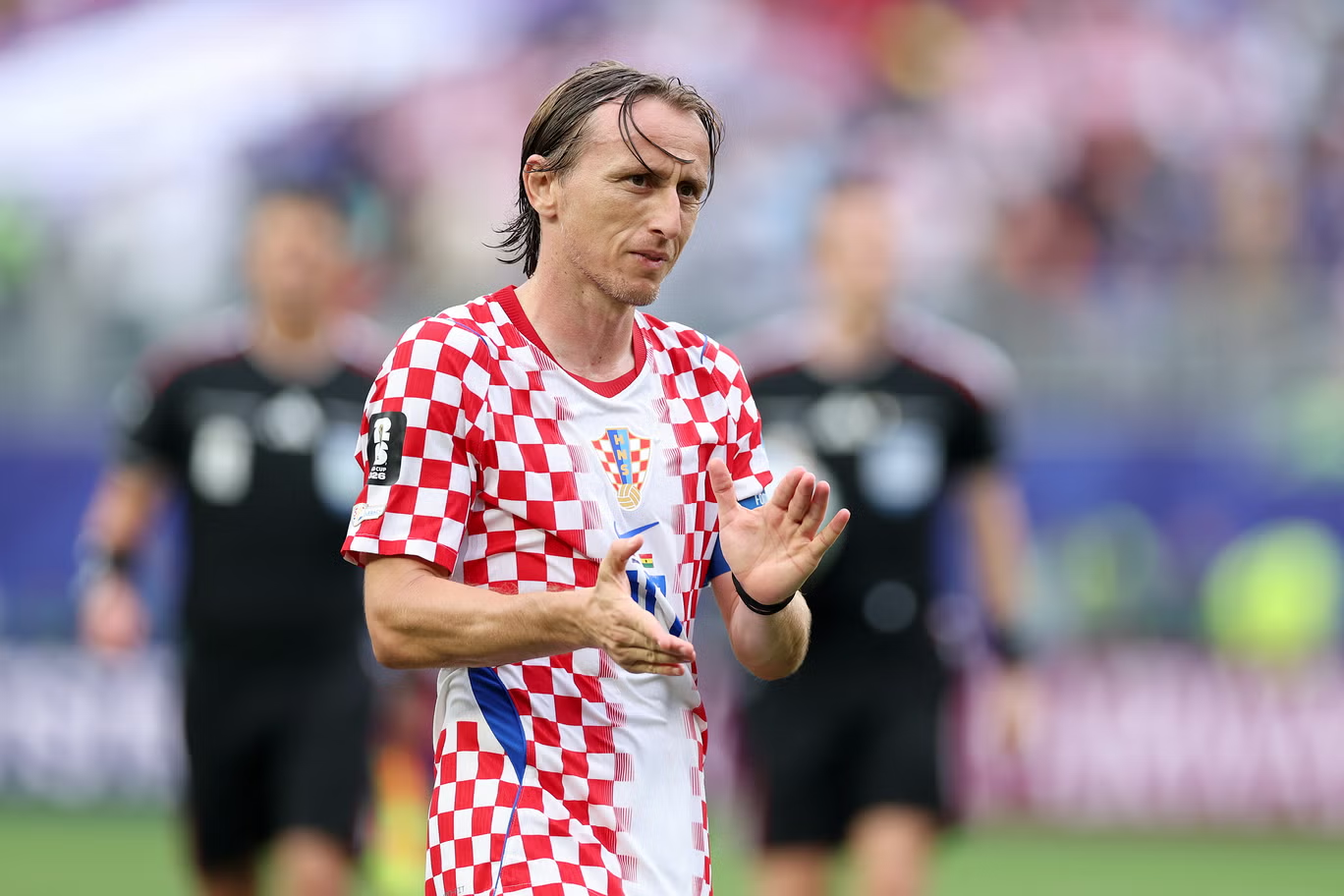
At 40, he was still one of the best players on the pitch. The numbers prove it. He had 66 touches, the most in the Croatia team. He made three tackles. He put in two dangerous crosses in the second half. These are not the numbers of someone saying a quiet farewell. They are the numbers of a leader who fought until the very last kick.
Watch how he plays and you quickly understand why. He does not need raw pace. He uses his head. He reads the game before it happens. He finds space others simply cannot see. He spots the right pass before the gap even opens up.
That ability kept him at the top long after most players his age had hung up their boots. It is worth remembering. Football is not all about speed and power. It is about making good decisions under pressure. Modric did that better than almost anyone in the history of the game.
His manager put it well. “Luka played very well. Once again, he was one of our most important players,” said Zlatko Dalic. “I am very sorry it ended like this for him. He once again showed his character and his quality. He led Croatia until the very end.”
That final line says it all. He led Croatia until the very end. As goodbyes go, very few are more fitting than that.
From a War Zone to World Football
To really understand how special Modric is, you need to go back to the start. And the start was not easy.
Modric was born in 1985 in Zadar, in what is now Croatia. When war broke out in the early 1990s, his family had to leave their home. He grew up as a refugee. Part of his childhood was spent living in a hotel, kicking a ball around a car park just to keep going.
Most young players face setbacks. Very few face anything like that. Yet this is where his story becomes something bigger than football.
He was told he was too small. Too slight. Too weak for professional football. Scouts doubted him. Coaches worried about his size. On paper, he had every reason to walk away.
He did not. He kept going. He kept learning. He turned his small frame into a strength by becoming smarter and quicker in thought than everyone around him. That is the real lesson from his early years. Talent gets you started, but sticking at it keeps you going.
He came through Dinamo Zagreb. He earned a move to Tottenham Hotspur in England. Then in 2012, he joined Real Madrid. That is where a good career turned into a historic one.
The Numbers Behind the Legend
Stats do not tell you everything. But with Modric, they tell you a great deal.
Here is what he achieved for Croatia at international level:
- 202 caps for Croatia, placing him among the most-capped players in the history of the game
- 23 World Cup appearances across five tournaments, from 2006 to 2026
- A World Cup final in 2018 and a third-place finish in 2022
- Started all four of Croatia’s matches at the 2026 World Cup, at the age of 40
At club level, the list of honours is just as impressive:
- Six Champions League titles with Real Madrid, the toughest prize in club football
- Four LaLiga titles in Spain
- 23 professional seasons, mostly at Dinamo Zagreb, Tottenham, and Real Madrid
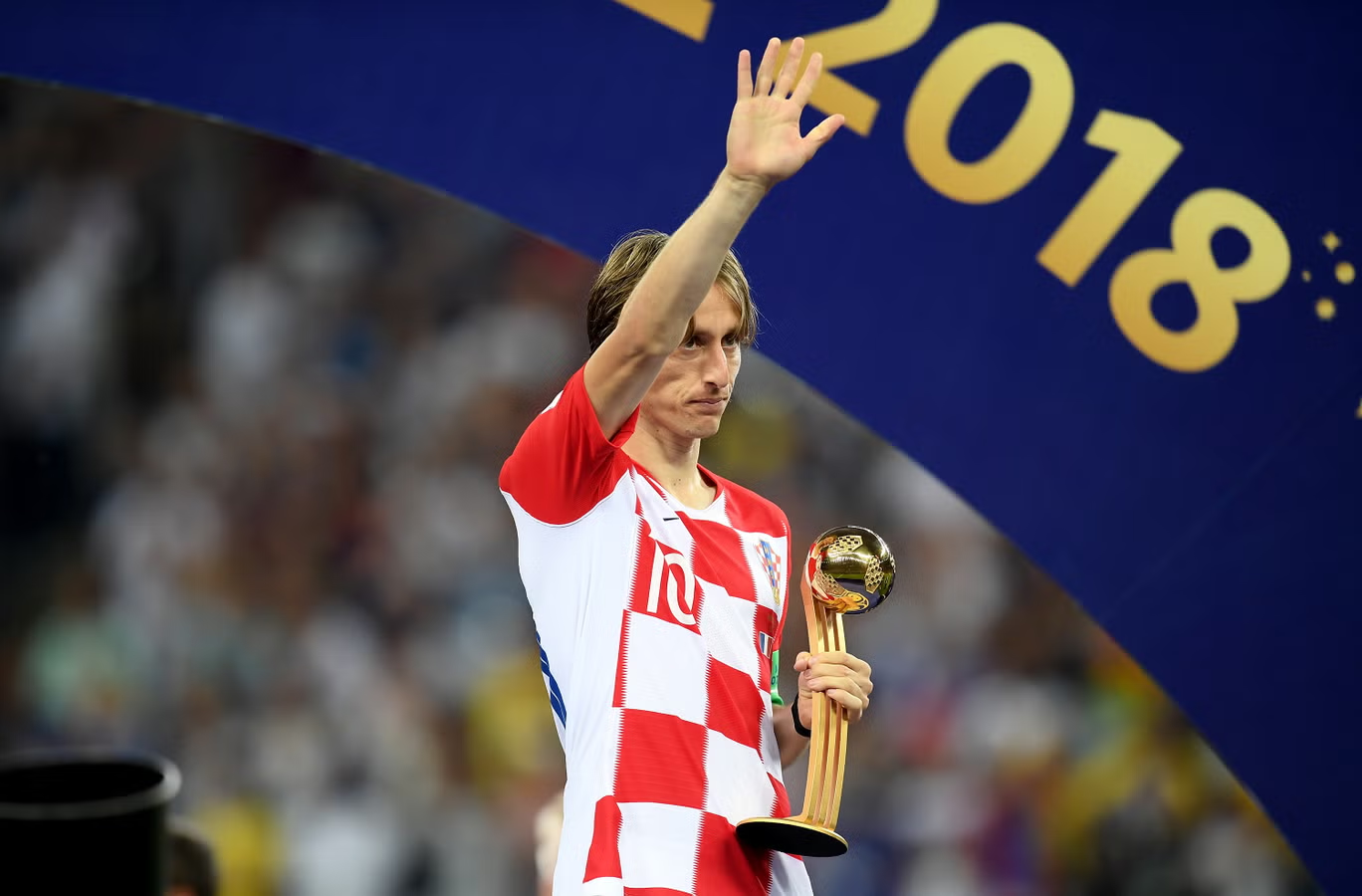
- A Ballon d’Or in 2018, the top individual prize in football, ending a long run of wins by Lionel Messi and Cristiano Ronaldo
Even his final club season says everything. Playing for AC Milan at 39 and 40, he led the team in touches, pass completions, progressive passes, carry distance, and ball recoveries. Simply put, he was still running the show.
Numbers like these do not happen by chance. They come from years of good choices, careful preparation, and never settling for less. Modric shows you what staying at the top for a long time actually looks like.
What His 2026 Tournament Really Showed
His final World Cup did not begin well. That is worth saying honestly.
In the group stage, Croatia lost 4-2 to England. Modric gave away a penalty and was taken off before the hour was up. For a player of his standing, it was a difficult moment. People began to wonder if this tournament had come one year too late for him.
Then he gave them his answer. Against Ghana, he whipped in a corner in the 83rd minute that led to Nikola Vlasic’s crucial header. He found his rhythm again. He got back to his best when his team needed him most.
That story tells you something really useful. One bad match does not decide who you are. What counts is how you come back from it. Modric came back the way he always has: by working hard and trusting himself.
Tributes From the Very Best
When your rivals speak highly of you, it means more than most praise. And Modric earned it from the biggest names in the game.
Cristiano Ronaldo, his former Real Madrid teammate, spoke after the final whistle. “I played with Luka so many years. We are nearly the same age. I think he is a legend of football. He is still a legend of football.”
Notice that last word. Still. Not “was.” Even now, at 40, Ronaldo puts him among the very best. Coming from one of the most competitive players in history, that means a great deal.
Portugal manager Roberto Martinez went even further. He talked about the part of football that most people overlook: thinking.
“You are talking about a player that, with the longevity that he has, plays the game like a young man with the capacity to think,” Martinez said. “There are not many times when you speak about the thinking part of the game. Everything is about tactics, the technical side, the physical side. Not many times do we talk about a player who can put his foot on the ball and make the right call. I think Modric is a beautiful example of that.”
The thinking part of the game. That phrase sticks with you. Modric won with his brain as much as his feet. That is why he lasted so long. And that is why young players should watch how he played and learn from it.
What Comes Next for Croatian Football
Now for the tougher question. What happens to Croatia without him?
Croatia’s rise over the past decade has been brilliant. A country of under four million people reached a World Cup final in 2018 and finished third in 2022. That does not happen often. Bigger, richer nations would love those results.
A huge part of that success was built around one person. So the road ahead is a real challenge.
Dalic gave a hint of what is coming. “Only God knows what will happen in the next four years. We will see. We will talk about it in Croatia.” He also spoke about giving younger players more chances to grow and learn.
Here is what Croatia need to do now, put simply:
- Build a new identity. The team cannot keep relying on one midfield genius to do everything.
- Bring through the next generation. Young players need proper game time and real trust from the manager.
- Find a new leader. A captain does more than wear an armband. Croatia need someone who can speak up and set standards in the dressing room.
Nobody can truly replace Luka Modric. That is not a negative thing to say. It is simply true. But football always moves forward. The best way Croatia can honour him is to keep competing, keep believing, and keep achieving more than people expect. That is the standard he set for them.
Football Folklore, Forever
Step back and look at the full picture. The Ballon d’Or in 2018. The Golden Ball as best player at that World Cup. Third in the world again in 2022. Six Champions League titles. The driving force behind a Croatian generation that beat every expectation.
What Modric achieved, especially for such a small country, is in a class of its own. He did not just take part in World Cups. He shaped them. He made Croatia matter on the world stage. He made that red-and-white chequered shirt mean something far beyond his country’s borders.
The farewell in Toronto was not the ending he deserved. But few great careers end the way we would write them. That is not really the point.
What matters is everything that came before it. The refugee kid who was told he was too small. The 202 caps. The five World Cups. The final in Moscow. The trophies, the tears, and a man who simply refused to let time catch up with him.
Time did catch up, in the end. But it took far longer than anyone thought it would. And that, more than any result, is the true measure of Luka Modric.
Goodbye, Luka. And thank you.
FAQs
Croatia lost 2-1 to Portugal in the Round of 32. They thought they had grabbed a late equaliser through Joško Gvardiol, but VAR ruled it out for offside in the build-up. That decision ended their tournament and sent Portugal through to face Spain.
Not officially, but it looks very likely. At 40 years old, this was almost certainly his last World Cup. His manager Zlatko Dalić stayed cautious, saying, “Only God knows what will happen in the next four years. We’ll see.” So the door is not fully shut, but time is not on his side.
Modric earned 202 caps for Croatia and made 23 World Cup appearances across five tournaments. At club level, he won six Champions League titles and four LaLiga titles with Real Madrid. He also won the Ballon d’Or in 2018, breaking the long run of wins by Lionel Messi and Cristiano Ronaldo.
Croatia looked to have equalised in stoppage time through Gvardiol. After a review, VAR spotted an offside in the build-up that led to the goal. The margins were tiny, but the decision was final, and the goal was chalked off.
Croatia now face a big rebuild without their leader and talisman. They will need to blood younger players, build a new style of play, and find fresh leadership on the pitch. No one truly replaces Modric, but the country has punched above its weight before and will aim to do so again.

No Comments