

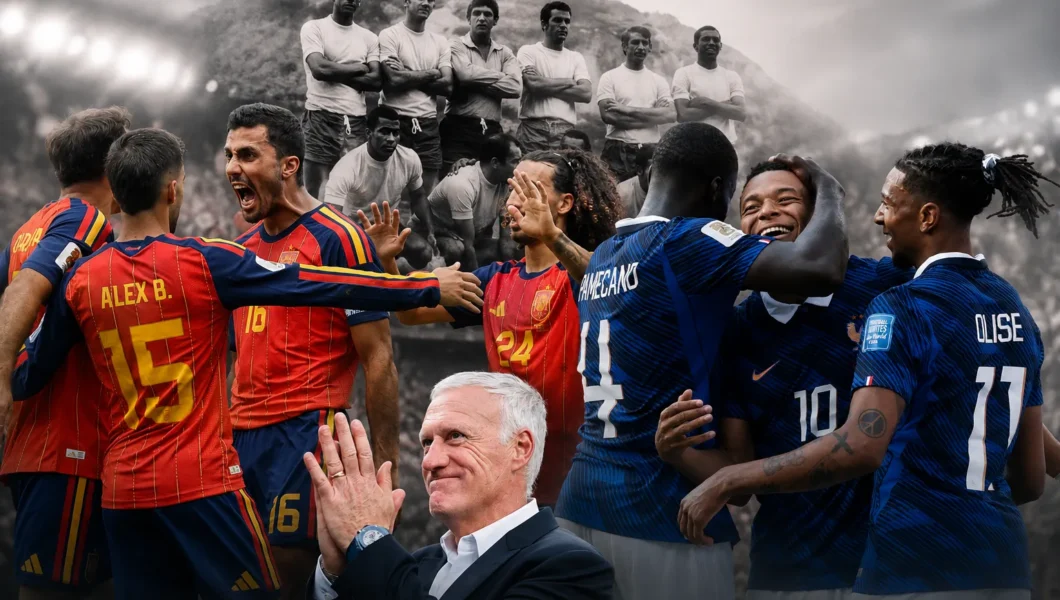
France have scored 13 goals in four 2026 World Cup matches, with Kylian Mbappe, Michael Olise, and Ousmane Dembele combining for 11 goals and nine assists. Didier Deschamps has changed from a cautious organiser into someone who trusts his attackers to play freely. France look like the strongest team in the tournament, but Spain’s midfield and a possible Argentina rematch could still trip them up.
Four games. Thirteen goals. Two conceded.
Those three facts tell you a lot about France at the 2026 World Cup. But they do not tell the full story.
What makes this French team different from the ones before is not just the goals. It is the style. There is a freedom between the attacking players that past France sides never quite had. Players read each other well. Positions feel like guidelines, not rules. Goals come from everywhere.
Didier Deschamps has managed France for 14 years. People have long seen him as a cautious manager who wins without always being exciting. That view is changing fast. And at the heart of that change are three players: Kylian Mbappe, Michael Olise, and Ousmane Dembele. They have made every France game worth watching.
This article looks at how France built this squad, what makes them so difficult to stop, and whether they have what it takes to go all the way.
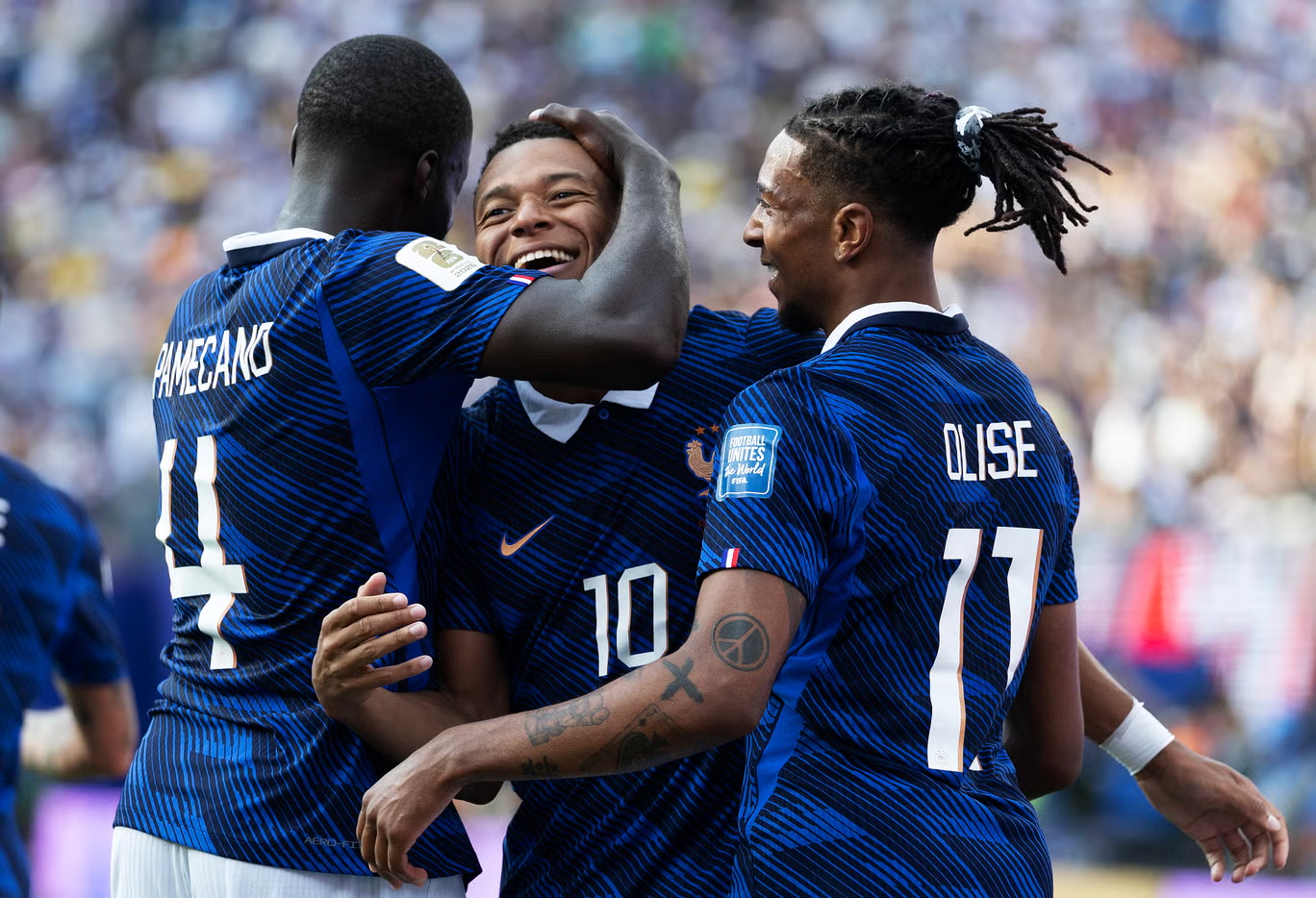
Mbappe, Olise, and Dembele: “They Speak the Same Football Language”
The numbers from France’s first four games are impressive. Mbappe, Dembele, and Olise have combined for 11 goals and nine assists across the group stage and the round of 32. Add Bradley Barcola, who has chipped in with two goals and an assist without always starting, and 12 of France’s 13 tournament goals have come from that attacking group alone.
Mbappe has scored six times in four games, putting him level with Lionel Messi at the top of the Golden Boot standings. He now has 18 World Cup goals in 18 appearances. That is just one behind Messi’s all-time record.
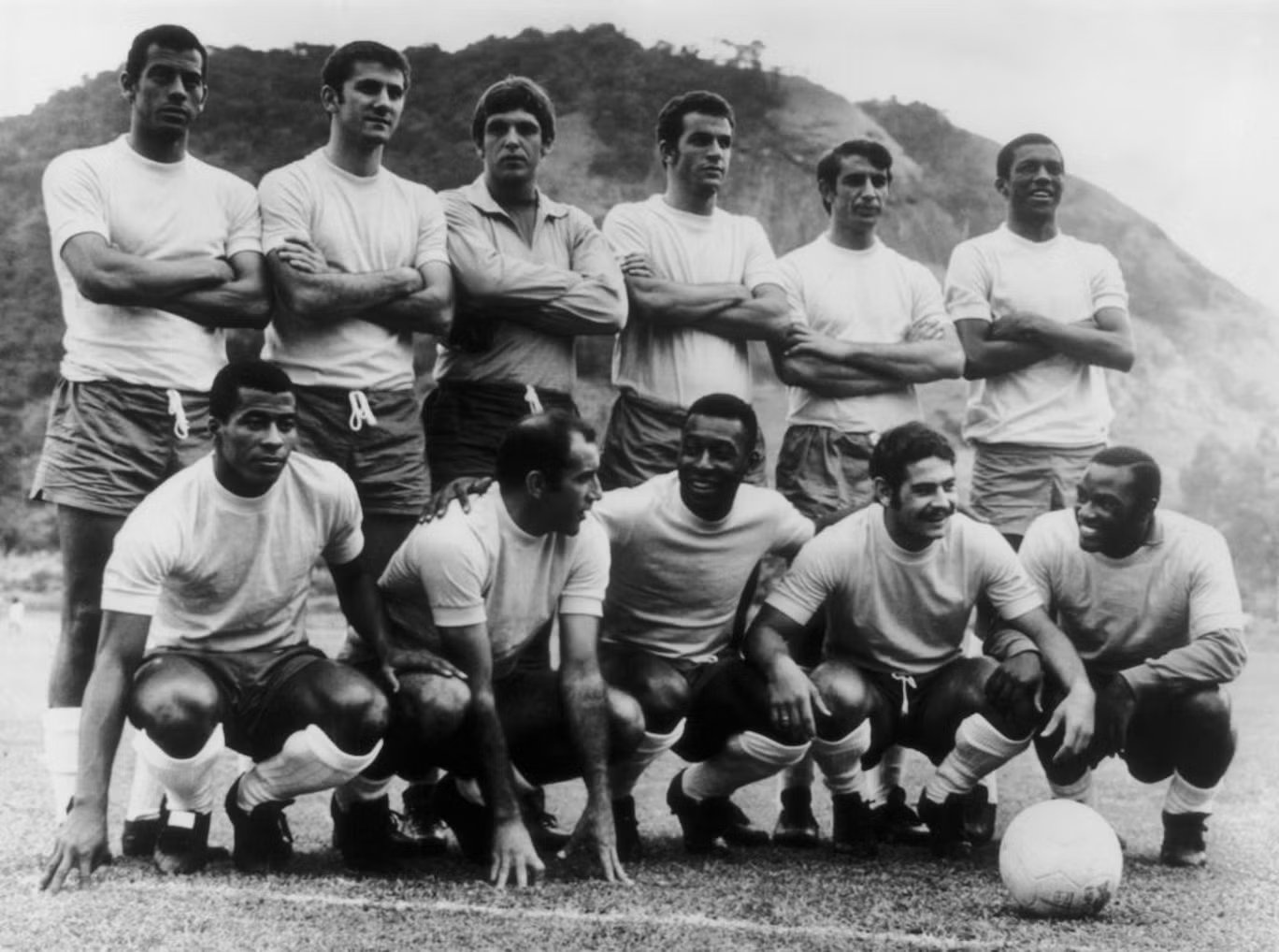
Olise has been just as important, even if he gets less attention. His five assists leave him one short of matching Pelé’s single-tournament assist record from 1970. He and Mbappe have set up six World Cup goals between them, more than any other attacking pair in tournament history.
Deschamps knows exactly what he has. “He’s in that category,” the France coach said of Olise. “Kylian has been there for a long time, but because of what Michael is doing with Bayern Munich and what he produces for us, yes, he belongs there too, just like Ousmane.”
Beyond the stats, the connection between these players is clear. They share a football understanding that makes set tactics feel less important. “The understanding between our attacking players is excellent,” Deschamps said after the 3-0 win over Sweden. “It is not only that they get on well as people. They speak the same football language, and from that point on, everything moves in the right direction.”
How Does This France Side Compare to the Greatest World Cup Attacks?
Comparing this France attack to the best in World Cup history is no longer far-fetched. The last attacking trio to score more than France’s current three in a single tournament was Brazil’s 2002 front line. Ronaldo scored eight goals, Rivaldo five, and Ronaldinho two. Their combined 15 goals helped Brazil win a fifth world title.
France have not reached those numbers yet, but the tournament is not over. And when midfielder Aurelien Tchouameni says, “When you look at the attacking potential we have, even in the history of football, it’s very rare,” he is speaking from inside a dressing room that genuinely believes it belongs in that conversation.
Mbappe was direct: “We’re very much more offensive than in 2018 and in 2022. It’s the continuity of what we started to build throughout Didier Deschamps’ time over the last 14 years. You can see the evolution, his personal touch, and the arrival of a lot of young talent.”
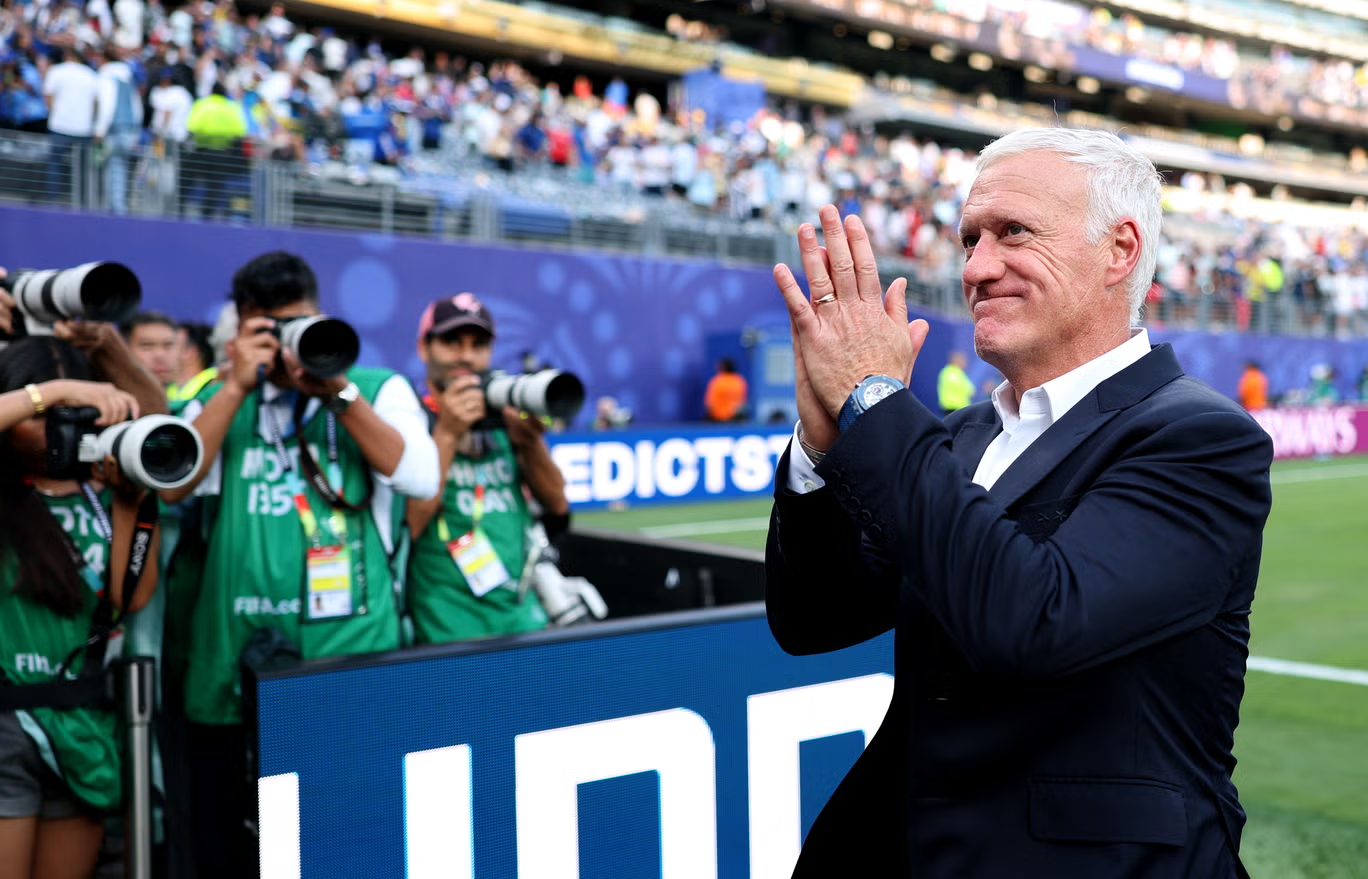
Deschamps’s Evolution: From Cautious Manager to Attacking Architect
Deschamps has always delivered results. Winning the World Cup in 2018 and reaching the 2022 final, where France lost on penalties to Argentina after a remarkable comeback, proves that. But his past teams were often criticised for not making the most of their talent. They were well-organised but rarely thrilling.
This France squad feels different. Deschamps has convinced a group of world-class attackers to work just as hard without the ball as they do with it. That is not a simple thing to achieve. “The collective comes before everything else, and Kylian, as captain, is the best example of that,” Deschamps said.
The squad depth is also impressive. Jean-Philippe Mateta scored 12 Premier League goals this season and has barely played. Marcus Thuram’s injury, after a 13-goal Serie A campaign, has barely been noticed. Rayan Cherki offers another quality option from the bench. France could put out two very different forward lines and still be dangerous.
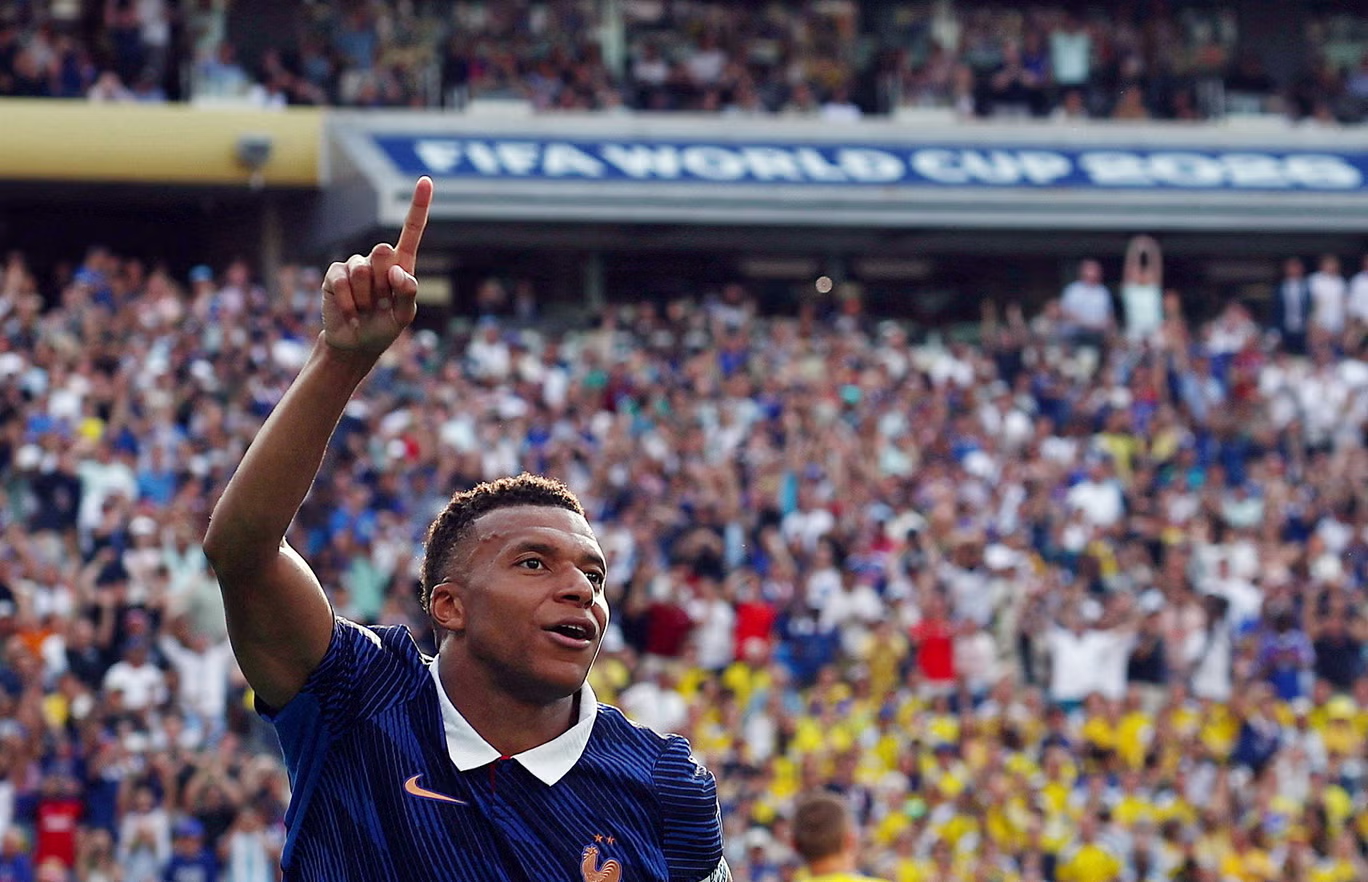
The Tactical Change: From a Rigid 4-2-3-1 to Free, Instinct-Driven Football
Deschamps started the tournament with something close to a lopsided 4-2-4 or 4-2-3-1. It was built around giving each attacker a role similar to what they do at their clubs. Mbappe led the line with freedom to move. Olise played on the right wing, as he does for Bayern Munich. Dembele played in the number 10 space behind Mbappe, much like at Paris Saint-Germain.
In the opening game against Senegal, problems appeared. The gaps between the attacking line and the midfield pair of Adrien Rabiot and Tchouameni were too big. Senegal found space in those areas and created several good chances.
Deschamps made changes at half-time and has kept improving things in each game since. The biggest decision was swapping the roles of Olise and Dembele. Asking the reigning Ballon d’Or winner to move from an attacking midfield role takes confidence. But it worked. Dembele’s energy on the right wing gave France a defensive shape they had been missing. His pressing from that position helped France set up in a more compact 4-4-1-1 without the ball.
Then Dembele scored a hat-trick against Norway. Three goals from the right wing in the first half. The tactical change had not just made France more solid at the back; it had also made Dembele a proper goal threat.
For Olise, moving to the number 10 role put him in the spaces where he does his best work. Unlike Dembele, who often drops deep, Olise times his forward runs well. That gives Mbappe a smart partner to link up with in behind defensive lines. Their connection is now central to how France attack.
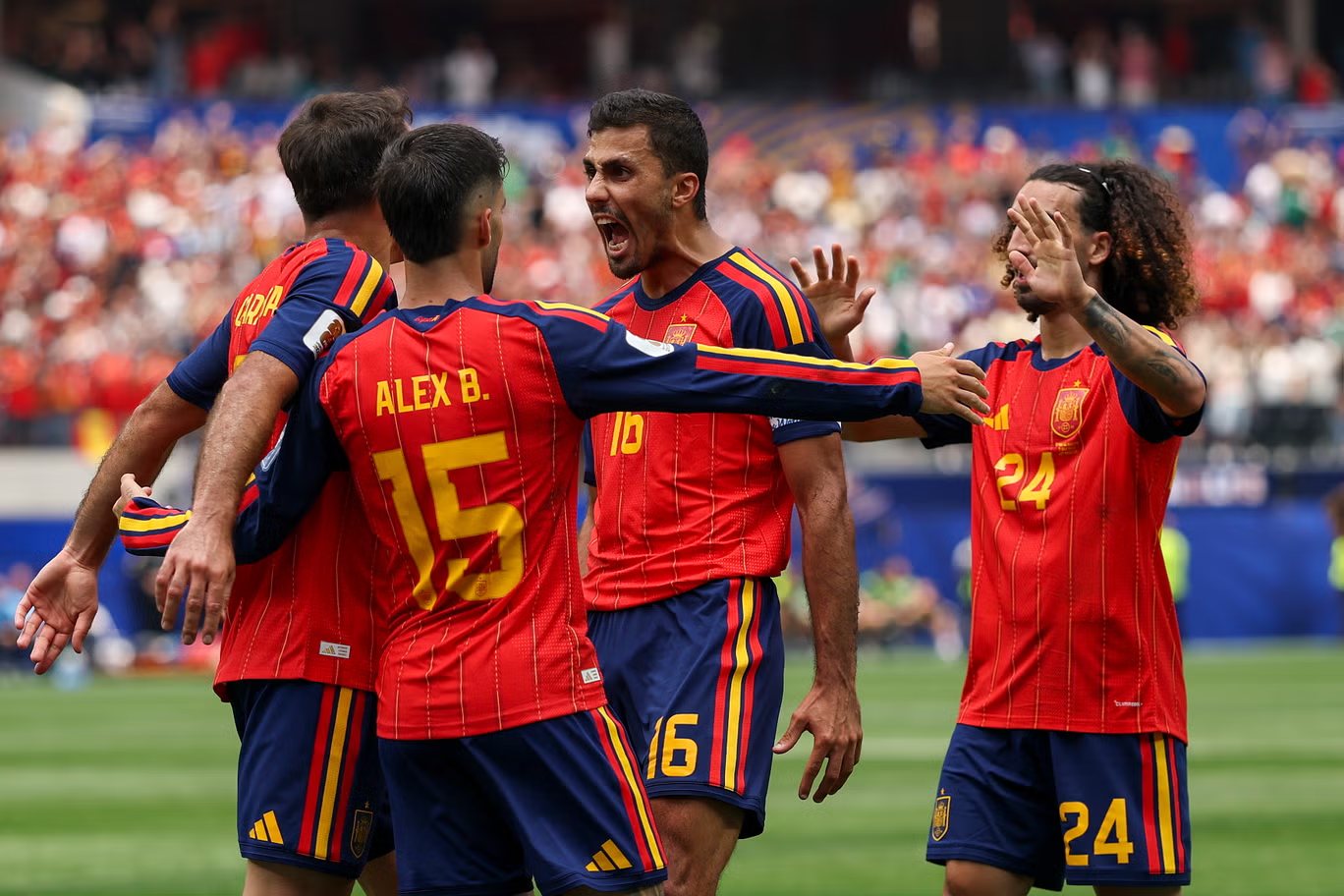
‘Relationism’: Why Opponents Find France So Hard to Prepare For
On paper, France play a 4-2-3-1. In practice, that shape becomes less important once they have the ball.
Mbappe moves into central areas when the game calls for it. Dembele switches between the right wing and cutting inside. Olise drops deep to control the tempo, then makes late runs into scoring positions. Barcola appears wherever the defence has the most space. The constant movement forces defenders into very difficult choices. Press one runner and another opens up. Sit deep and France pick you apart with combinations.
This understanding goes deeper than coaching instructions. Many of these players came through France’s youth teams together. They have developed shared instincts over years, not weeks. What looks like improvisation on the pitch is actually the result of deep, shared familiarity. They do not need to look up to know where a team-mate will be.
Key Players: Mbappe’s Pressing, Olise’s Creativity, and the Midfield Engine
People used to talk about Mbappe mainly as a finisher. Quick, clinical, and deadly in front of goal. That is still true, but there is more to his game now.
At Real Madrid last season, his pressing was part of a structured plan. At this World Cup, according to FIFA tracking data, Mbappe is pressing at more than double the rate he did in La Liga last season. He is getting involved earlier, winning the ball in higher areas, and taking on defensive work his club performances rarely required of him.
This matters. It changes how opponents think about defending. When the most dangerous striker in the tournament is also forcing you into errors in your own half, no defensive shape gives you a complete answer.
Behind Mbappe and the forwards, Rabiot and Tchouameni provide the stability that lets the attackers play freely. Tchouameni often drops to create a back three in possession, giving France extra numbers in the build-up. Rabiot’s physicality and passing keep the midfield competitive. Jules Kounde, playing further forward than a typical right back, offers defensive cover while also making clever runs that free up Dembele in one-on-one situations.
France’s Weaknesses: Where Can They Be Hurt?
No squad is without weak points. Conceding twice in four games is a reminder of that.
The two-man midfield of Rabiot and Tchouameni works well when France’s shape stays organised. But against teams that overload the central areas, that pairing can be exposed. There have been moments, most clearly against Senegal in the first half, when the gap between the defensive line and midfield was large enough for opponents to build dangerous attacks.
Set pieces are a separate concern. France have not been tested badly from dead balls in this tournament, but against strong and well-coached opponents, that could become a problem.
The most obvious weakness is in midfield numbers. Spain, a likely semi-final opponent, play with three central midfielders who control possession and push teams back. France’s system, based around two central midfielders supporting a free-running attack, could be outnumbered if Spain control that part of the pitch.
The Road Ahead: Spain, and the Weight of Argentina
France’s next opponents are Paraguay in the round of 16. Paraguay knocked out Germany, which shows they can handle pressure and frustrate well-organised teams. It will not be straightforward.
After that, Morocco is the likely quarter-final opponent, and then possibly Spain in the last four. Spain’s ability to control the game through their midfield is a very different challenge to anything France have faced so far. The teams France have beaten so far are ranked between 18th and 63rd in the FIFA rankings. That level of opponent will not continue.
And then there is Argentina. A possible final rematch against the reigning world champions, who beat France on penalties in Qatar in 2022, would carry enormous weight. That defeat hurt. Mbappe scored three times in the final and still ended up on the losing side. A rematch, if it happens, would be unlike any other game at this tournament.
Can This France Side Write Football History?
Every great tournament generation gets one chance. The players are fit, in form, and playing with a level of understanding that usually takes much longer to build. That chance is here right now.
Deschamps has described this squad as the result of fourteen years of steady building. Mbappe has called it the “continuity” of something that started long before this tournament. Both are right. What feels like a sudden peak is actually the result of years of investment in talent, trust, and a shared way of playing that finally has room to express itself.
France are not the finished article. Tougher games will reveal things the group stage could not. But the combination of attacking depth, tactical flexibility, defensive solidity, and team intelligence makes them the most complete side at the 2026 World Cup.
The question is no longer whether this France team belongs in the conversation about great tournament sides. They are already part of it.
The question is whether they finish the job.
FAQs
France have scored 13 goals in their first four matches of the 2026 World Cup, and conceded only twice. The other came from the attacking quartet of Kylian Mbappe, Ousmane Dembele, Michael Olise and Bradley Barcola.
Mbappe is one goal behind Lionel Messi’s all-time record of 18 goals in 18 World Cup appearances. At the 2026 World Cup, Mbappe has scored six times in four games, level with Messi at the top of the Golden Boot standings.
The biggest change has been swapping the roles of Michael Olise and Ousmane Dembele. Moving Dembele to the right wing and Olise to the number 10 role made France more compact defensively and gave Olise a position where his creativity helps Mbappe directly. Dembele went on to score a first-half hat-trick against Norway from that right wing position.
France’s main weak point is their two-man central midfield, which can be stretched by teams that overload the centre. Spain’s three-man midfield is the clearest threat to France’s structure. Set pieces are a secondary concern, though France have not been badly tested in this area so far.
France lost the 2022 World Cup final to Argentina on penalties, despite Mbappe scoring a hat-trick in one of the most dramatic finals ever. A possible 2026 rematch carries real psychological weight for the French squad. It would give Deschamps’s side the chance to make up for one of the most painful results in recent French football history.
Olise has assisted five goals in France’s first four matches at the 2026 World Cup and needs one more to match Pelé’s single-tournament record of six, set in 1970. Olise and Mbappe have also combined for six World Cup goals as a pair, the most by any attacking duo in the tournament’s history.



No Comments