

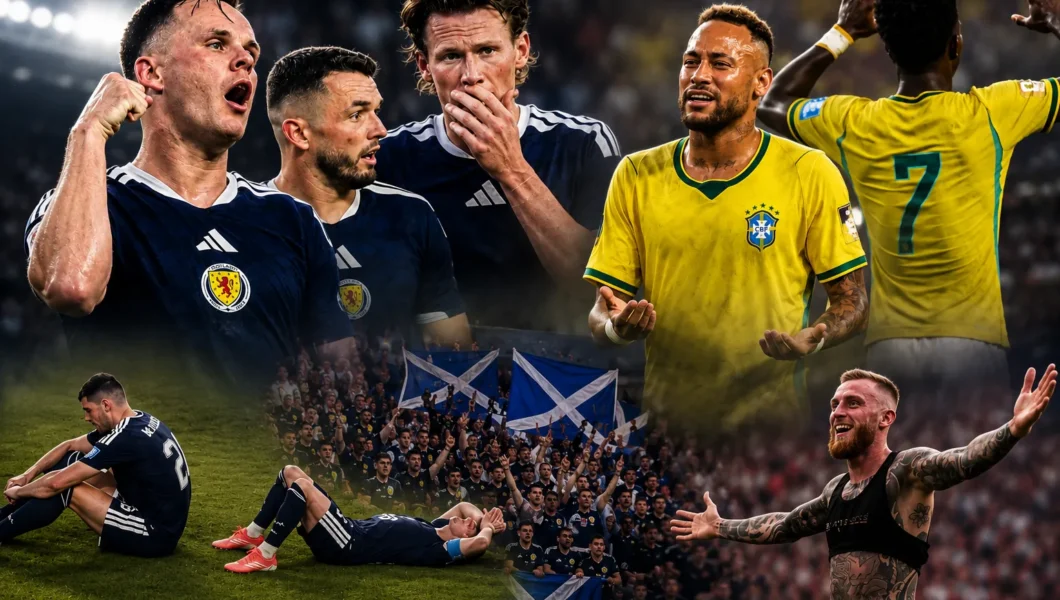
Scotland were knocked out of the 2026 FIFA World Cup at the group stage. They came third in Group C with three points. They beat Haiti, lost 1-0 to Morocco, and lost 3-0 to Brazil. Steve Clarke quit as manager just 30 days after signing a new deal. The exit showed up some deep problems: a shaky defence, an ageing squad, not enough attacking threat, and a worryingly thin supply of new talent.
The Tartan Army turned up in the United States ready for a party. And what a party it was. Thousands of Scotland fans poured into Boston and Miami, turned stadiums navy blue, and made an atmosphere that Scottish football rarely gets on the world stage. Scottish Football Association CEO Ian Maxwell called them “exceptional ambassadors for our country and our national game.” For once, that was bang on.
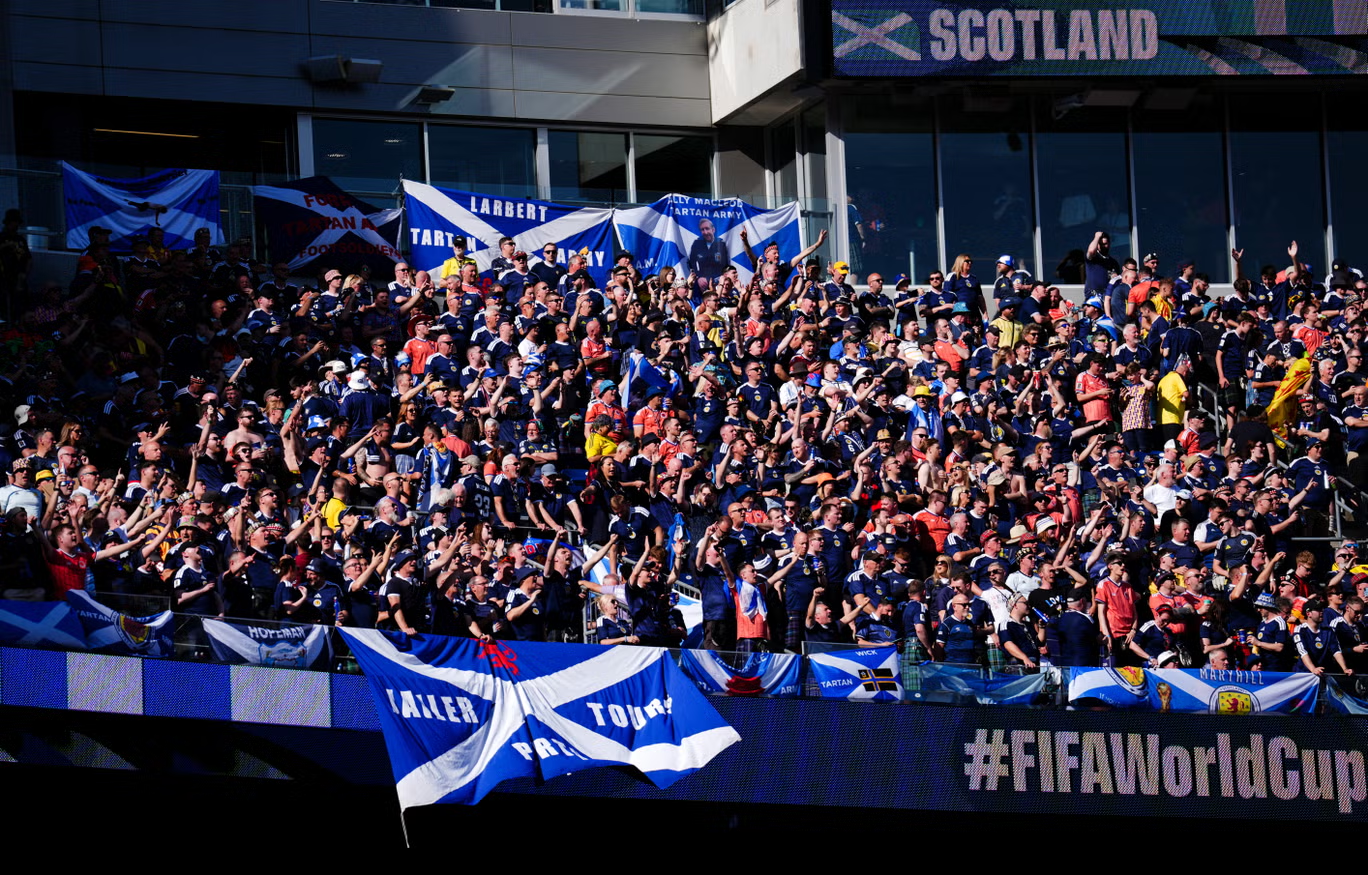
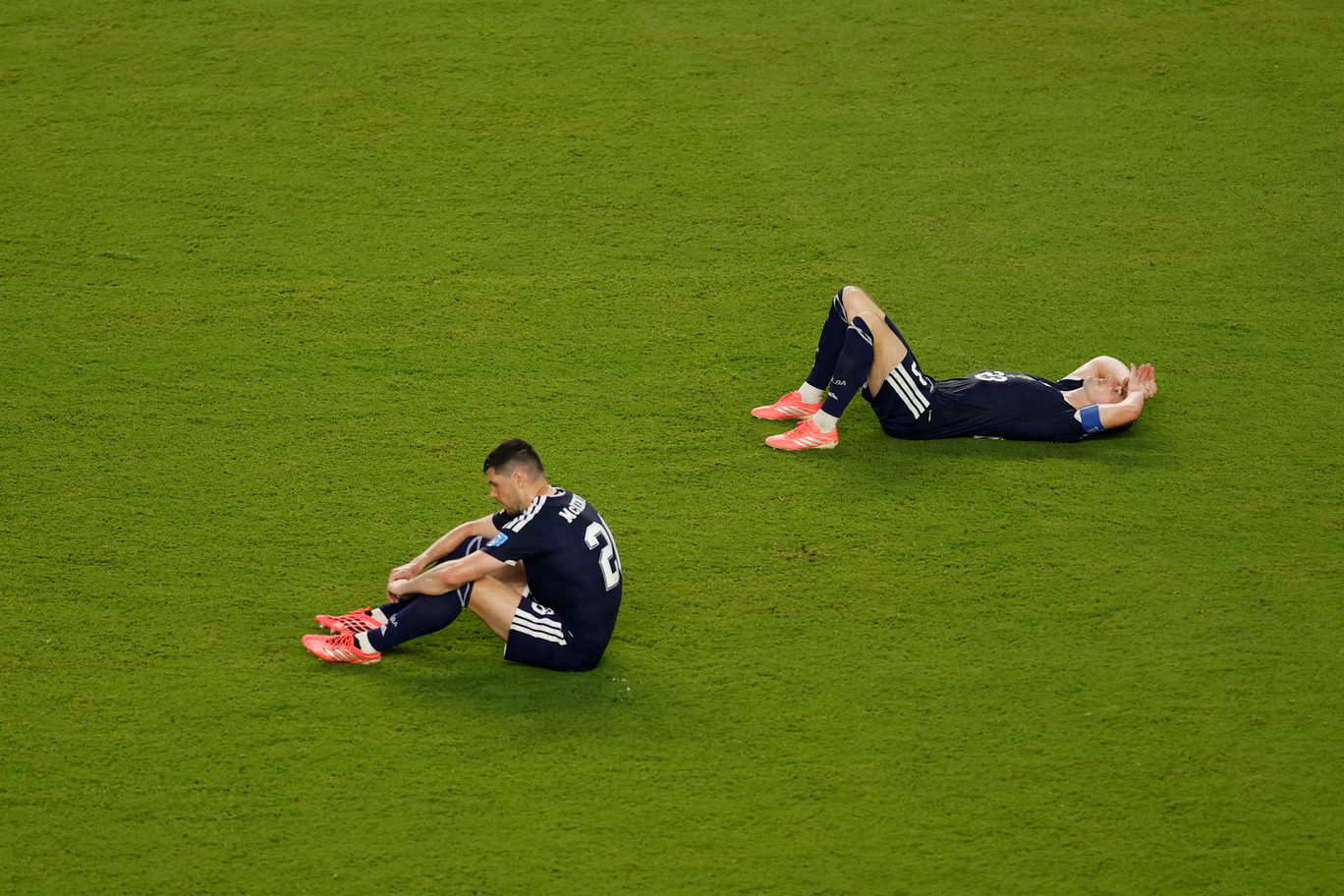
But once the final whistle went at Hard Rock Stadium on June 24, the noise died down and the numbers told a grim story. Scotland finished as the 11th-ranked third-placed team out of 12. Their goal difference was minus-three. Steve Clarke, the man who had taken the Tartan Army back to the big stage for the first time in 28 years, quit within days. Opta had already put Scotland’s chances of going through at just 0.07% before Croatia confirmed the exit with a 2-1 win over Ghana in Group L on June 27.
Scotland’s 2026 World Cup had some truly historic moments. But it also laid bare problems that a tough draw cannot fully explain. The hard truths need facing head-on.
What Did Scotland’s Group Stage Results Really Show?
Group C was always going to be hard. Brazil, one of the best sides on the planet, and Morocco, who reached the semi-finals at Qatar 2022, were tough opponents. Scotland knew this going in.
But it was the way they lost, not just the results, that worried fans and pundits alike.
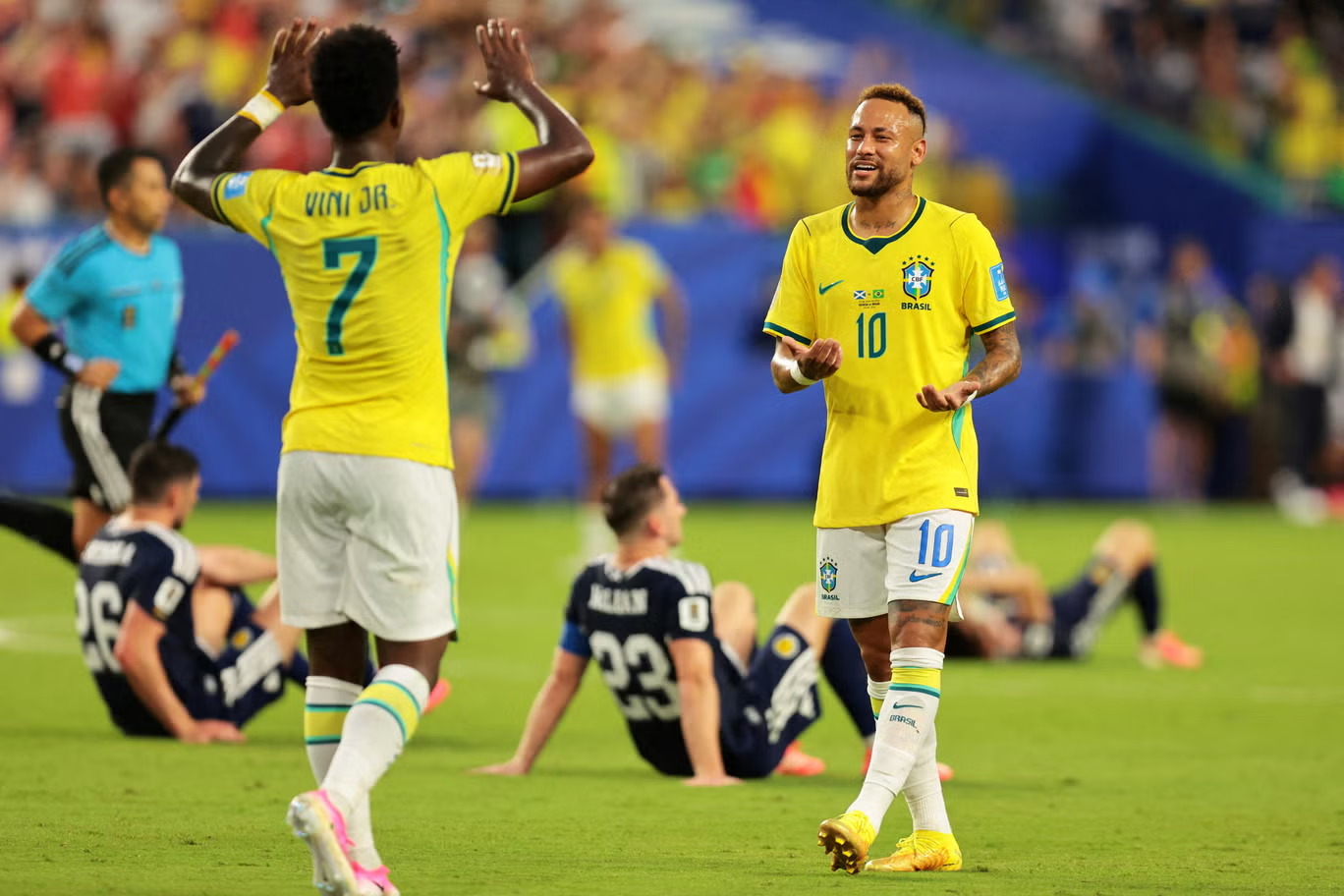
Against Morocco in the second match, Scotland had zero shots on target from six attempts. Their best chance was a John McGinn mishit volley just before half-time, plus a Lyndon Dykes header that drifted wide late on. Ismael Saibari’s thumping strike inside two minutes set the tone, and Scotland never really got back into it. Against Brazil in the deciding third game, a Vinícius Júnior double and a Matheus Cunha goal made it 3-0, a scoreline that, in truth, flattered Scotland. RTÉ’s match report said Scotland had “only themselves to blame” because of “careless defending.”
Three games. One win. Four goals let in. One scored.
The Haiti Win and Why It Was Not Enough
Scotland’s 1-0 win over Haiti on June 13 at Boston’s Gillette Stadium was a really emotional moment. John McGinn’s goal, which Daily Record Sport called a “sclaff,” was enough for Scotland’s first World Cup win since beating Sweden at Italia 90. Grant Hanley was strong, Ben Gannon-Doak lit up the left flank, and Lewis Ferguson was solid in midfield. The Tartan Army celebrated like history had been made.
In a way, it had. But the display itself carried warning signs that would come back to bite Clarke’s side. Scotland looked nervous. Angus Gunn spilled the ball in the first half. Lawrence Shankland had “a couple of sniffs” but did not take them. The team were living on the edge, and against better opponents the same approach would not hold up.
Three points against Haiti, on its own, was not the platform Scotland had hoped for. Morocco and Brazil were always going to be the games that decided the group, and Scotland failed both badly.
Steve Clarke’s Resignation: A Record Worth Defending, an Exit Hard to Ignore
Steve Clarke took the Scotland job in May 2019. What he did over seven years is genuinely impressive. He led the national team to three major tournaments in a row: Euro 2021, Euro 2024, and the 2026 World Cup, after Scotland had spent decades on the outside. He turned Scotland from a Pot 4 nation into a side that won its World Cup qualifying group, capped by a memorable 4-2 win over Denmark. For a nation with the player pool Scotland has, that record really matters.
Clarke had signed a new contract just weeks before the tournament, a deal set to run until 2030. But just 30 days after that news, he walked away.
“The most emotional part of this goodbye is for my players, without whom we wouldn’t have had any of the memories that we’ve accumulated from 2019 until now,” Clarke said in his resignation statement. “They deserve all the praise and adulation that they receive and it was truly an honour to be called their Gaffer.”
Clarke, 62, walked out of a TV interview after the Brazil loss. He looked like a man who had given all he could. As The Guardian put it, he “could live a far more peaceful life.” No one should grudge him that.
But the SFA now faces an awkward truth. They gave Clarke a four-year deal without thinking through what might happen at the World Cup, and now they are back to square one before a Nations League campaign in September and Euro 2028 qualifying on the way.
Defensive Frailties: The Same Errors Again and Again
Scotland’s defending at this World Cup was not just about facing top attackers. The individual mistakes were plain to see.
Against Morocco, Grant Hanley lost track of Ismael Saibari as the Moroccan forward ran into space and let fly with an unstoppable strike inside two minutes. According to ESPN’s match ratings, Hanley “tried to play him offside, failed,” and there was no stopping Saibari after that. Jack Hendry, who made some key blocks against Morocco in the second half, had an up-and-down tournament. Angus Gunn made some good saves but also got stick for his positioning on Saibari’s opener, with The Blazing Musket noting the ball “flew past his right shoulder” in a way that raised questions.
Against Brazil, sloppy defending in transition let Vinícius Júnior and Matheus Cunha find space again and again. The defence as a whole looked stretched against real pace.
A back line that had served Clarke well in qualifying looked weak and, at times, naive under World Cup pressure. These were not one-offs. They were a pattern.
Attacking Struggles: The Goal Threat That Never Showed Up
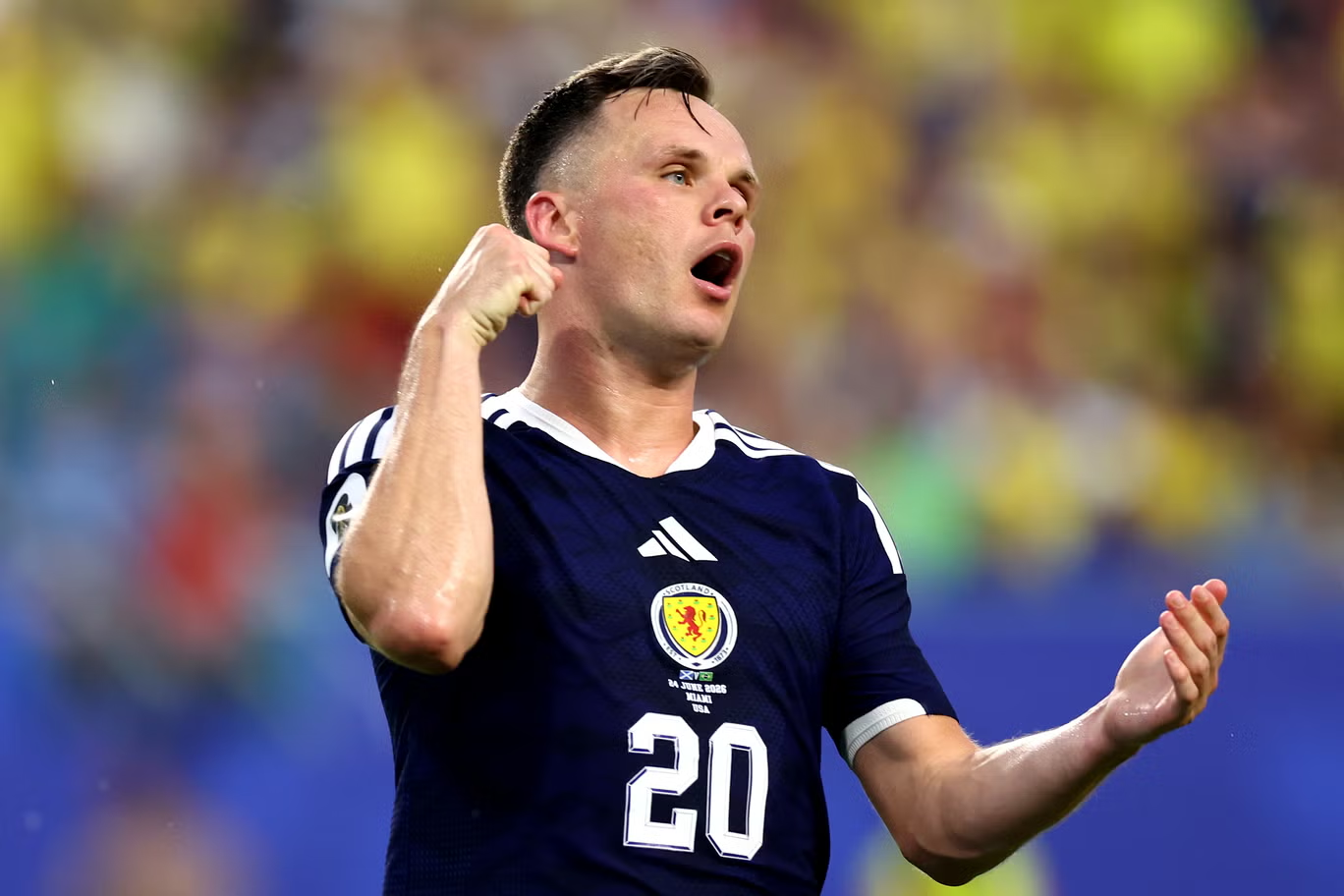
Scotland’s attacking output across three games was tiny. One goal scored, a McGinn sclaff against a team ranked well below the rest of the group, and zero shots on target against Morocco.
Lawrence Shankland, Scotland’s top home-based striker, found the tournament a “tough gig.” Up against big, strong defenders and high defensive lines, Shankland could not make the impact his club form suggested he might. Che Adams worked hard but was often described in player ratings as having “a hugely difficult job” with little service. The big question of whether Scotland had a genuine top-level striker, one that had hung over the squad since the Euro 2024 exit, got no good answer in the United States.
Leaving certain strikers out of the squad before the tournament sparked debate, and the lack of a reliable goal threat across three games suggests the problem runs deeper than selection alone.
Players Who Shone, and Those Who Did Not
Not everyone fell short. Ben Gannon-Doak was Scotland’s brightest spark. The young winger was, according to Daily Record Sport, “a real live wire any time he got on the ball” against Haiti, earning an 8/10 and drawing quick comparisons to the kind of dynamic, forward-thinking talent Scotland needs more of. His direct running caused problems Scotland’s other attackers could not.
Lewis Ferguson was steady throughout. Rated 7/10 across matches, Ferguson was a calm, combative presence in front of the back four, arguably Scotland’s most complete performer at the tournament.
Andy Robertson’s experience and composure mattered, even if he could not fully shut down Achraf Hakimi and Brahim Díaz for 90 minutes against Morocco.
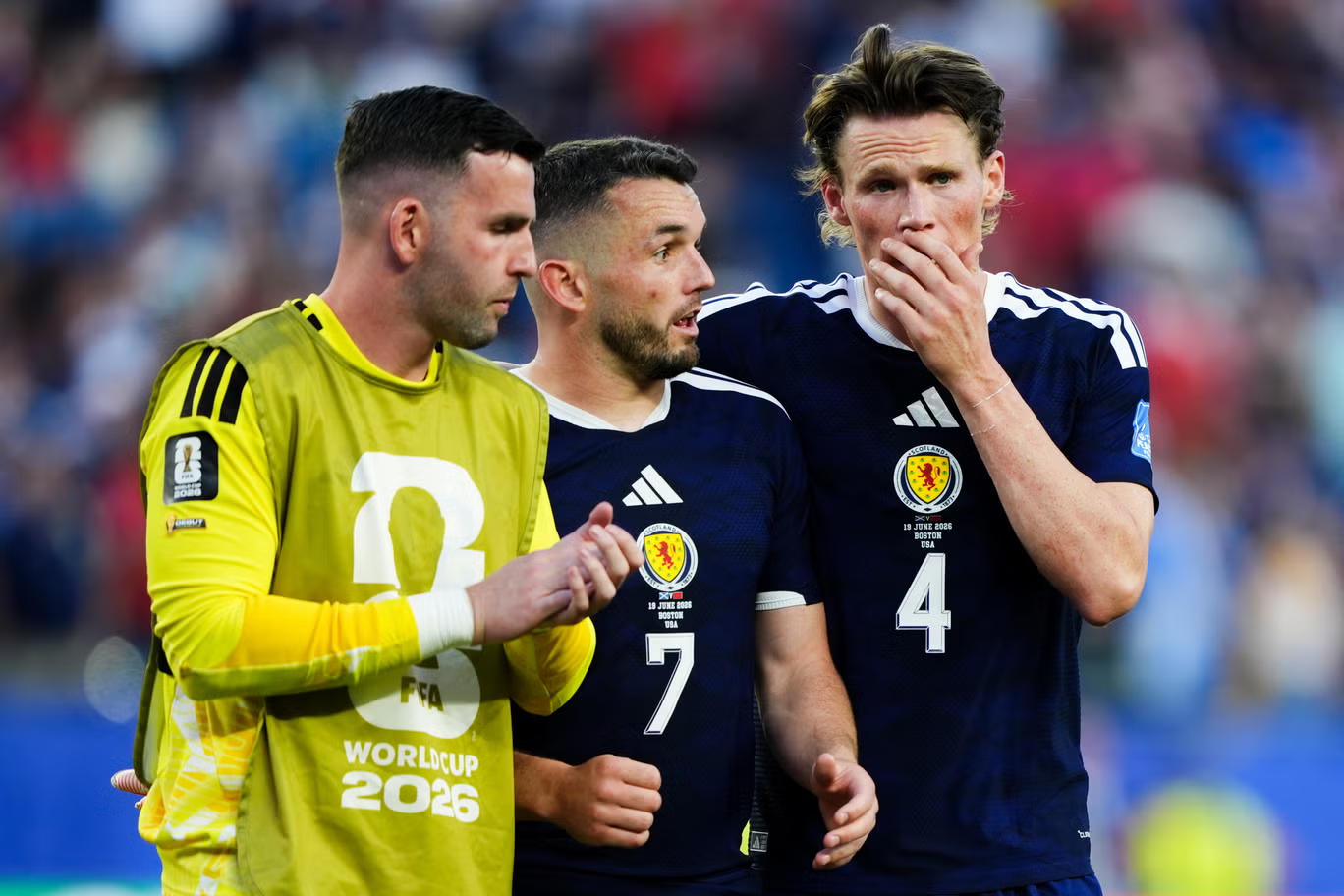
On the other side of the coin, Scott McTominay, Scotland’s biggest name, had a tournament that never hit the heights people hoped for. Against Morocco, he “had a few loose touches and couldn’t impose himself at all in the first half,” per ESPN’s ratings. He showed more against Brazil, but by then the result was gone. John McGinn scored the Haiti goal but went quiet when Scotland needed him most, struggling to make his mark in either the Morocco or Brazil games at the key moments. Ryan Christie, by most accounts, had one of the poorest displays of the group stage against Morocco.
Tactical Missteps: A Pattern Across Three Tournaments
Scotland’s three group stage exits in a row, Euro 2021, Euro 2024, and World Cup 2026, share an awkward common thread: the team keeps failing to take charge tactically when the pressure is highest.
Against Morocco, Clarke was rated 7/10 by ESPN, but the verdict came with a clear note: the manager “could have revved his side up a bit more and urged the players to gamble a bit more as the game drew to a close.” Selection calls across the tournament were questioned, especially the starting line-up for the second group game.
The Guardian was less kind, saying that “Scotland froze at the World Cup, which is at least partly the responsibility of coaching.” Three group stage exits, always competitive but never moving on, is a pattern that single-match factors alone cannot explain.
An Ageing Squad and the Reckoning Ahead
The Scotland squad in the United States had several players at, or past, their peak international years. Andy Robertson, Grant Hanley, John McGinn, and Scott McTominay, the spine of Clarke’s team across three tournaments, have huge experience. But experience, without fresh legs, only takes a squad so far.
The Guardian’s post-tournament analysis described Clarke’s job as managing “an ageing player pool that is diminishing all the time.” Clarke seemed to admit as much by walking away rather than taking on what would have been a tricky rebuild as the same manager. After seven years, the spark of a fresh outlook fades.
Scotland’s senior players will be several years older by the time the 2030 World Cup comes around. The squad needs younger legs, and it needs them fast.
The Talent Pipeline Problem: Scotland’s Real Challenge
Scotland’s main problem is not tactical. It is structural. The country produces good footballers in small numbers. Clarke’s critics were often accused of ignoring this fact. When the pool is small, every injury, every player who chooses not to play for the country, and every missed chance to develop a young talent hurts even more.
As The Guardian noted, only two Scottish managers, David Moyes and Alex Neil, work in England’s top two divisions. The supply of coaches is as thin as the supply of players.
Ben Gannon-Doak and Lewis Ferguson are the most hopeful signs. But flashes of quality from a few players cannot replace a proper development plan. Scotland’s new manager, and the SFA looks likely to go beyond its own borders this time, following nations like England and Brazil who have hired foreign coaches, will need to do more than just spot players. The whole development model may need a rethink.
The SFA must be in place before the Nations League starts in September. Then comes Euro 2028 qualifying, a tournament Scotland will co-host, which gives a fairly easy route back to a major competition. But qualifying as a host nation hides the deeper problems. What happens after 2028? What does the 2030 squad look like if Gannon-Doak’s generation is not developed with real care and money behind it?
What Needs to Change Before 2030
Scotland leave the 2026 World Cup with three points, a goal difference of minus-three, and more questions than answers. The Tartan Army’s presence in the United States was brilliant. The team’s performance was not.
Steve Clarke’s seven-year record deserves respect. He took Scotland to places they had not been in decades. But the three group stage exits are part of his record too, and together they suggest Scotland had reached their ceiling under him.
What comes next means the SFA has to make some brave choices: a manager ready to challenge old selection habits, a real plan to develop young players with the raw quality Gannon-Doak has shown, and an honest look at where the team’s defensive and attacking weaknesses really lie.
Scotland’s fans, those amazing supporters who spent thousands travelling to the United States in hope, deserve a team that matches their ambition. The gap between the passion in the stands and the output on the pitch has never looked wider than it did in the summer of 2026. Closing it, before the 2030 cycle begins, is now the big job for whoever takes charge next.
FAQs
Scotland finished third in Group C with three points. They had one win (1-0 vs Haiti), one loss (0-1 vs Morocco), and one heavy defeat (0-3 vs Brazil). Their goal difference of minus-three left them 11th among the third-placed teams across all groups, not good enough to reach the round of 32 as one of the eight best third-placed sides.
Steve Clarke resigned on June 27, 2026, after Scotland went out of the World Cup at the group stage. He had signed a new contract with the SFA just weeks before the tournament, set to run until 2030, but chose to step down. In his resignation statement, Clarke thanked his players and the memories built over seven years, and wished his successor well. He gave no specific reasons beyond the emotional goodbye.
Clarke took over in May 2019 and has taken Scotland to three major tournaments in a row – UEFA Euro 2021, Euro 2024 and the 2026 FIFA World Cup, which will be Scotland’s first World Cup for 28 years. He took Scotland from a Pot 4 nation to one that won its World Cup qualifying group, including a 4-2 win over Denmark. Scotland did not get past the group stage in any of the three tournaments.
Ben Gannon-Doak was widely seen as Scotland’s most exciting player, earning an 8/10 from Daily Record Sport against Haiti for his direct running and energy. Lewis Ferguson was steady across all three games, rated 7/10 in both the Haiti and Morocco matches. Andy Robertson’s experience also counted, especially in dealing with Moroccan attackers during the second group game.
The SFA had not confirmed Clarke’s replacement as of late June 2026. The Guardian has argued that Scotland should look beyond its borders for the next boss, pointing to the small pool of Scottish coaches in senior roles. The new manager must be in place before Scotland’s Nations League campaign starts in September 2026, with Euro 2028 qualifying to follow, a tournament Scotland will co-host.



No Comments