

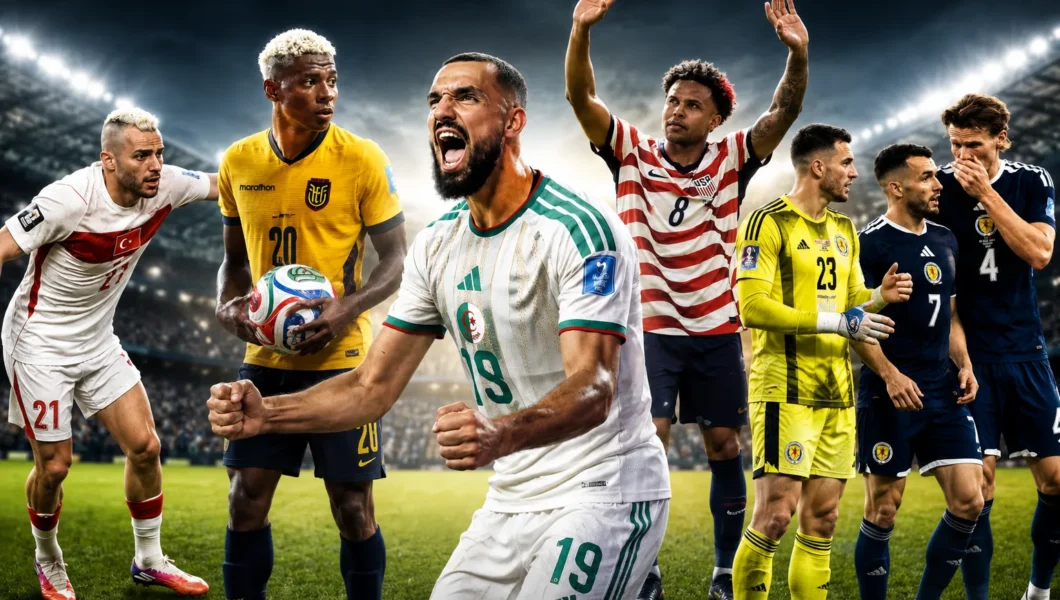
For World Cup 2026, FIFA swapped goal difference for head-to-head records as the main tiebreaker when teams are level on points. The result? Teams like Mexico, the USA and Germany have already locked up first place with a game to spare, while Tunisia, Turkey and Haiti are out. Matches that should be thrilling have turned into dead rubbers.
The final round of World Cup group games is meant to be pure chaos. Lots of matches kicking off at once. Managers staring at their phones for scores from across the country. One goal flipping a whole group on its head. That’s the magic, isn’t it?
Well, FIFA seems to have decided we were having a bit too much fun.
For the 2026 tournament, football’s governing body quietly changed a rule that had been in place since 1970. And while the change sounds tiny on paper, it’s already sucking the life out of what was shaping up to be a brilliant World Cup. Teams have been crowned group winners with a game still to play. Others have been knocked out before they’ve even played their last match. The drama we love is being switched off before it can even start.
Let’s look at what actually changed, why it matters, and how FIFA managed to take a bigger tournament and somehow make fewer games count.
What Actually Changed in the World Cup 2026 Tie-Breaking Rules?
Here’s the heart of it. When two teams finish level on points in their group, FIFA now looks at their head-to-head record first. That means the result of the match between those two teams. Goal difference, which used to come first, has been pushed way down the list.
That’s a genuinely big deal. According to BBC Sport, goal difference had been the main separator at every World Cup since 1970 (before that, FIFA used goal ratio until 1966). Now the full order of tiebreakers looks like this:
Head-to-head points between the tied teams
Head-to-head goal difference
Head-to-head goals scored
Group goal difference
Group goals scored
Fair play points
FIFA world ranking
The reason FIFA gives? Comparing two teams directly is supposedly “fairer” because it strips out freak scorelines. Think of Germany’s 7-1 thrashing of Curacao, which would have wildly boosted their goal difference. It also brings FIFA in line with UEFA, which has used head-to-head at the Euros for years.
That sounds fair enough on the surface. But here’s the problem: this system has been clearly flawed at the Euros for ages. So why on earth would FIFA bring it into the World Cup, and into the very tournament they keep promising will be the most exciting ever?
How the New Rule Locks Teams Into Their Positions Too Early
This is where it gets really frustrating.
Under the old goal-difference system, a team had to be four points clear of second place to lock up top spot after two games. That almost never happened, because it needed both of the other group games to end in draws. So heading into matchday three, nearly everyone still had something to play for.
Now? A team can grab first place while only three points clear. All it takes is for the leaders to have already beaten the team chasing them, because that head-to-head result can no longer be wiped out by a goal-difference swing.
The knock-on effect is brutal. The BBC notes that up to 12 nations could go into their final group game with absolutely nothing to play for. Twelve! In a tournament FIFA made bigger to create more meaningful matches. You couldn’t make it up.
And it cuts both ways. Teams on the wrong end of a head-to-head result are getting knocked out early too, even when they’re only three points behind third place. Under the old rules, that gap would have left their fate wide open.
Real World Cup 2026 Examples: Who’s Already Stuck?
Let’s look at how this is actually playing out, because the examples are honestly damning.
Mexico (Group A)
The co-hosts won their first two games to sit on six points, three clear of South Korea. Because Mexico already beat South Korea head-to-head, they can’t be caught, so the group is won. That means their final match against the Czech Republic is basically pointless, and Mexico can rest their stars. Worse, the Czechs face a possibly weakened side, which creates an uneven playing field that could matter hugely in the race for the best third-placed teams.
United States (Group D)
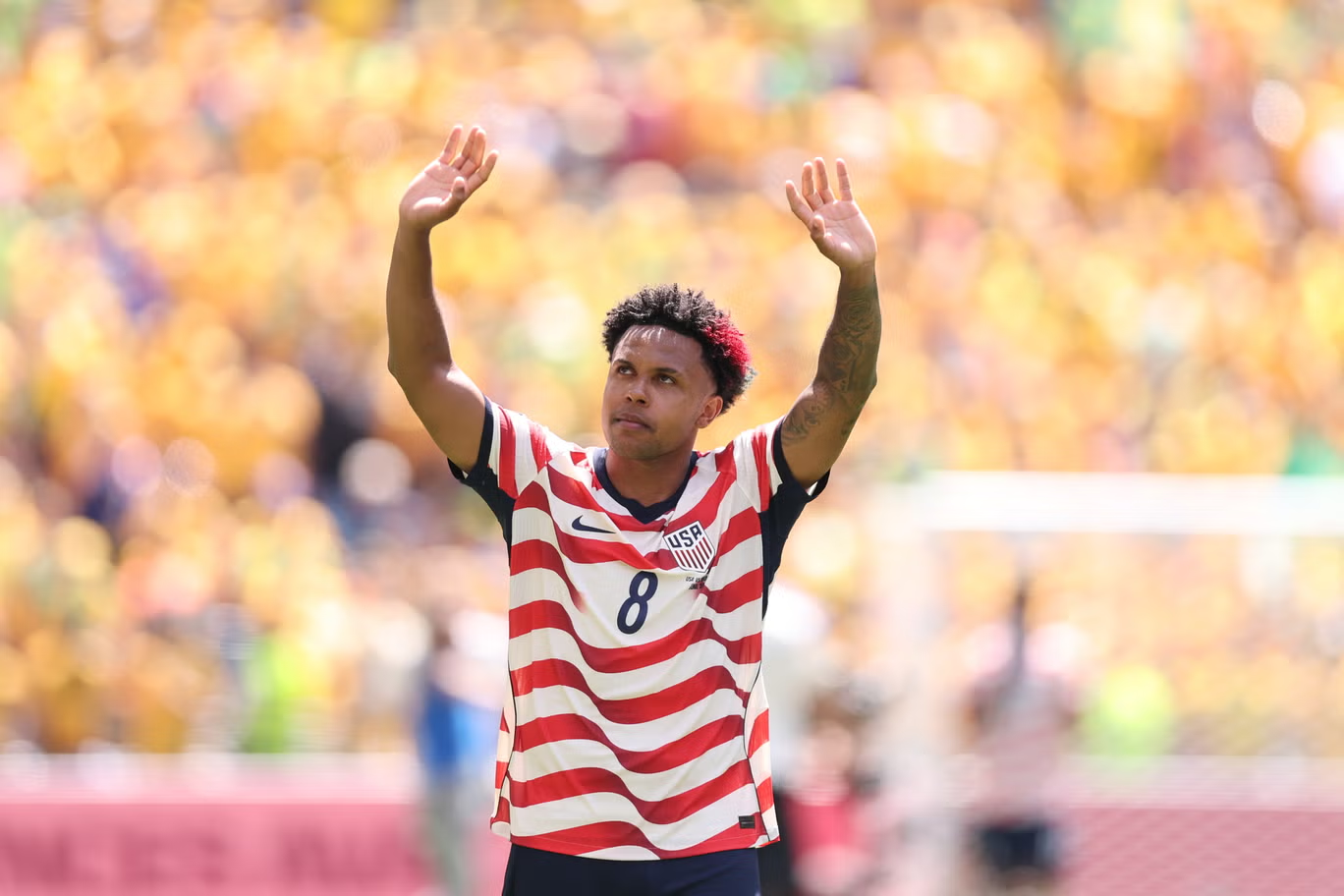
Same story. The US sit three points ahead of Australia and Paraguay, and they’ve beaten both. Group won, top spot secured, heading to Santa Clara no matter what. And their final match? Turkey, in Inglewood. A complete dead rubber.
Germany (Group E)
Already confirmed as group winners. As The Independent points out, that could spoil their final match against Ecuador and leave Ivory Coast at a needless disadvantage, with Ecuador holding an unfair edge in a game that should have been full of jeopardy.
Tunisia (Group F)
This one stings. Tunisia lost to Sweden, and because head-to-head now carries so much weight, that single defeat has basically knocked them out. And yet they could still beat a team that Sweden themselves lost to. As The Independent put it, why is losing to Sweden suddenly worth more than the chance to beat someone Sweden couldn’t?
Turkey (Group D) and Haiti (Group C)
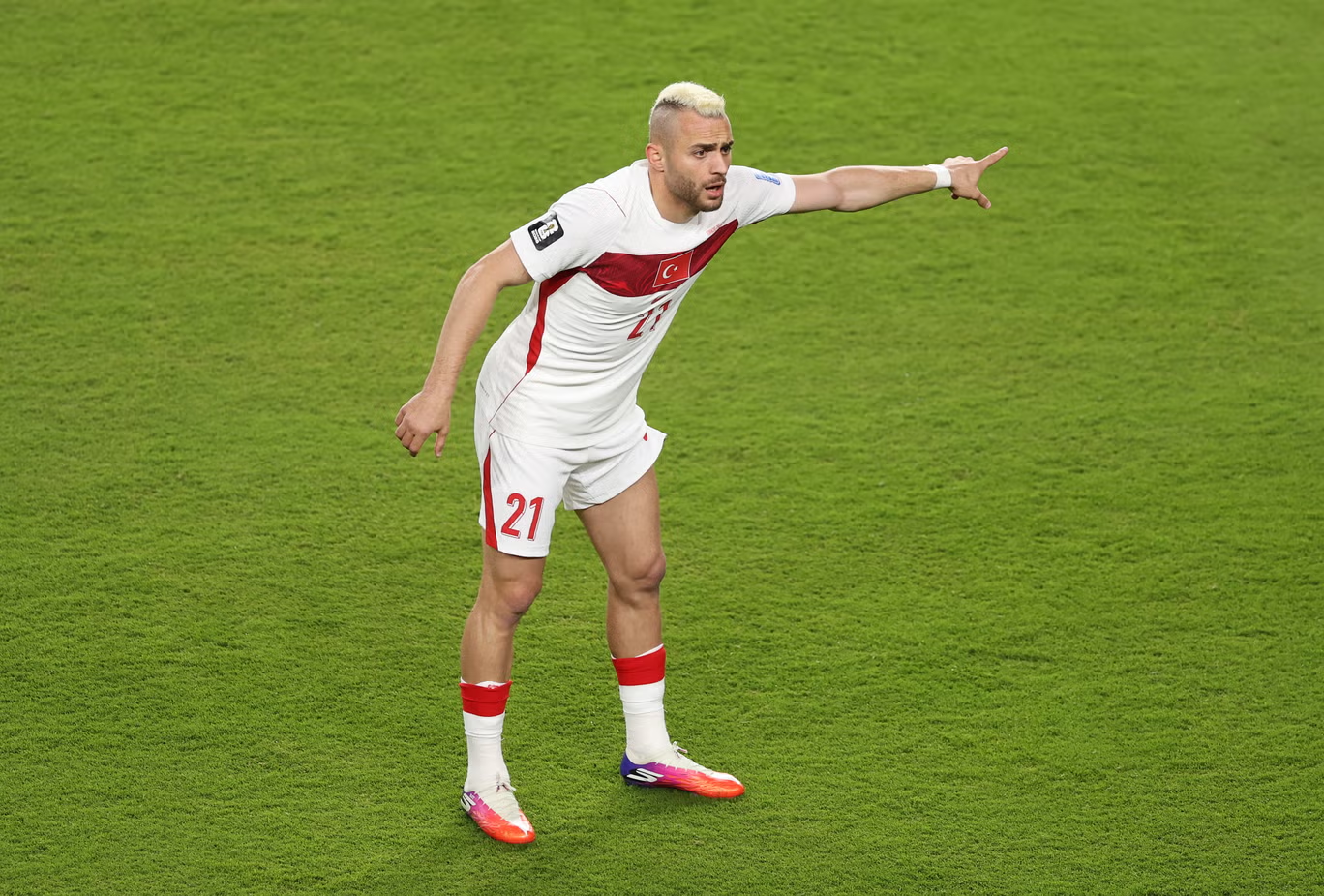
Both knocked out after two games. Turkey lost to both Australia and Paraguay, so they’re mathematically gone. Under goal difference, all of these teams would still have a chance. Now they’re just making up the numbers.
Compare this to Qatar 2022. As BBC Sport highlights, only two nations, hosts Qatar and Canada, were knocked out after two matches. No group winner had even been confirmed. France, Brazil and Portugal had qualified but could still have been caught with a big enough goal swing. Every other team walked into matchday three with hope still alive. That’s the difference. That’s what we’ve lost.
Is FIFA Sacrificing Sporting Integrity?
Here’s a question worth sitting with: why should one match in a tiny three-game group matter more than another?
That’s the integrity issue at the heart of all this. In a long league season, head-to-head makes sense. You play everyone twice, results balance out, and freak days get soaked up. But in a group of just three matches? One bad afternoon can sink you completely, with no way to make up for it through your overall form.
Imagine playing brilliantly across your campaign, scoring lots of goals and beating two opponents, only to go out because of a single off day against one rival. That doesn’t feel like rewarding the better team. It feels random.
Goal difference, for all its faults, at least measures your whole effort in the group. It asks a simple question: across everything you did, how good were you? Head-to-head narrows that down to one snapshot, and snapshots can lie.
The Problem With the Third-Place Qualification System
It gets messier still. Because this is a 48-team tournament, the top two from each of the 12 groups go through, plus the eight best third-placed teams. And ranking those third-placed sides fairly is a nightmare.
Picture this, which The Independent flags brilliantly: Scotland could get absolutely battered 6-0 by Brazil and still go through ahead of a Cabo Verde side that has earned historic draws against both Spain and Uruguay. How is that fair? One team fought heroically against elite opposition, the other got hammered, and the hammered team goes through.
That’s not some odd edge case. It’s a direct result of bolting a third-place qualification system onto groups that vary wildly in difficulty. When you’re comparing teams across completely different groups, the numbers stop meaning the same thing.
How the Knockout Bracket Gets Skewed
The damage doesn’t stop at the group stage. The need to fit in those eight third-placed teams warps the whole Round of 32 bracket.
Instead of a clean “first plays second” setup across the board, the bracket goes lopsided, and that creates daft incentives. The Independent points out a couple of beauties:
Austria vs Algeria
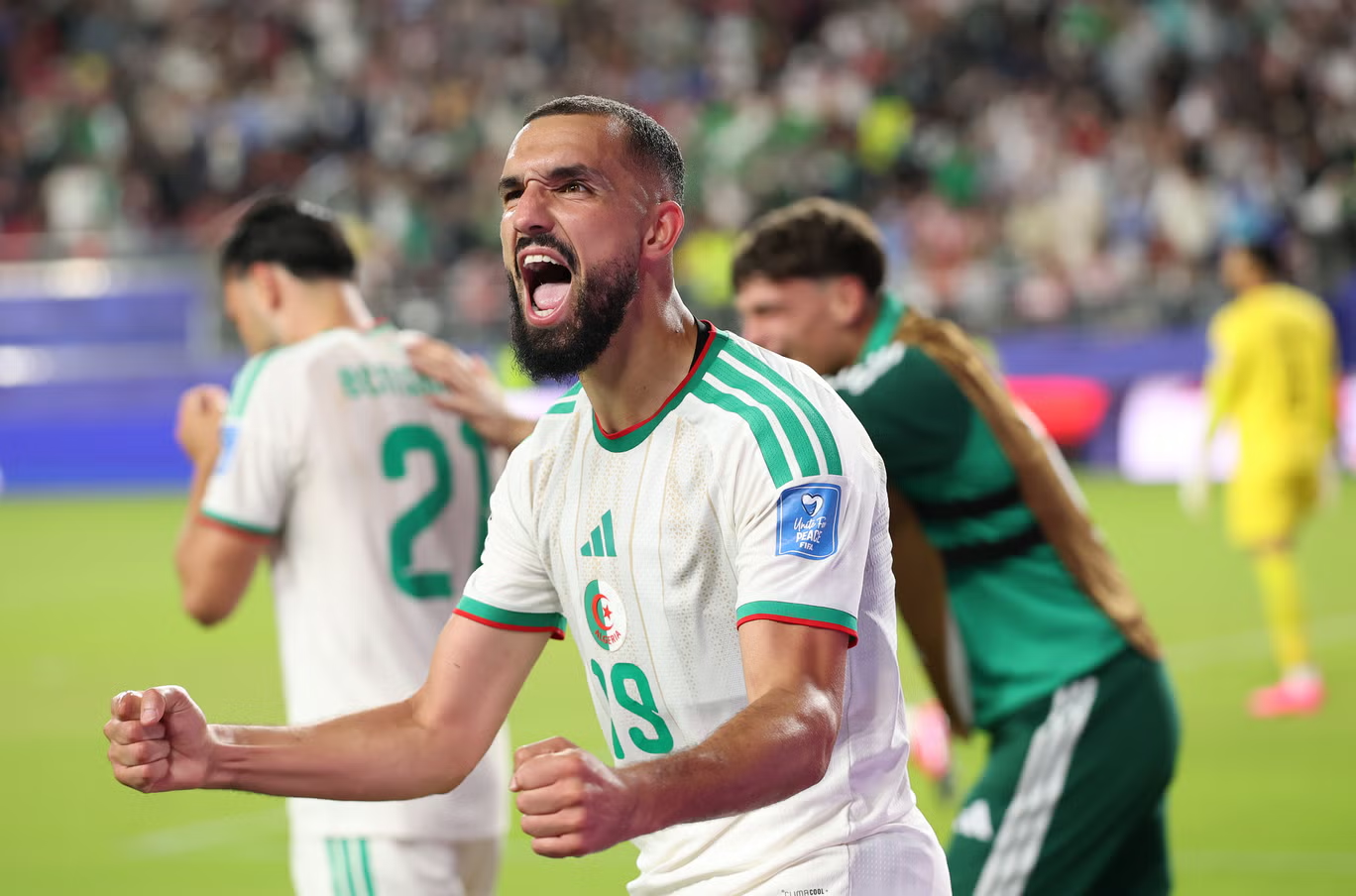
Both teams might actually prefer to finish third, because third place could hand them a tie against Egypt or Belgium, while second place likely means running into favourites Spain. So you’ve got a situation where teams might be better off not winning. That’s the opposite of what a competition should reward.
Norway vs France
These two battled through what’s been called the hardest group of the lot, yet their clash for top spot brings its own dilemma. One winner’s path could feature a last-16 game with Germany, the other might run into Brazil or Morocco. When finishing first isn’t clearly better than finishing second, the reason to go and win the game just disappears.
In a tournament that’s already physically punishing, players need every reason to chase results, not reasons to play it safe.
What a Better World Cup Format Could Look Like
So what’s the fix? The good news is that smarter options definitely exist.
The Independent put forward a genuinely clever alternative back in December: keep the 48-team expansion, but borrow from the Champions League model. Rather than letting eight third-placed teams through, allow only the top two from each group to advance, but send the eight best group winners straight into the Round of 16.
The remaining 16 teams would then play an extra “mezzanine” round to fill out the bracket. The clever bit is the incentive it creates: finishing top of your group earns you a bye, a rest, and a saved game in a brutal summer schedule. Suddenly every team is desperate to win that final group match. No dead rubbers. No teams trying to finish third. Just full-throttle football right to the final whistle.
That’s the version of this tournament we deserved. Maximum expansion, maximum intensity, zero pointless matches.
FIFA’s Self-Inflicted Wound
Here’s what makes all of this so maddening: none of it was necessary.
FIFA made the World Cup bigger, with 48 teams, insisting on four-team groups even after the gloriously chaotic finish to 2022. They’ve talked endlessly about delivering the greatest, most exciting tournament in history. And then they went and adopted a tie-breaking system that does the exact opposite. It locks teams in early, knocks sides out before matchday three, and creates reasons to not win.
When The Independent asked FIFA directly how and why the current model was chosen, the honest takeaway was that so much of it simply can’t be properly explained. That should worry anyone who loves this game.
The 2026 World Cup is still going to give us magic moments. Scotland scrapping against Brazil, the chance of Cabo Verde making history, the inevitable late-night thrillers. But it could have been so much more. FIFA had the chance to build maximum drama into every single group game, and instead they switched a chunk of it off before kickoff.
Want to test your own knowledge of the new rules? Pull up your group’s standings and try to work out who’s already through and who’s already gone. Then ask yourself how many of those final-round matches you’d actually pay to watch. That number, and how small it is, tells you everything about FIFA’s missed chance.
FAQs
For the first time at a World Cup, FIFA is using head-to-head records as the main tiebreaker when teams finish level on points. This means the result of the match between the two tied teams matters most. Goal difference has been dropped to the fourth tiebreaker, behind head-to-head points, head-to-head goal difference, and head-to-head goals scored.
FIFA argues that comparing two teams’ direct results is fairer because it removes the effect of freak scorelines, such as a 7-1 thrashing that would skew overall goal difference. The change also brings FIFA in line with UEFA, which has used head-to-head at the European Championship for years. Critics say goal difference reflects a team’s full performance across the group much better.
Mexico, the United States and Germany all secured top spot in their groups with a game to spare. Meanwhile, Tunisia, Turkey and Haiti were knocked out after just two matches, even though they sat only three points behind third place. That gap would have kept them mathematically alive under the old goal-difference system.
At Qatar 2022, only two teams (Qatar and Canada) were knocked out after two games, and no group winner had been confirmed. In 2026, several group winners and eliminations were settled before the final round, meaning up to 12 nations could go into their last group game with nothing to play for.
With 48 teams in 12 groups, the top two from each group go through automatically, joined by the eight best third-placed teams. This creates fairness problems, since teams from harder groups can finish third with strong performances yet still be ranked below weaker third-placed sides. It also skews the Round of 32 bracket into a lopsided shape.



No Comments