

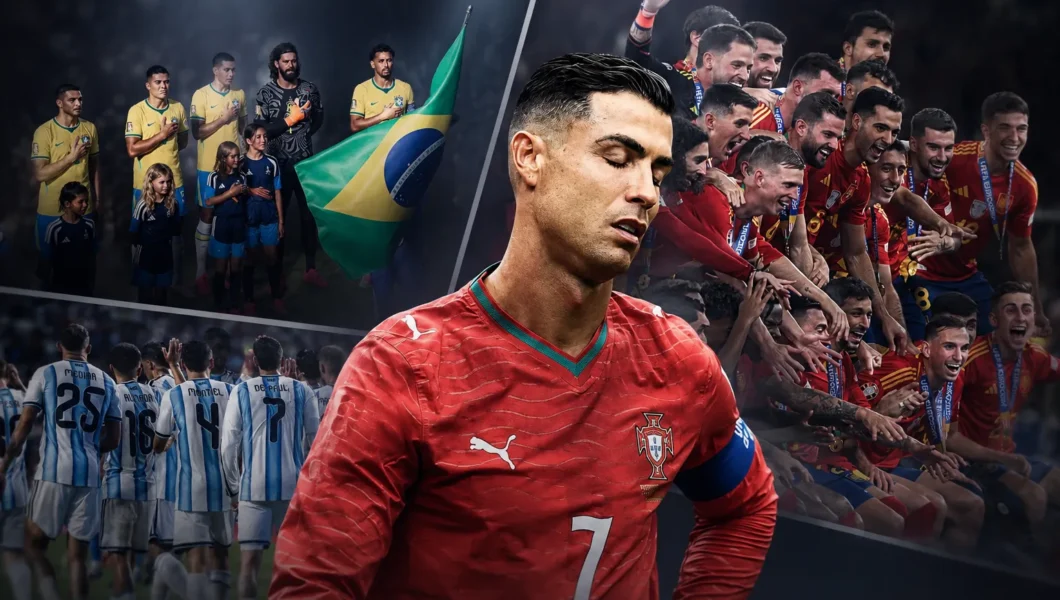
The World Cup 2026 might not be won by the team with the brightest star. It could be won by the team with the fewest holes. Under “weak link theory,” football rewards squads that fix their weakest spot. The team that hides its flaws best, like France’s midfield, England’s defence, or Argentina’s full-backs, could lift the trophy.
We all love a superstar, don’t we? When the World Cup comes round, every camera, headline, and pub chat seems to spin around the same few names: Lionel Messi, Harry Kane, Kylian Mbappé. They sell shirts and break records. But here’s a question worth thinking about. What if the tournament isn’t won by the best player on the pitch, but by the least worst one?
That idea sits right at the heart of “weak link theory,” and it’s a brilliant way to look at the 2026 World Cup. Instead of asking which team has the most dazzling attacker, it asks a humbler question. Whose 11th-best player is strongest? Whose weak spot is least likely to crack under pressure?
In this post, we’ll look at the weak spots of the tournament’s biggest hopefuls: France, Portugal, England, Argentina, Brazil, Germany, and the Netherlands. We’ll explore why a squad’s softest position might matter more than its hardest shot, and what history tells us about teams that found a way to win anyway. Grab a cup of tea and let’s get stuck in!
What Is the Weak Link Theory in Football?
The weak link theory comes from The Numbers Game, a fascinating book by Chris Anderson and David Sally. Their argument is delightfully surprising. Football is a “weak link” sport, not a “strong link” one.
What does that mean? In a strong link sport like basketball, the best player can take over and drag an average team to glory almost on his own. Football doesn’t work like that. As Anderson and Sally put it, the game is really about stopping goals, and one defensive slip, like a poorly placed defender or a tired full-back, can ruin everything. Your team is only as strong as its weakest player.
That makes good sense when you think about it. A genius pass means nothing if the striker fluffs the finish. A brilliant save counts for little if the defence gifts the other side three clear chances. The chain breaks at its weakest point.
Why the 11th Man Matters More Than the Star Player
International football makes this problem even sharper. Club managers can buy their way out of trouble. They spot a weakness, then sign a fix. National team managers can’t do that. There’s no transfer market, no chance to bring in a world-class right-back from another country. They pick from a fixed, often shallow pool of players.
The result? A nation’s weakest starter is often much weaker than the worst player at a top club. And in a knockout tournament, where one bad afternoon ends your run, that weak spot gets badly exposed.
So the smart money isn’t always on the team with the best player. It’s on the team that hides its flaws most cleverly. It’s the one whose 11th name on the teamsheet won’t get found out when it matters most.
Here’s a fun thought game. You could build a fantasy World Cup winner by picking the best bits from different squads. Imagine France’s forwards, Spain’s midfield, Portugal’s full-backs, Brazil’s centre-backs, and Belgium’s goalkeeper all in one team. Unbeatable, right? But flip it round, and you could just as easily build a very ordinary side from each team’s weakest links. Every contender, it turns out, has a soft spot.
Let’s go through them one by one.
France’s Midfield Concerns
France arrive as co-favourites, and for good reason. Their attacking talent is genuinely scary. But the engine room? That’s where the questions creep in.
The French midfield has thinned out a lot in recent years. Paul Pogba and Antoine Griezmann are no longer the forces they once were, and N’Golo Kanté is now in his mid-thirties. France reached the 2022 final with Aurélien Tchouaméni and Adrien Rabiot holding things together, and they’re far from poor players. Still, it’s hard to picture this French midfield controlling a game the way Spain or Portugal might, setting the tempo, smothering opponents, and keeping the ball when the pressure builds.
For a team with such firepower up top, the midfield is the link most likely to wobble. If France lift the trophy, it’ll be because their attackers covered the cracks.
Portugal’s Ronaldo Problem
Now here’s a tricky one. Portugal’s weakest area might just be the position where they have an all-time great.
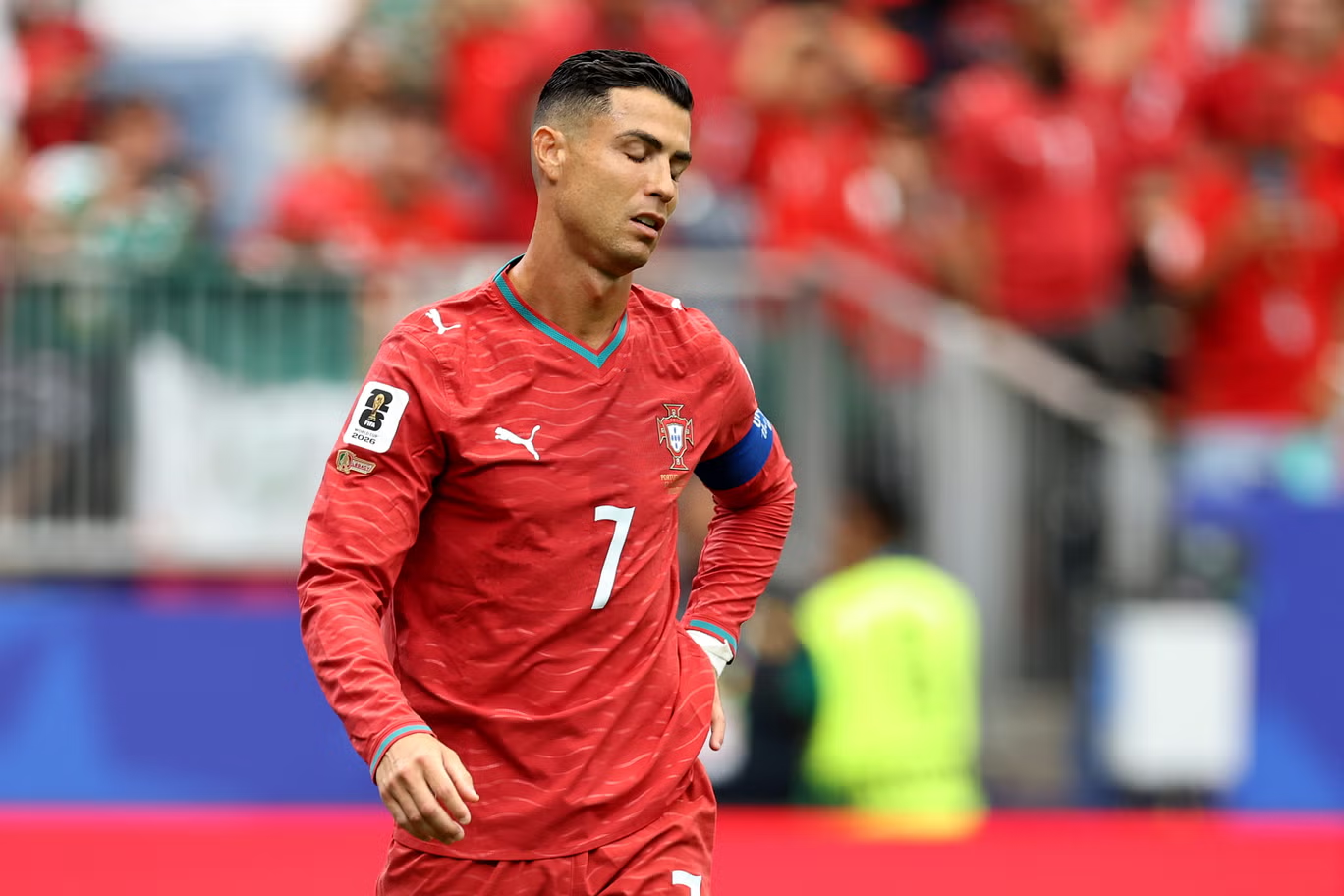
Roberto Martínez’s side can look a little short on world-class centre-backs, especially when Rúben Dias is missing. But the more awkward talk is about centre-forward, and in particular, Cristiano Ronaldo. He’s still arguably Portugal’s greatest ever player. Yet at this stage of his career, building the team around him can limit the side’s movement and pressing, turning a strength into a puzzle.
It’s a fascinating problem. How do you drop a legend? And should you? Portugal’s challenge isn’t a lack of talent. It’s working out whether their most famous name is helping them or quietly holding them back.
England’s Defensive Questions
For years, England’s weak spot was the middle of midfield. Remember 2018, when Croatia simply passed around them in the semi-final? Those days look to be over. With Elliot Anderson and Declan Rice working together, England finally have a balanced, energetic central pairing. Anderson, in particular, has gone from promising youngster to truly vital.
So where’s the weak link now? It may have shifted to the back. England let in two goals against Croatia in their 4-2 win in Dallas. A win, yes, but a slightly leaky one. The defenders are good. The honest question is whether they’re World Cup-winning good. When the margins get tight in the later rounds, can England’s back line hold firm against the very best attacks?
And of course, there’s no worry up front, where a fit and firing Harry Kane is still one of the most reliable finishers on the planet.
Argentina and Brazil’s Full-Back Struggles
South America’s great rivals share a surprisingly similar headache: full-backs.
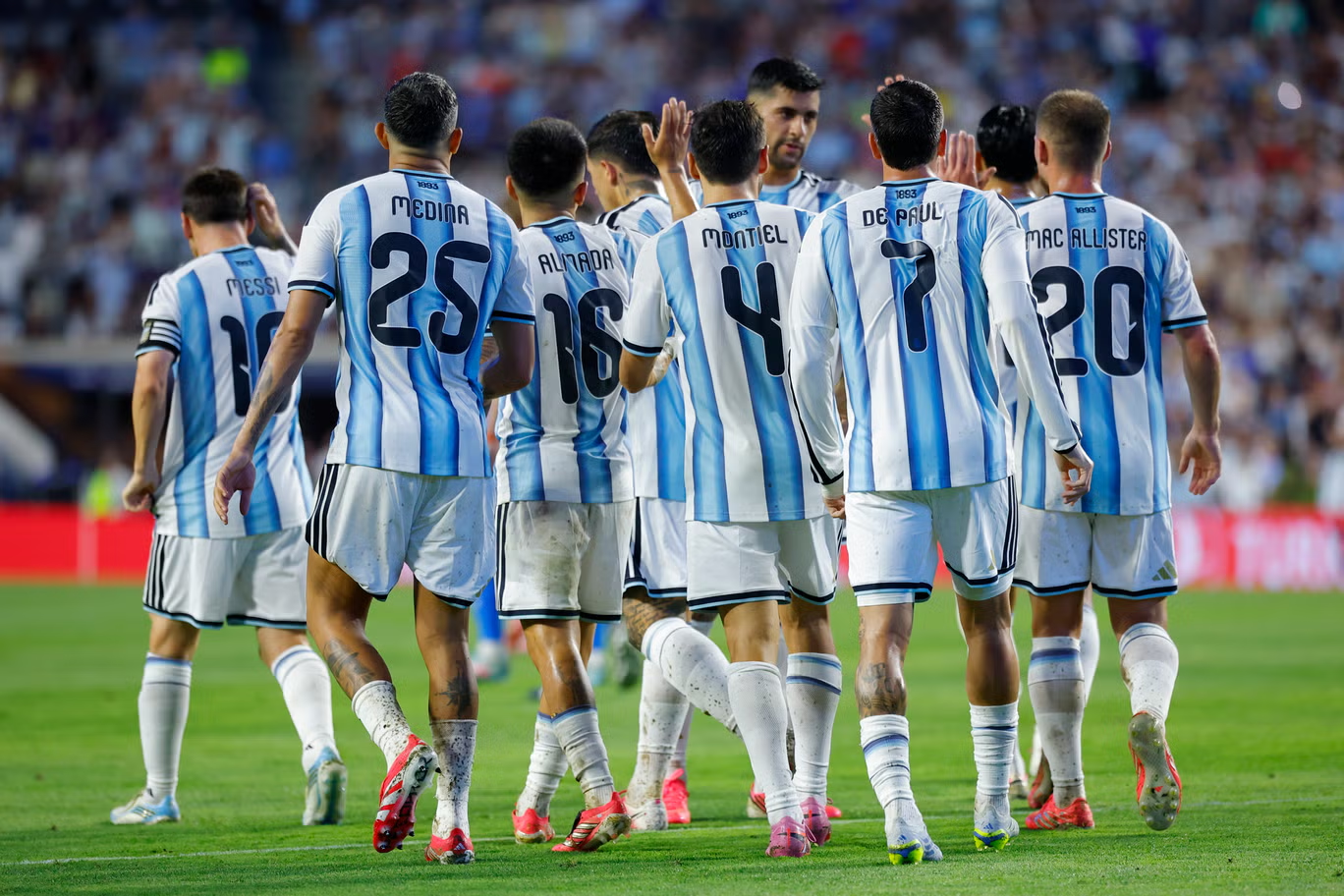
Neither Argentina nor Brazil are blessed with top options out wide. For the reigning champions Argentina, that didn’t stop them in Qatar. But let’s be honest, that win leaned heavily on Messi’s incredible form. That was strong-link theory winning out, a single genius lifting everyone around him. With Ángel Di María now retired from international football, Argentina also lack some of the wide creativity their rivals enjoy.
Brazil’s worries run a bit deeper. Beyond the full-backs, there are real questions in central midfield. Casemiro’s struggles against Morocco in their 1-1 draw didn’t help, and there’s a lingering doubt about whether they have a truly top-class No. 9. For a nation used to producing world-beaters in every position, that’s a humbling place to be.
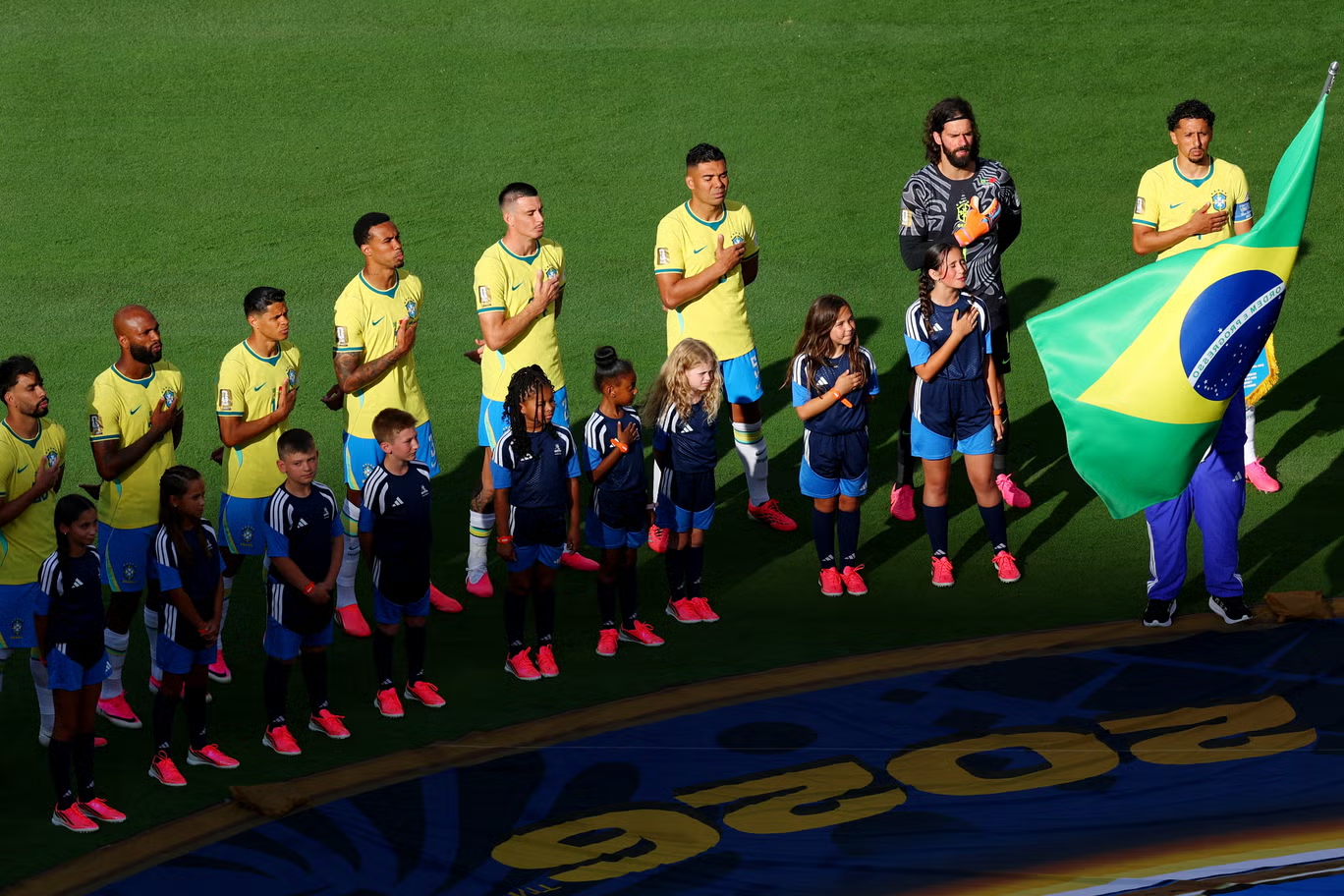
Germany and the Netherlands: Plugging the Gaps
Germany face a familiar question about the No. 9 role too. The good news for Julian Nagelsmann is that Kai Havertz, who’s more of a false nine than a normal striker, started his tournament in style, scoring twice in a thumping 7-1 win over Curaçao. Germany also coaxed goalkeeper Manuel Neuer out of international retirement, a clear sign that Nagelsmann wanted to shore up a position where they might otherwise fall short. That’s weak-link management in action.
The Netherlands are the mirror image. The Dutch are wonderfully stacked at the back. Defenders have never been their problem. But compared to great Dutch sides of the past, this generation looks a touch lighter in midfield and attack. Their weak link sits further forward than they’d like.
How Past Champions Managed Their Weak Links
History offers comfort to the flawed, and almost every champion has been flawed somewhere.
Look at 2014. Germany won the World Cup partly by moving Philipp Lahm, who started the tournament in midfield, back to right-back to fix a problem position. Smart, sensible, and it worked.
France, meanwhile, won in both 1998 and 2018 with strikers who barely scored. Stéphane Guivarc’h in ’98 and Olivier Giroud in 2018. Giroud finished the entire Russia tournament without a single shot on target! Yet both did the unglamorous work that let the brilliant players around them shine.
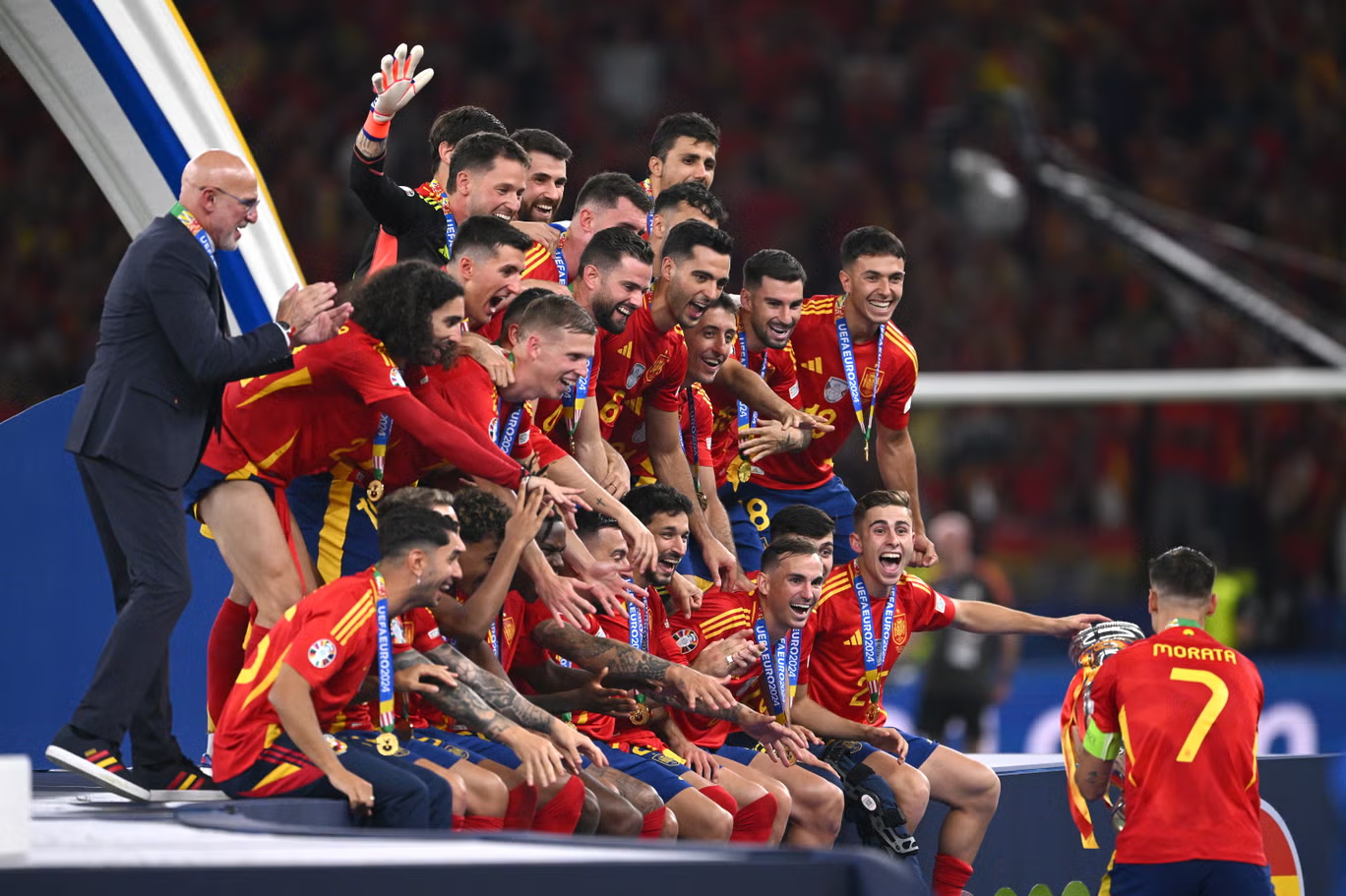
Spain’s 2010 champions had their most modest starter at left-back in Joan Capdevila, but he was reliable enough never to get caught out. And the 2006 Italy and 2014 Germany sides shared a quiet superpower: a high average quality across the whole team. You could argue neither had a true superstar. But crucially, neither had a weak link either.
That’s the lesson that keeps coming back. You don’t need the best player in the tournament. You need to make sure your worst player never costs you.
The Formula for World Cup Glory
So, who’ll win World Cup 2026? If weak link theory holds true, don’t just back the team with the most magical attacker. Back the team that has done the unglamorous, vital work of strengthening its softest spot.
France must find midfield control. Portugal need to solve their Ronaldo riddle. England have to trust their defence. Argentina and Brazil must hope their full-backs don’t get exposed. Germany and the Netherlands have to fill their gaps up front. The team that manages this best, the one that makes sure its weak link is barely a weakness at all, will give itself the finest chance of lifting the trophy.
It’s a refreshing way to watch the tournament, isn’t it? Next time you settle in for a match, try taking your eyes off the superstars for a moment. Watch the 11th name on the teamsheet instead. That quiet player might just hold the key to football’s greatest prize.
Who do you think has the strongest weak link? We’d love to hear your verdict, so drop your thoughts in the comments and let the debate begin!
FAQs
The weak link theory says football is decided by a team’s weakest player rather than its best. Made popular by the book The Numbers Game by Chris Anderson and David Sally, it suggests that since one defensive mistake can undo a whole team, your side is only as strong as its weakest link.
France are widely tipped as co-favourites thanks to their brilliant attacking talent, with Spain, England, Brazil, Argentina, Portugal, and Germany all firmly in the mix. Under weak link theory, though, the winner may be whichever of these teams best hides its weakest position.
France have questions in central midfield, Portugal face a dilemma over building around Cristiano Ronaldo, and England’s defence looks shakier than their midfield. Argentina and Brazil both lack elite full-backs, Brazil also worry about a top-class No. 9, Germany have striker concerns, and the Netherlands look light in midfield and attack.
Not always. Argentina’s 2022 victory was very much down to Lionel Messi, a clear case of the “strong link” working. But many recent winners, like Italy in 2006 and Germany in 2014, managed it not with one superstar but with a high average quality across the squad.
Past winners managed their flaws cleverly. Germany moved Philipp Lahm to right-back in 2014, France won in 1998 and 2018 with non-scoring strikers who supported their stars, and Spain’s 2010 side relied on a dependable, low-key left-back in Joan Capdevila who never got caught out.



No Comments