

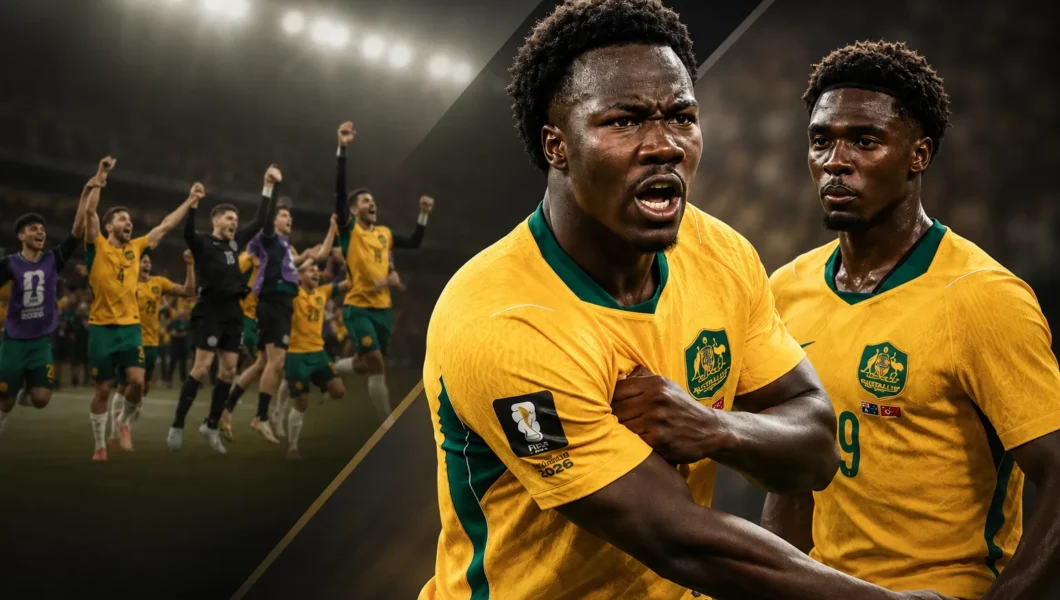
Australia’s 2026 World Cup squad is one of the most culturally diverse in the tournament. It has players born in refugee camps, across many continents, and to parents who fled war. Their big moment at World Cup 2026 has come at a tense political time, as far-right leader Pauline Hanson climbs the Australian polls with a clearly anti-multicultural message.
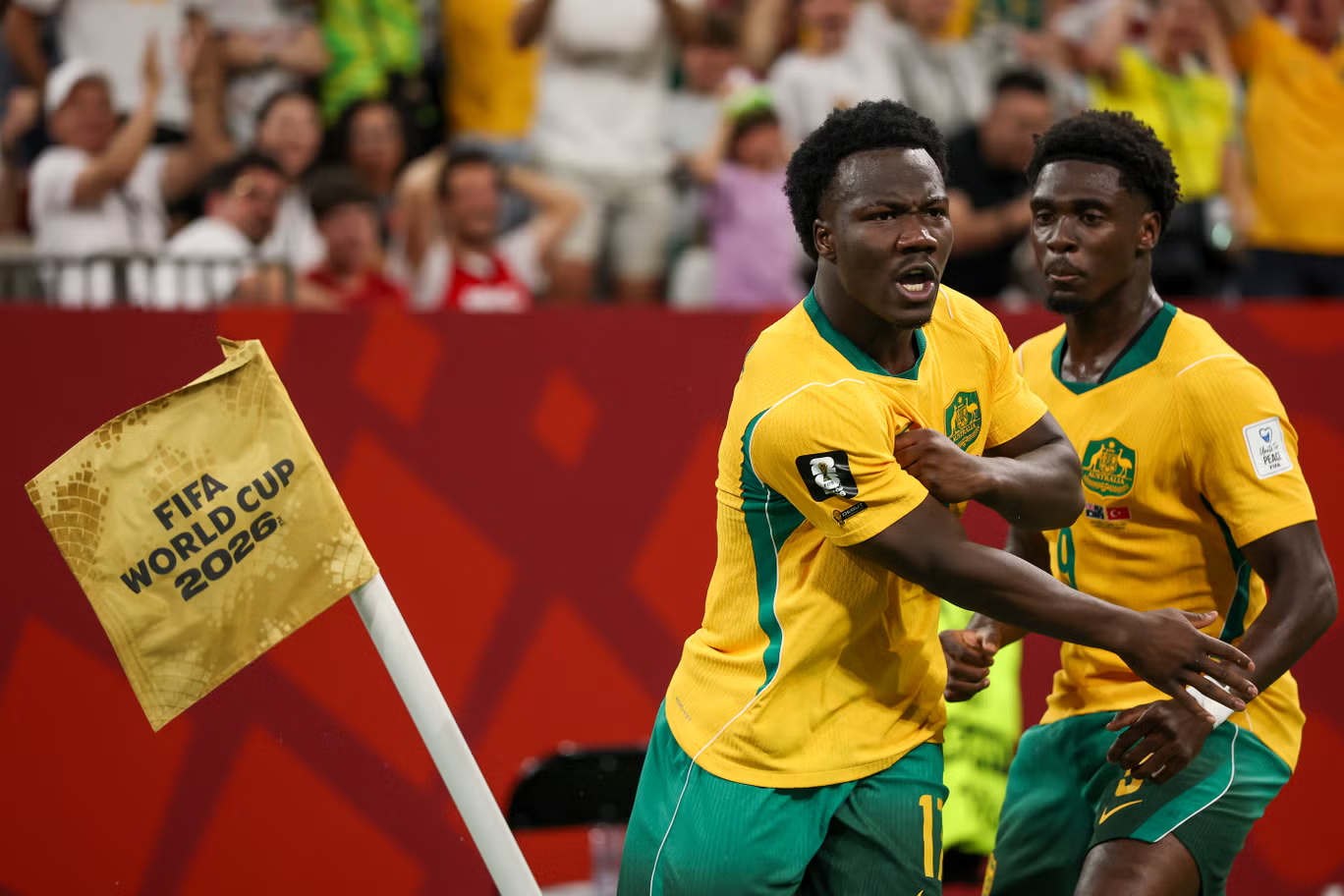
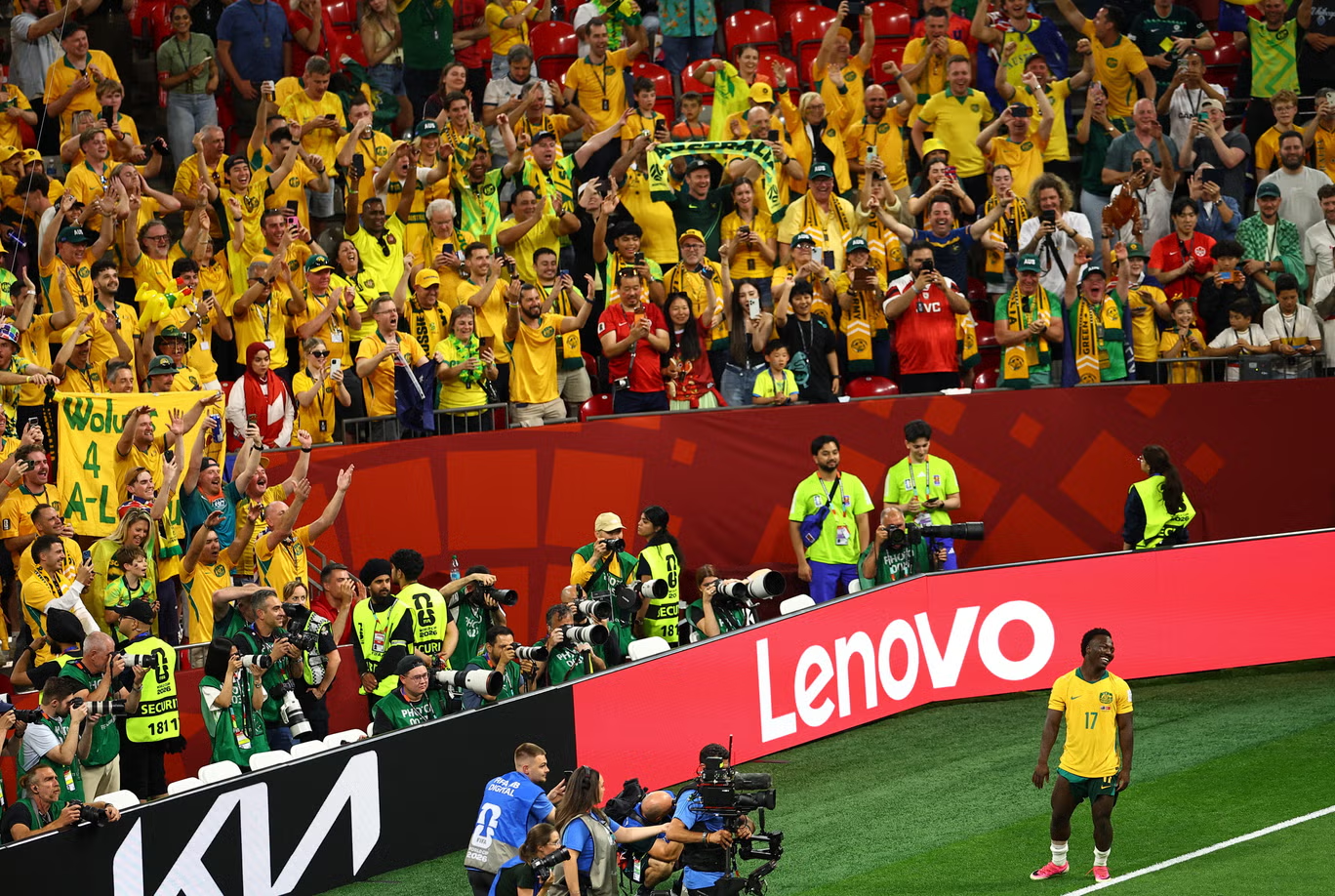
There is a moment in football that goes far beyond the sport itself. Not the goal, but what comes after it. When Nestory Irankunda raced away from the Turkey net last Saturday and ran to the corner flag, arms pumping and fists flying, anyone who knew their Socceroos history felt a shiver. It was Tim Cahill’s celebration. The same joyful move that marked Australia’s famous run to the last 16 in Germany back in 2006. Irankunda, just 20 years old and playing on football’s biggest stage for the first time, was not only scoring a goal. He was passing the torch.
“I look up to him and I want to be like him one day,” the Watford winger said about Cahill after the match. It is the kind of quote that wins over casual fans straight away, and there have been plenty of new Socceroos fans this week. But Irankunda’s story, and the stories of many of his teammates, carry a weight that goes far beyond football. They are stories of being forced from home, of survival, and of belonging. And right now, they have landed in the middle of one of the most divided moments in modern Australian history.
How Did the Socceroos Perform Against Turkey at World Cup 2026?
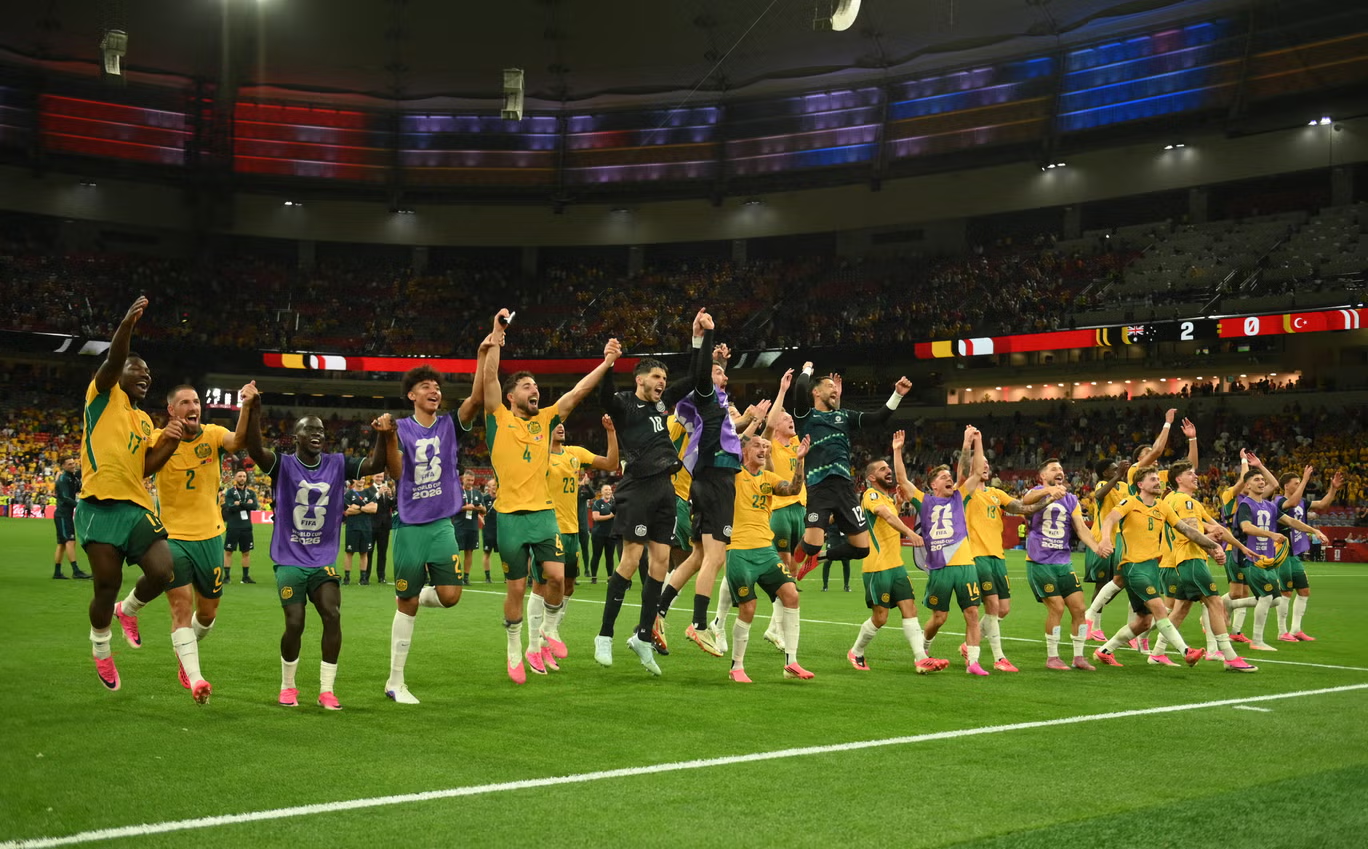
Australia went into Group D at World Cup 2026 with low expectations. Tony Popovic’s squad was widely seen as the group’s underdog, and few people backed them to get a result against Turkey. What followed was a calm, controlled 2-0 win. Irankunda’s early goal was followed by a second from Connor Metcalfe, and it quickly changed how people saw Australia’s hopes.
The win sets up a huge clash with the USA in Seattle, set for Friday at 8pm BST. The American hosts are already calling it the “Soccer Derby,” and the winner will almost surely top Group D and reach the knockout rounds. For Australia, it would be only the third time in their history that they have gone past the group stage. The pressure is real, but so is the belief.
Who Are the Players Behind Australia’s Diverse World Cup Squad?
Here is where the story gets truly remarkable. Across the Australia dressing room, the life stories are amazing.
Nestory Irankunda was born in a refugee camp in Tanzania. His parents had fled civil war in Burundi, and his early years were full of fear and uncertainty. Today, he plays Premier League football for Watford and has just become the star name of Australia’s World Cup campaign.
Awer Mabil spent the first ten years of his life in a refugee camp in Kenya after his family escaped the conflict in South Sudan. He is now a professional footballer and one of the squad’s strongest voices. Speaking at a press conference this week, Mabil talked about the team’s now-viral pre-tournament video: “The reason why it went viral is because it was raw. It was not edited. It was just purely what the players wanted to say, all put together. It had an effect because individually Australians can feel and relate with it.”
Mohamed Toure, the Norwich City forward, was born in a camp in Guinea, where his family lived for 14 years after escaping war in Liberia. Milos Degenek fled with his family from Croatia to Belgrade as a baby before settling in Sydney. Ajdin Hrustic was born in Sydney to a Bosnian father and a Romanian mother. Alessandro Circati moved to Perth from Italy as a toddler when his father, a journeyman footballer in Serie B and C, got a transfer.
Then there is captain Harry Souttar, born in Aberdeen, Scotland, who qualifies through his Australian mother. It is a reminder that national identity has always been a layered, complicated thing.
These are not minor squad members. These are the players at the very heart of Australia’s 2026 World Cup campaign.
What Does the Socceroos’ Squad Composition Say About Modern Australia?
Step back from the personal stories, and the bigger picture is striking. Australia’s squad is not unusual. At World Cup 2026, nations like Curacao and Cape Verde have built squads that rely almost fully on diaspora players. Big parts of England’s squad could play for other nations. France, Germany, the Netherlands. The same pattern shows up again and again across the tournament.
Nationality, as this World Cup is showing once more, is a fluid and complex idea. Football simply has a way of making that clear.
But Australia’s case carries extra weight because of what is happening politically back home. The Socceroos are not just reflecting modern Australia in some vague way. They are doing it at the exact moment when a strong political movement is arguing that modern Australia should look very different.
What Is Pauline Hanson Saying, and Why Does It Matter for the Socceroos?
A couple of hours after Irankunda’s goal sparked celebrations across Australia, a poll dropped that made headlines for a very different reason. For the first time, the far-right One Nation party, led by Pauline Hanson, was topping the nationwide popularity contest in Australia.
On Wednesday, Hanson gave a 51-minute speech to Australia’s National Press Club. The content will sound familiar to anyone who has watched similar movements rise in the United States, the United Kingdom, or across Europe. There were attacks on left-leaning media, on Islam, and on transgender rights. But it was her view on immigration and national identity that cuts most directly across the Socceroos’ story.
“We cannot be a multicultural society,” Hanson said. “We are a multiracial society but we must be monocultural. Australians must live under the one cultural umbrella.”
Set that against the life stories above, with Irankunda born in a Tanzanian camp, Mabil spending his childhood in Kenya, and Toure born in Guinea, and the tension is impossible to ignore. Under the kind of Australia that Hanson describes, it is not even clear whether this Socceroos squad would exist in its current form. Australia might not even be at this tournament.
What Message Did the Socceroos Send Before the World Cup Started?
Before a ball was kicked at World Cup 2026, the Australia squad released a video. Players took turns speaking straight to camera, talking about their journeys, some of them very hard, to reach this point. The message they chose was simple and clear.
“No matter where you come from, football is for everyone,” they said. “We are a reflection of modern Australia. Our diversity is our strength. The Socceroos right now are a representation of what Australia is. There are a lot of journeys behind the jersey. To be a Socceroo has many meanings, but with one purpose: to do the country proud.”
Before the Turkey match, the video had only modest attention. After Irankunda’s goal and Metcalfe’s follow-up, it went viral. Mabil explained why: because it was real. No polish, no PR gloss, no carefully built story. Just players saying what they actually felt. And in a world full of managed messaging, that landed.
Why Does the Socceroos’ World Cup Run Matter Beyond Football?
It would be easy to write off football as a distraction from the serious business of politics and policy. But that argument has always missed what sport really does. At its best, it gives people a way of seeing themselves, and each other, that they might not find anywhere else.
For migrants and refugees in Australia who are watching this tournament, the Socceroos are not just a national team. They are a clear, public sign that belonging is possible. That you do not need a single-origin story to represent a country with pride. That the journey, however hard, can lead somewhere good.
The irony that Hanson and the One Nation movement seem unable to grasp is that the team creating the most national pride in Australia right now is exactly the kind of team they argue should not exist. The players celebrating in front of packed crowds, winning hearts back home, making children want to run to the corner flag and throw their fists in the air, they are the migrants. They are the refugees. They are the sons of men and women who fled wars that most Australians will never have to imagine.
Tony Popovic’s squad has a huge game ahead of them in Seattle. The USA will be a tough opponent on home soil, backed by a loud crowd. Australia will need everything they have: tactical discipline, team spirit, and the kind of individual brilliance that Irankunda has already shown.
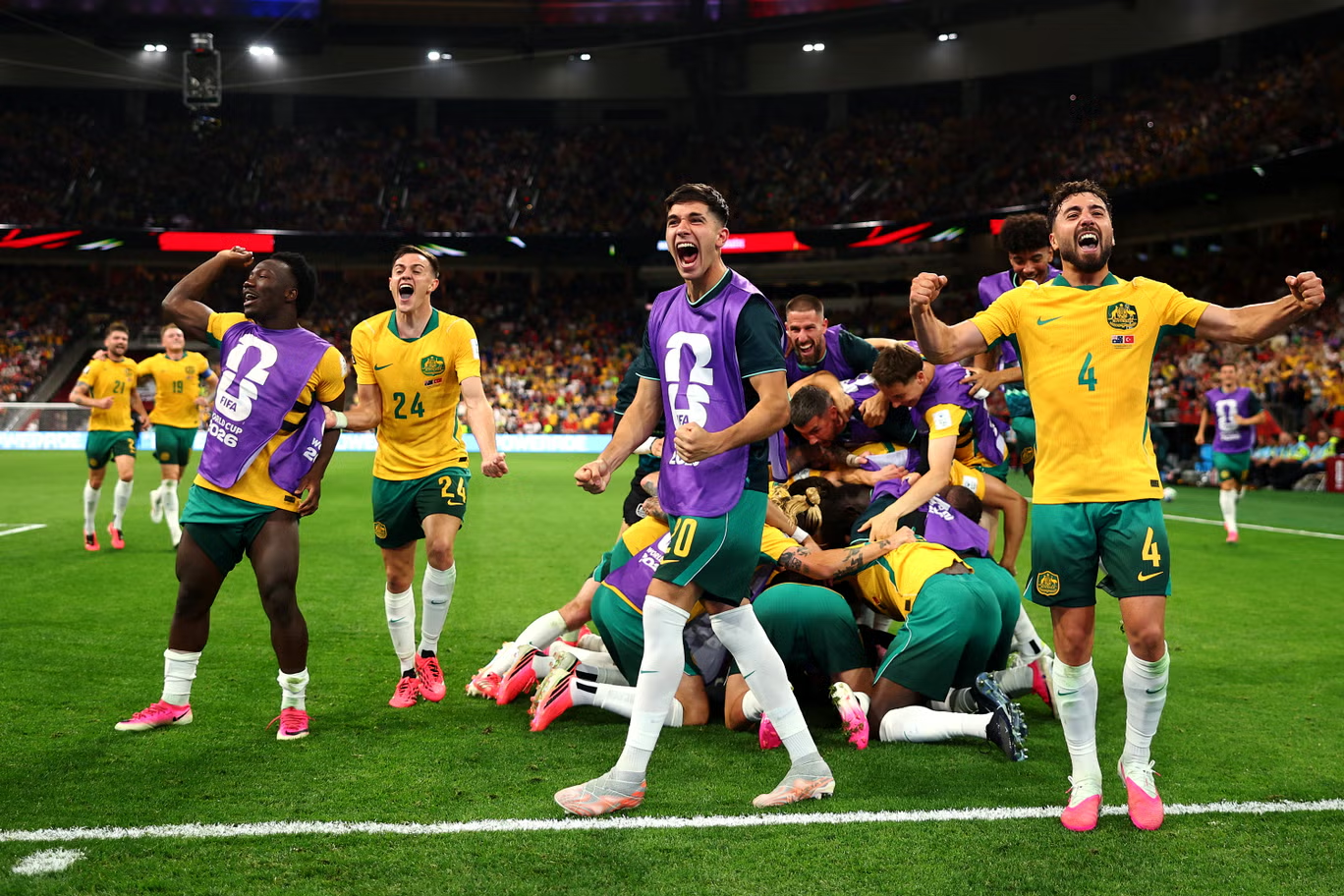
There was joy as the Socceroos kicked off their World Cup campaign in style (Getty)
The Socceroos and Australian Identity: What Comes Next?
The political question will not be settled by a football result. One Nation’s rise in the polls reflects real worries among some of the Australian public, and those worries will not vanish if the Socceroos reach the knockout rounds. The tension between a multicultural reality and a monocultural dream is not something that sport can settle on its own.
But what the Socceroos are doing, right now, in group games at World Cup 2026, is making an argument in the most powerful way available. Not speeches. Not statistics. Not policy papers. Goals. Celebrations. Stories told in press conferences and pre-match videos. People from Tanzania and South Sudan and Guinea and Croatia and Bosnia, wearing the same jersey and doing the country proud.
Irankunda will keep saying that he wants to be like Tim Cahill one day. He might want to start believing he already is.
FAQs
Nestory Irankunda scored the opening goal, with Connor Metcalfe adding the second in a 2-0 win for Australia in their Group D opener.
Nestory Irankunda is a Watford winger who was born in a refugee camp in Tanzania. His parents fled civil war in Burundi before settling in Australia.
Tony Popovic is head coach of the Socceroos, the Australian national football team, at the 2026 FIFA World Cup.
At a National Press Club address in June 2026, One Nation leader Pauline Hanson said that Australia “cannot be a multicultural society” and argued that Australians must live “under the one cultural umbrella.”
Australia face the USA in Seattle on Friday at 8pm BST. The match is a direct contest for top spot in Group D, with the winner almost certain to reach the knockout rounds.
The squad includes players born in refugee camps in Tanzania, Guinea and Kenya and players who immigrated to Australia from Italy, Croatia, Bosnia and Scotland. The list of players with refugee backgrounds includes Awer Mabil, Nestory Irankunda, and Mohamed Toure.


No Comments