

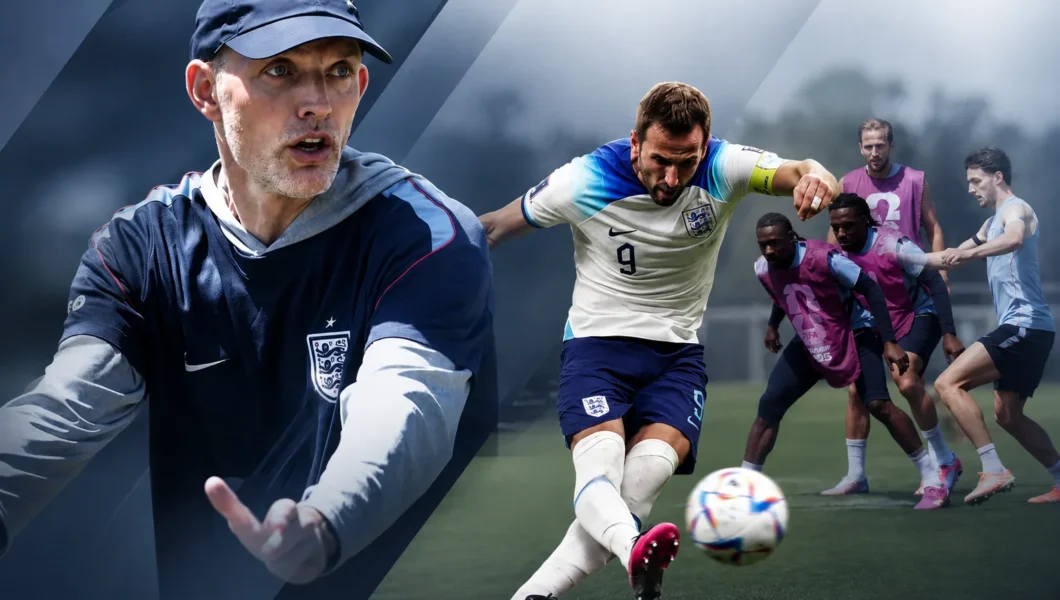
England head into the 2026 World Cup under Thomas Tuchel with real hope. They’ve got a rebuilt youth setup, a smarter squad, and players who know how to win at the top level. The progress is real, but knockout football can trip up even the best-prepared side. The Croatia opener on 17 June will set the tone for everything that comes next.
Sixty years. Ten World Cups. No trophies. That number hangs over English football like a heavy fog. And yet, here we are again, daring to believe.
Something does feel different this time. The setup has genuinely changed. The manager is fresh, sharp, and free of the baggage from past campaigns. A squad built on clear roles and a strong mindset is heading into a tournament in North America with more clarity than England have had in years.
But hope has let English fans down before. The big question isn’t just whether the squad is good enough. It’s whether the system around them, the coaching, the draw, and the ability to beat the world’s best, has finally caught up with the players’ quality.
Let’s go through it properly.
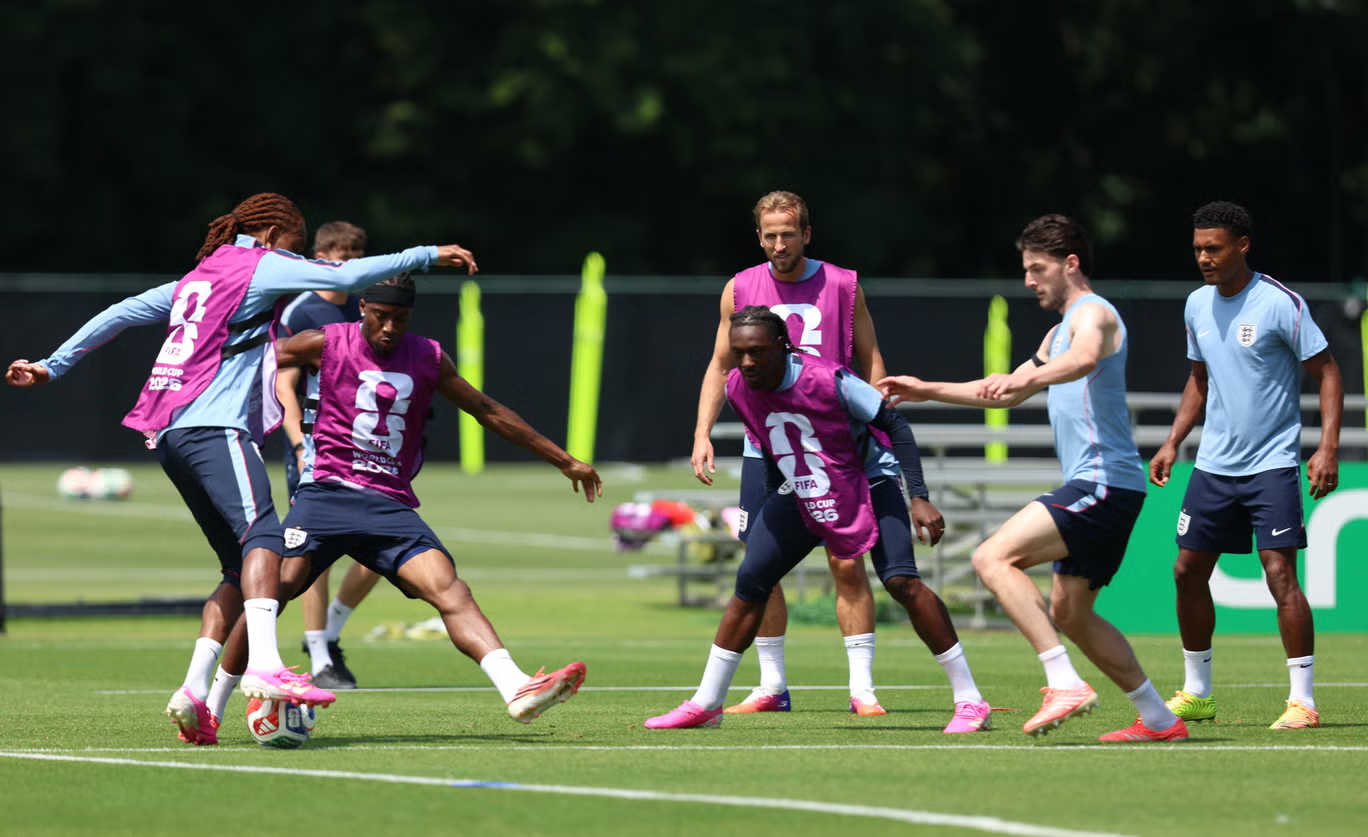
The Weight of 60 Years: How Long Is Too Long?
England’s only World Cup win came in 1966, at home under Alf Ramsey, in a Wembley final shown so many times it barely feels real now. Since then, every four years has added a new chapter to the same sad story.
Quarter-final exits. Penalty shoot-out heartbreak. A dull 0-0 against Algeria. A disallowed Frank Lampard goal against Germany in 2010 that still makes grown adults wince. Diego Maradona’s hand. The list of low points is long, and English fans have never forgotten them.
What stands out about 2026 isn’t just that England are back. It’s that the timing feels almost poetic. Sixty years on from their only win, the expectation is bigger than ever. ESPN’s look back at every England exit since 1966 paints a grim picture. Some were cruel (2018, beaten by Croatia in the semis), others baffling (2014, out in the group stage). The 2022 run ended in a quarter-final loss to France, the moment that brought change at the top.
2026 isn’t just another tournament. It’s a reckoning.
Investment and Infrastructure: England’s Quiet Revolution
One of the less flashy but most important stories of the last decade is the FA’s steady spending on youth development, work that’s now paying off on the biggest stage.
The England DNA programme, inspired by Germany and Spain, was set up to give every age group one clear identity, from under-15s to the senior side. Instead of picking the biggest, strongest teenagers, the FA shifted towards skilful, smart players who can press, play out from the back, and handle high-intensity football.
St George’s Park, the FA’s national centre in Burton upon Trent, has been at the heart of that change. An ambitious SGP 2.0 upgrade, announced in early 2025, will improve the setup even further. The FA’s aim is to build “a reimagined performance home to inspire and enable England’s players, teams and coaches to be the best in the world.”
The results show in the current squad. Jude Bellingham, Bukayo Saka, and Eberechi Eze are no accident. They’re the product of a system that valued skill over brute strength. France, Germany, and Spain built winning cultures through smart youth investment, and England have finally taken that lesson on board.
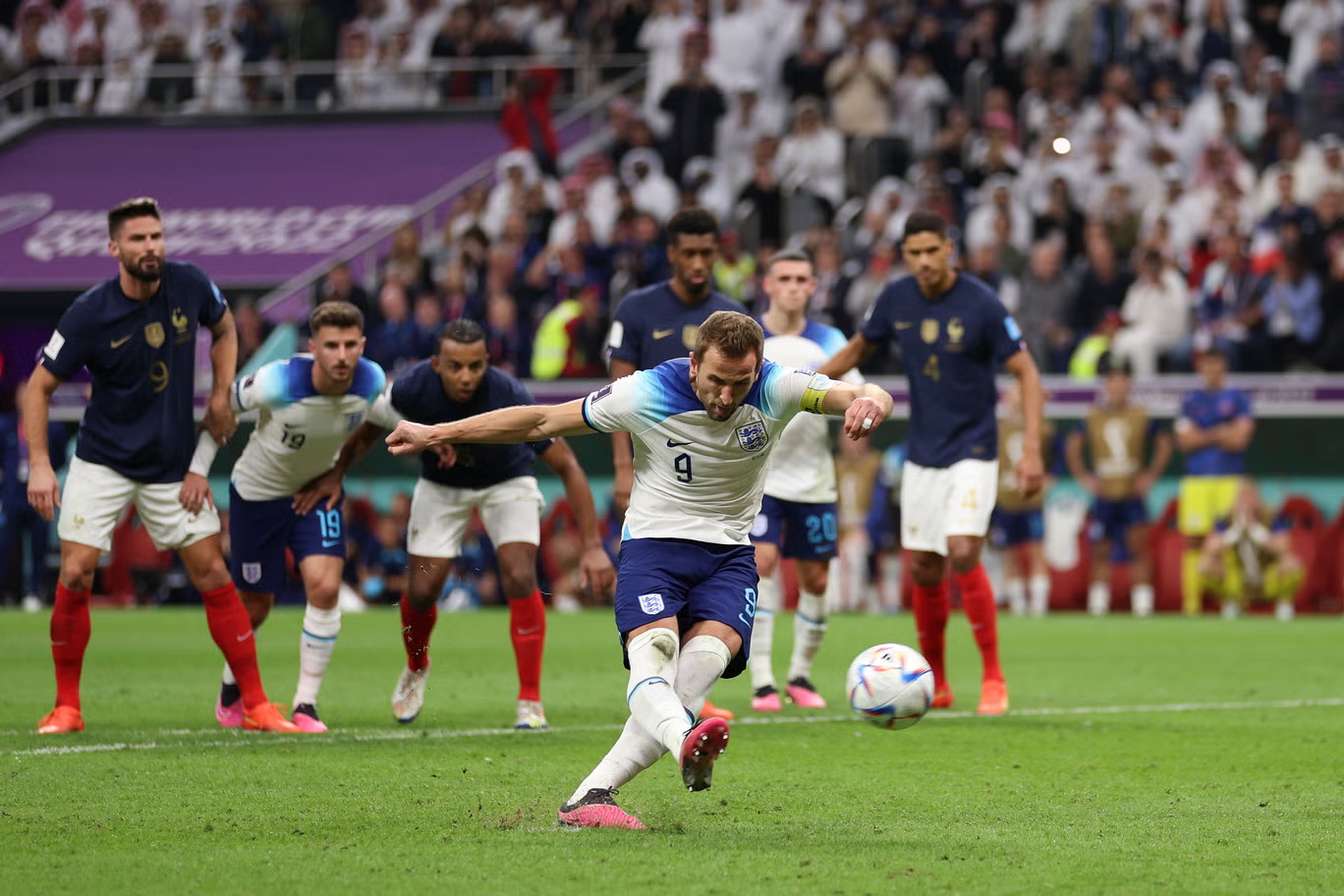
The Role of Luck in Knockout Football
No amount of spending takes luck out of a tournament. Even the best squads have been undone by a lucky deflection, a wrong offside call, or a goalkeeper having the game of his life.
England’s recent past has often been shaped by bad luck as much as bad decisions. The Lampard goal in 2010 that should have made it 2-2 against Germany. The shoot-out losses that became a running national joke.
Knockout football doesn’t care about reputation. Spain won three major tournaments in a row between 2008 and 2012, then crashed out in the 2014 group stage. Argentina, the reigning champions, lost their opening game in 2022 to Saudi Arabia. Nothing is certain.
What good preparation can do is cut down luck’s role. A squad built for different scenarios, with Tuchel picking Ivan Toney for his penalties, has clearly thought hard about the small moments that decide tournaments. You can’t control luck. You can control readiness.
Thomas Tuchel vs. Gareth Southgate: What’s Different?
This is the comparison English fans have quietly chewed over since Tuchel arrived. The honest answer is that a lot is different, for better and, maybe, in a few subtle ways, for worse.
Gareth Southgate deserves more credit than he usually gets. He took a broken team and gave them a tournament mindset, reaching a World Cup semi-final in 2018 and a Euro final in 2021. His style was cautious, sometimes too cautious, but it was built on real people skills and a feel for guiding young, high-profile players through huge pressure.
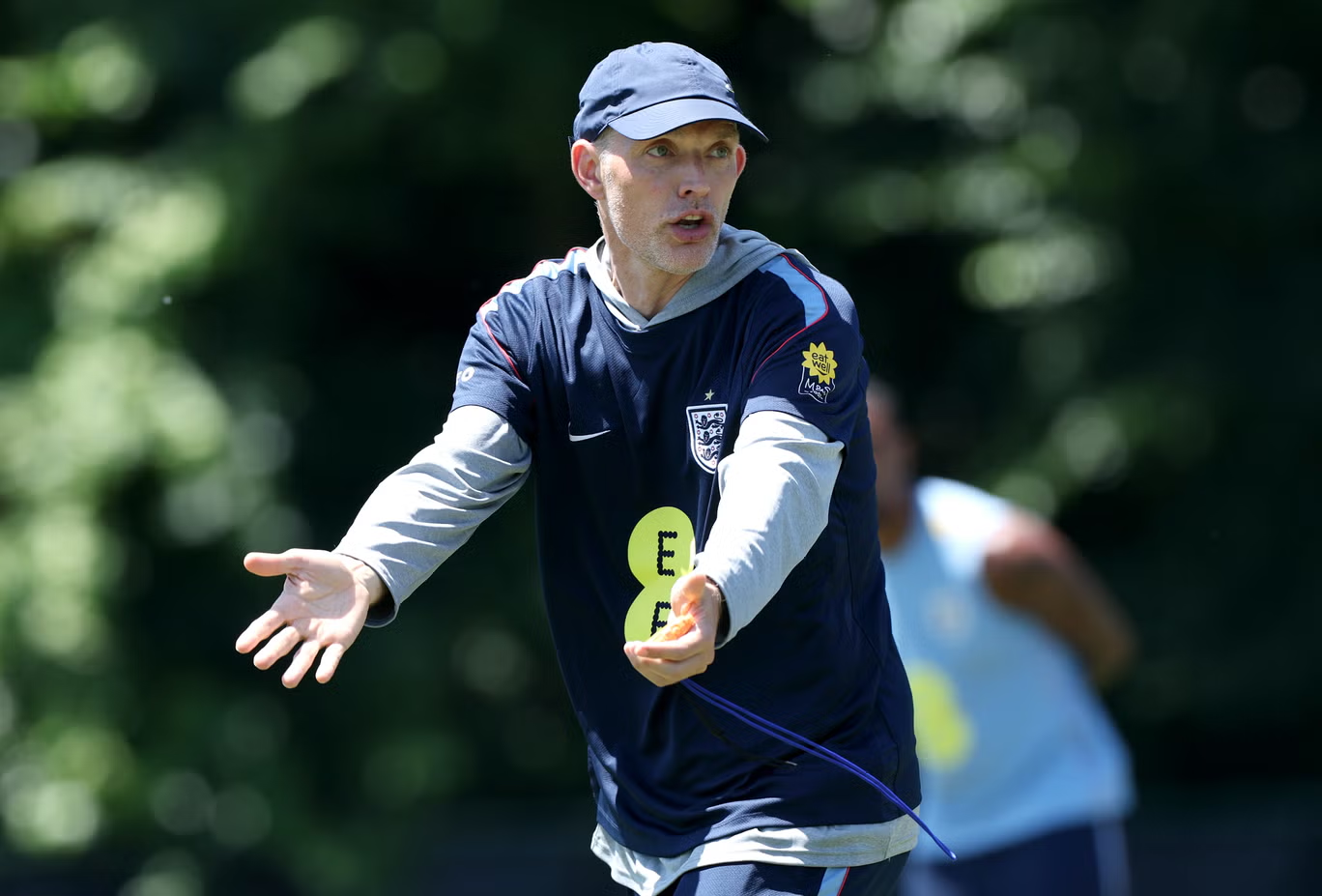
Tuchel is a different beast. He’s bold, direct, and not afraid of unpopular calls. He spent around four hours phoning players who missed out to explain why, not because he had to, but because he believes in being straight with people. His choice to pick not “the 26 most talented names” but “specialists for all kinds of different scenarios” shows a tournament plan, not a reputation game.
The Telegraph noted that Tuchel’s approach is “completely different to his predecessor’s,” and that difference could prove key. Southgate sometimes looked like a man trying to keep expectations low. Tuchel looks like a man who expects to win and has built everything around it.
There are risks. Strong belief can tip into stubbornness. The big calls, dropping Phil Foden, Cole Palmer, and Harry Maguire, look bold now and could look brilliant or disastrous depending on the next seven weeks.
Tactical Challenges: The No. 10 Glut and the Defensive Midfielder Problem
For all the excitement, England’s squad has real problems Tuchel must handle.
The biggest is the lack of a top defensive midfielder. Declan Rice is the best option, but his role has changed; he’s as good arriving in attack as he is shielding the back four. Behind him, the depth is thin. Against France or Spain, who press hard and win the ball in the middle, that could be a serious weakness.
Then there’s what The Independent’s Miguel Delaney called the No. 10 problem. England are spoilt in attacking midfield. Bellingham, Eze, Foden (absent), Palmer (absent), and Morgan Gibbs-White (absent) are all best behind the striker. You can’t play all of them. You can’t even play three without crowding the middle and blunting each one.
Tuchel’s fix, stripping it back and building around Bellingham with Eze and Rogers in rotation, makes sense. But it means England go into a World Cup without world-class players who simply didn’t fit the plan.
Reece James can fill in centrally too, and that adds handy flexibility. In a tournament where heat, tiredness, and rotation all matter, that versatility could be worth more than a one-position specialist.
England vs. The Elite: How Do They Stack Up?
Spain, France, Argentina, Brazil. These names sit at the top, and England will need to beat at least two of them to win it all.
Spain are one of the most settled sides around; their club-style play flows straight into the national team, and their midfield depth is huge. France look stronger on paper than the 2018 winners, with Kylian Mbappé behind a forward line opponents truly fear. Argentina have their best squad since Maradona’s day. Brazil, rebuilding under a new coach, are less sure of themselves but still capable of magic on any night.
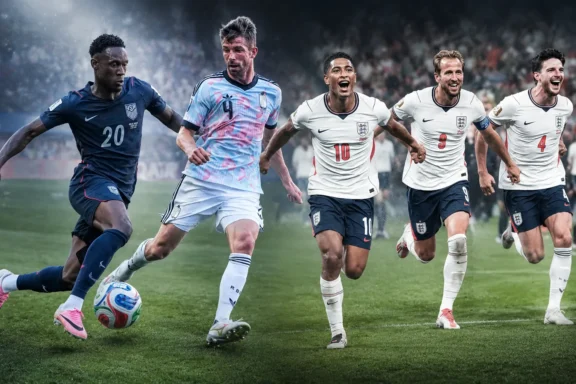
England’s first XI, with Saka, Kane, Bellingham, Rice, and Rashford adding width, can match any of them. Kane is a world-class finisher with Champions League experience. Bellingham, at his best, is among the five best attacking midfielders on the planet. Saka has been brilliantly consistent for Arsenal, one of Europe’s strongest clubs this season.
The gap is in depth. Spain and France can swap five, six, seven players with little drop-off. England’s second string is thinner. A bad injury to Kane or Rice would change things a lot.
This is where Tuchel’s planning really matters. The squad was built to deal with those problems, not pretend they aren’t there.
The Croatia Opener: More Than a Group Game
England face Croatia in their opening match on 17 June. The timing is poetic in a way that makes fans nervous.
It was Croatia who beat England in the 2018 semi-final, a result that still hurts. And it was Croatia who handed England an embarrassing group-stage defeat at Euro 2020 before England recovered. There’s plenty of history here.
But Croatia in 2026 are not Croatia in 2018. That golden generation, built around Luka Modrić, Ivan Rakitić, and a midfield that could boss games for ninety minutes, is getting old. Modrić is still there and still has quality moments, but the legs have gone. Croatia qualified, but they no longer carry the threat of their peak.
England qualified with a perfect record and didn’t concede a single goal, a real sign of defensive strength heading in. The Croatia opener is winnable. Beyond that, Group L (with Ghana and Panama) is there to be navigated. England should go through comfortably.
The danger is treating the group stage as a sure thing. England have slipped before when expectation outran focus. Tuchel, to his credit, has framed nothing as guaranteed. “Once we get this energy right, anything is possible,” he said, the right tone for a team that still has to earn it.
Is This Finally England’s Time?
Here’s the honest answer: maybe. And that’s a more hopeful maybe than England fans have felt with real belief for a long time.
The groundwork is real. The FA’s investment in smart, skilful players has produced a generation that can truly compete at the top. The manager is sharp, both tactically and with people. The core of Kane, Bellingham, Saka, and Rice has won at the highest level and knows what big tournaments demand.
The problems are real too. The defensive midfielder question won’t fix itself. The depth behind the first XI is thinner than England’s rivals’. Luck, as always, will play its part. And no fan old enough to remember the last three decades should walk into any knockout game feeling certain.
What has changed is the foundation. For the first time in sixty years, England aren’t just hoping. They’re properly ready.
Whether that turns into a trophy, or into another chapter of heartbreak that future fans recite alongside ’98, ’06, and ’10, is a question only the next seven weeks can answer. But when the Croatia opener kicks off and the crowd roars, one question will hang over every match: is this finally England’s time?
FAQs
Thomas Tuchel is England’s head coach at the 2026 World Cup. The German took over after Gareth Southgate left following Euro 2024, and he’s gone for a scenario-based approach to selection, valuing tactical flexibility over simply picking the biggest names.
Jude Bellingham, Bukayo Saka and Declan Rice are England’s most important players, with Harry Kane the key man. Eberechi Eze and Marcus Rashford pose a real threat in wide areas, and Ivan Toney was picked mainly for his penalties in the high-pressure knockout games.
Phil Foden, Cole Palmer, and Harry Maguire were among the biggest names left out. Tuchel’s reasons came down to squad balance, fitness worries, and avoiding too many players in the same role, especially the No. 10 spot, where England have plenty of talent.
England were drawn into Group L alongside Croatia, Ghana, and Panama. Their opening match against Croatia is on 17 June 2026.
The most common worry is the lack of a top, specialist defensive midfielder to sit behind Declan Rice. Against the best sides with strong control in the middle, especially Spain and France, this could leave England exposed.


No Comments