

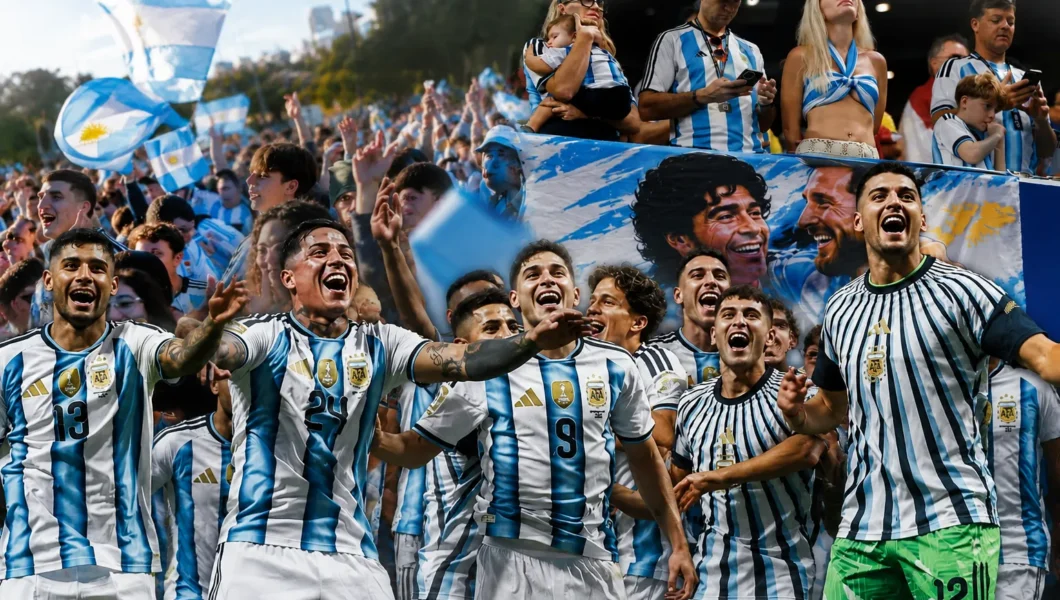
Argentina World Cup 2026 has been full of raw emotion. From Lionel Messi’s tears after a dramatic comeback against Egypt to fan chants about Maradona, the Malvinas, and a fourth World Cup star, this is a country that lives and breathes football.
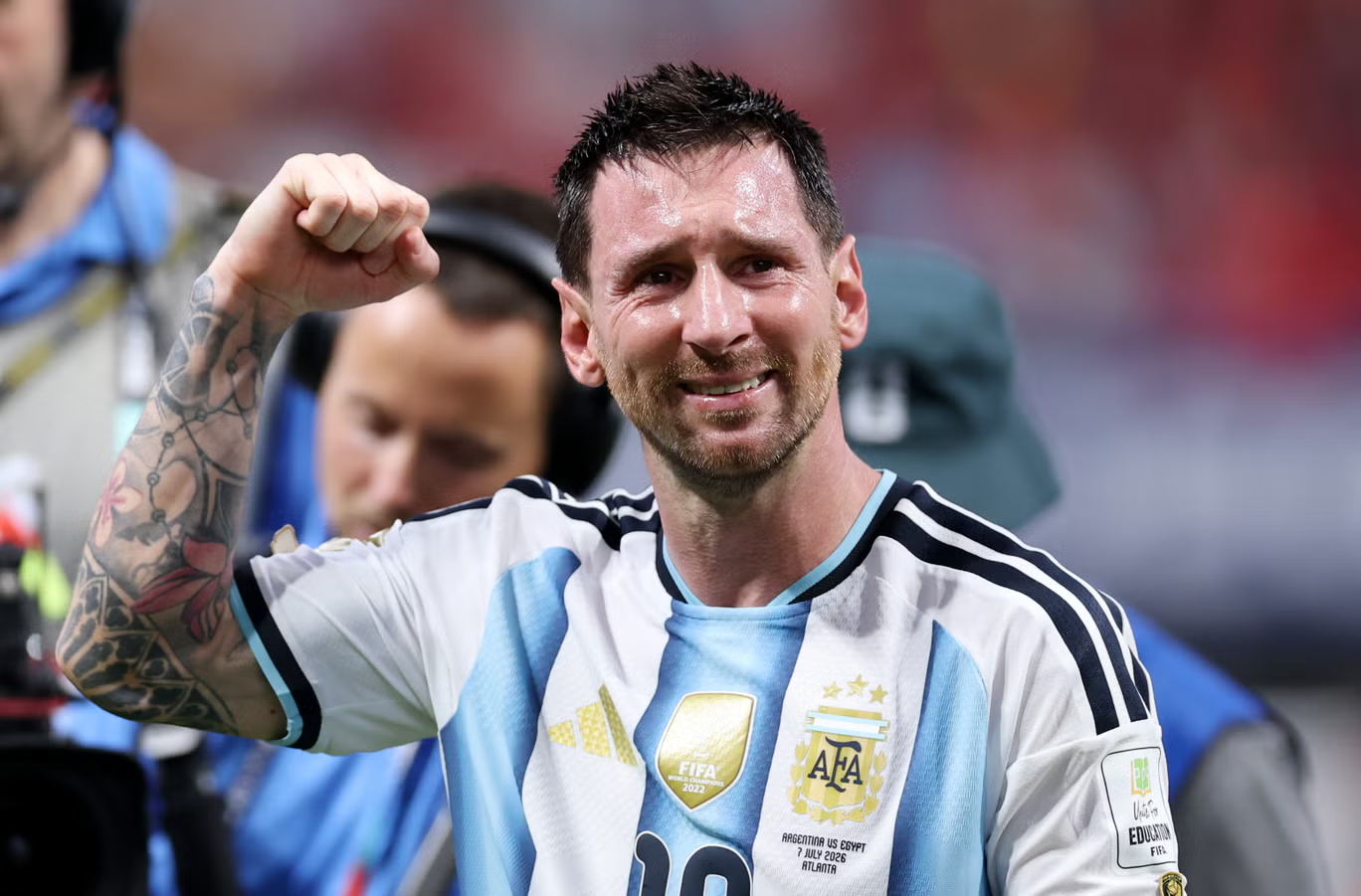
No team at the 2026 World Cup carries as much weight as Argentina. And we’re not just talking about talent. When manager Lionel Scaloni broke down in tears after Argentina’s round-of-16 win over Egypt on 7 July, it wasn’t just about football. It was the hope of an entire nation pouring out of him, all squeezed into ninety-plus minutes on a summer evening in Atlanta.
That’s Argentina in 2026. Desperate, passionate, brilliant, and complicated. Following this team isn’t simply following a sport. It’s following a country that has wrapped its whole identity around a game.
Why the Egypt Win Meant So Much More Than Three Points
Argentina were 2-0 down with just eleven minutes left. For most teams, that would be game over. Not for this lot.
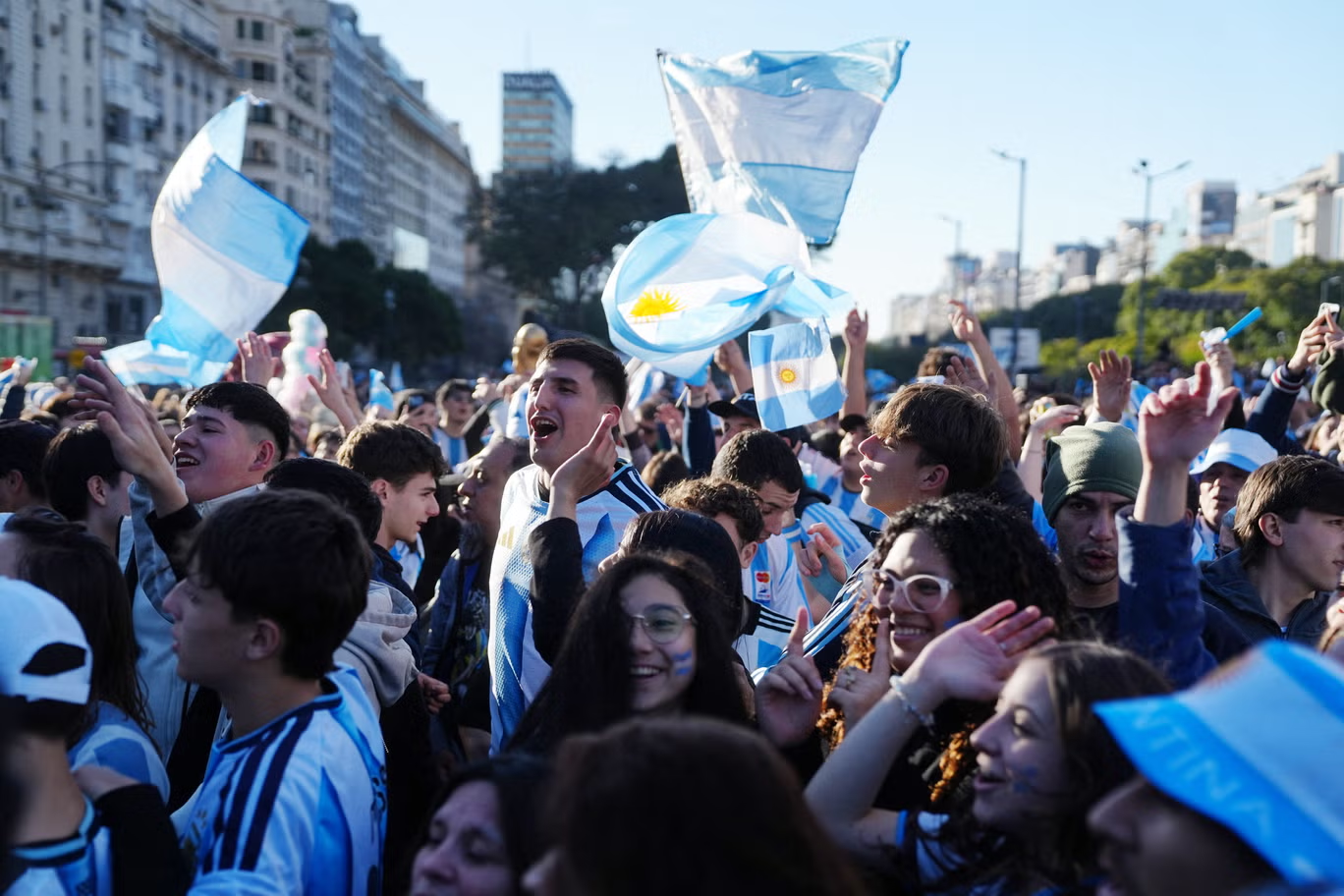
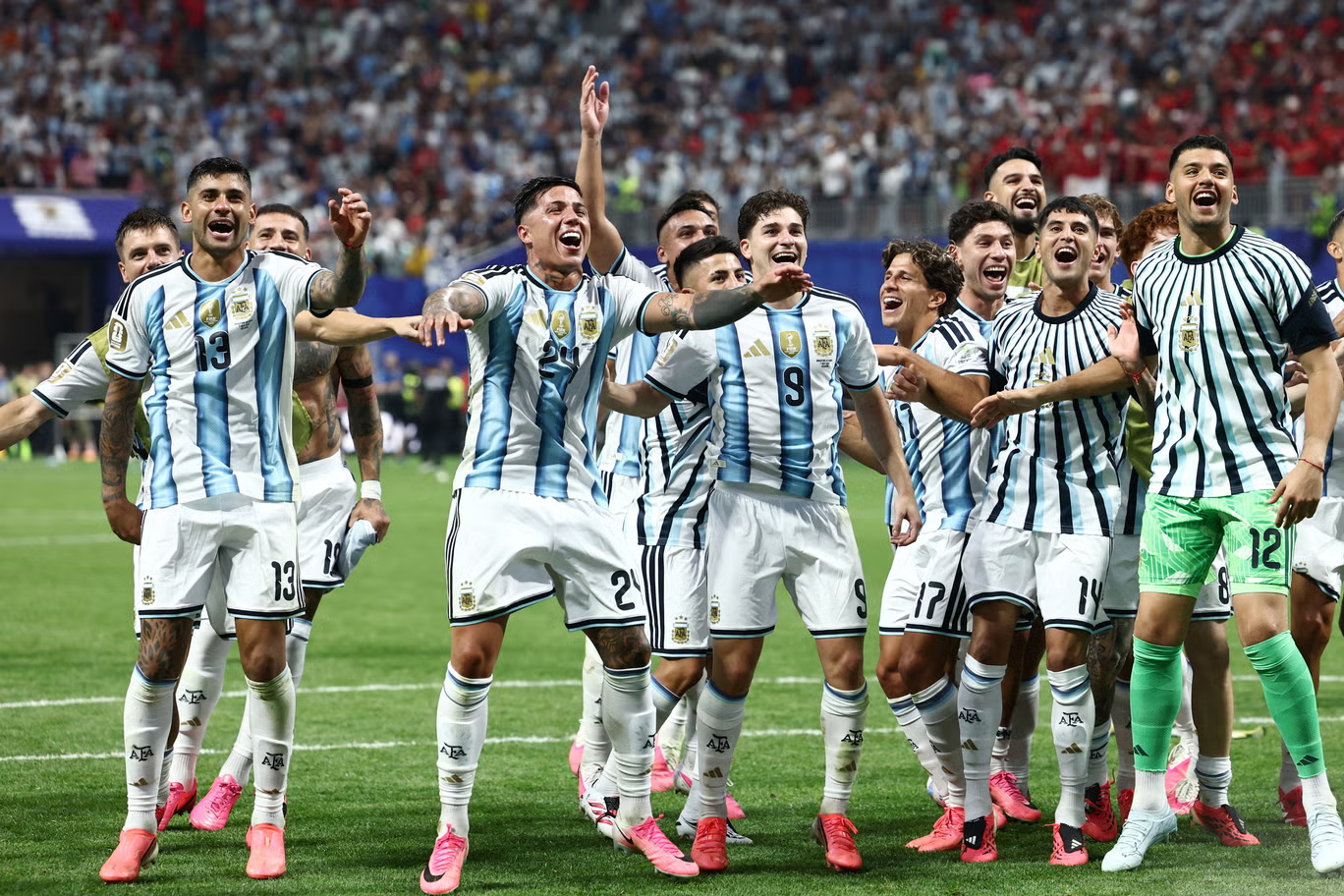
Cristian Romero pulled one back. Then Messi, all 39 years of him, scored the equaliser. Then, deep into stoppage time, Enzo Fernandez put the defending champions through with a goal that sent Argentine fans wild. Inside the stadium, in the streets of Buenos Aires, fans gathered at the famous obelisk to celebrate a round-of-16 win as though they had already lifted the trophy.
That tells you everything, doesn’t it?
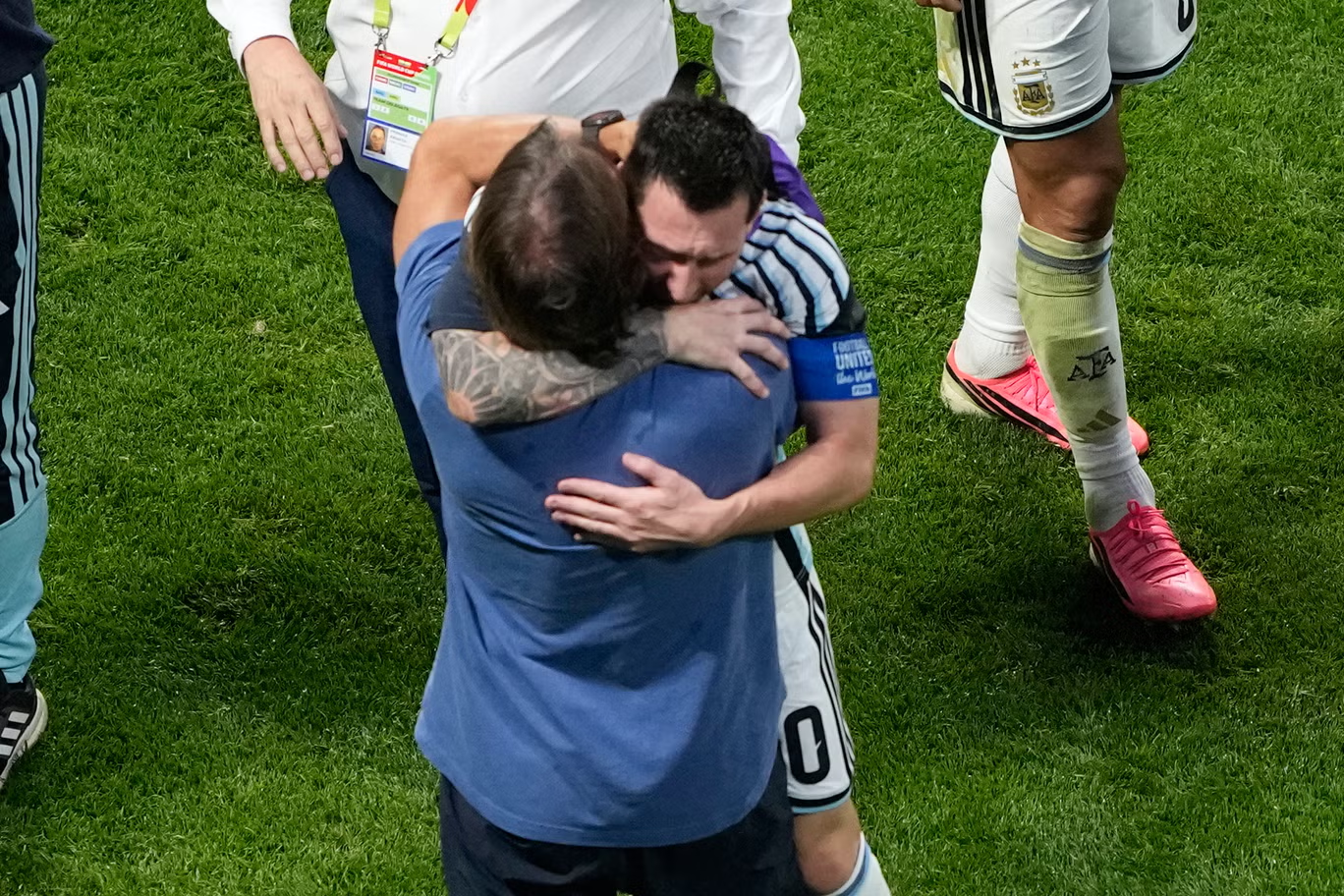
Scaloni spoke to reporters afterwards with red eyes and a shaky voice. He said: “I always get emotional. Sometimes the tears come out. The tears came in the dressing room too. The boys even call me ‘the cry baby,’ but I don’t care. For all of us who played football for 20 years, to feel what we felt today again is incredible.”
When a seasoned coach is moved to tears by reaching the quarter-finals, you start to realise that what Argentina is chasing goes far beyond football.
Messi at 39: Carrying a Nation on Ageing Shoulders
Messi missed a penalty in the first half against Egypt. For a young player, that might be forgotten by full time. For a 39-year-old in what is almost certainly his final World Cup, it hits differently.
He scored anyway. He set up the third goal. And then he stood on the pitch in Atlanta and wept, later calling it “a release.” Scaloni watched his captain with clear admiration. He said: “I’m convinced that he plays football for moments like this. For him to feel these emotions at this stage of his career is hard to explain.”
This is Messi’s sixth World Cup. He has scored a record 18 World Cup goals. He led Argentina to glory in Qatar in 2022, winning the Golden Ball after scoring seven times. His legacy is already secured. And yet here he is, older and slightly slower, still the heartbeat of this team. Still the reason Argentina believe before every big game.
The fans know it. They sing it. And that’s where the most fascinating story of this World Cup really starts.
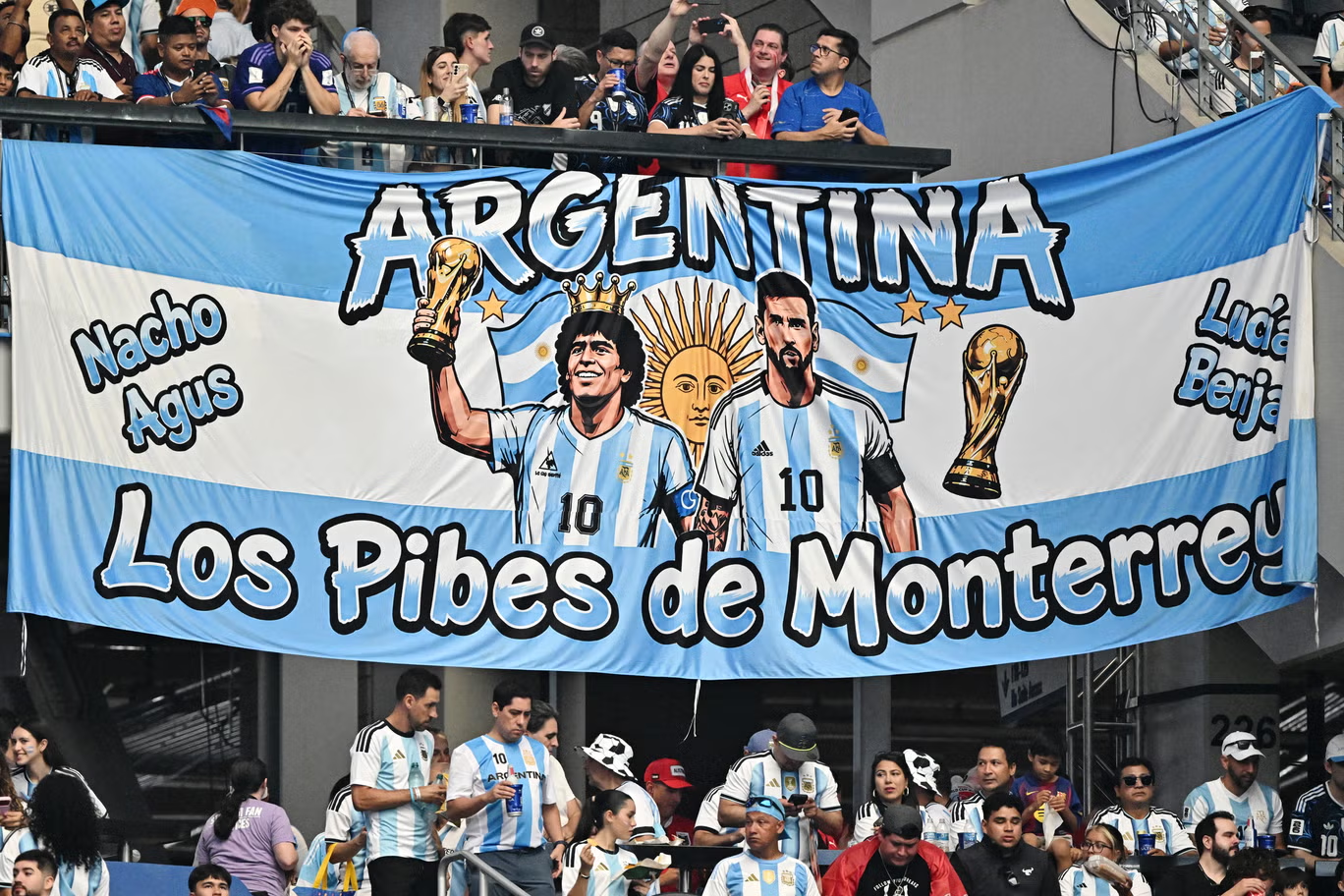
“For the Malvinas, for Diego, for Leo’s Last World Cup”
Every World Cup, the Argentine fans bring a song. It gets stuck in your head, rings around stadiums, and carries something bigger than football inside its melody. In 2026, that song is La Cuarta Estrella, which means The Fourth Star. It is produced by Palmito Música and set to the tune of “No me arrepiento de este amor” by Argentine singer Gilda.
The lyrics, translated into English, say:
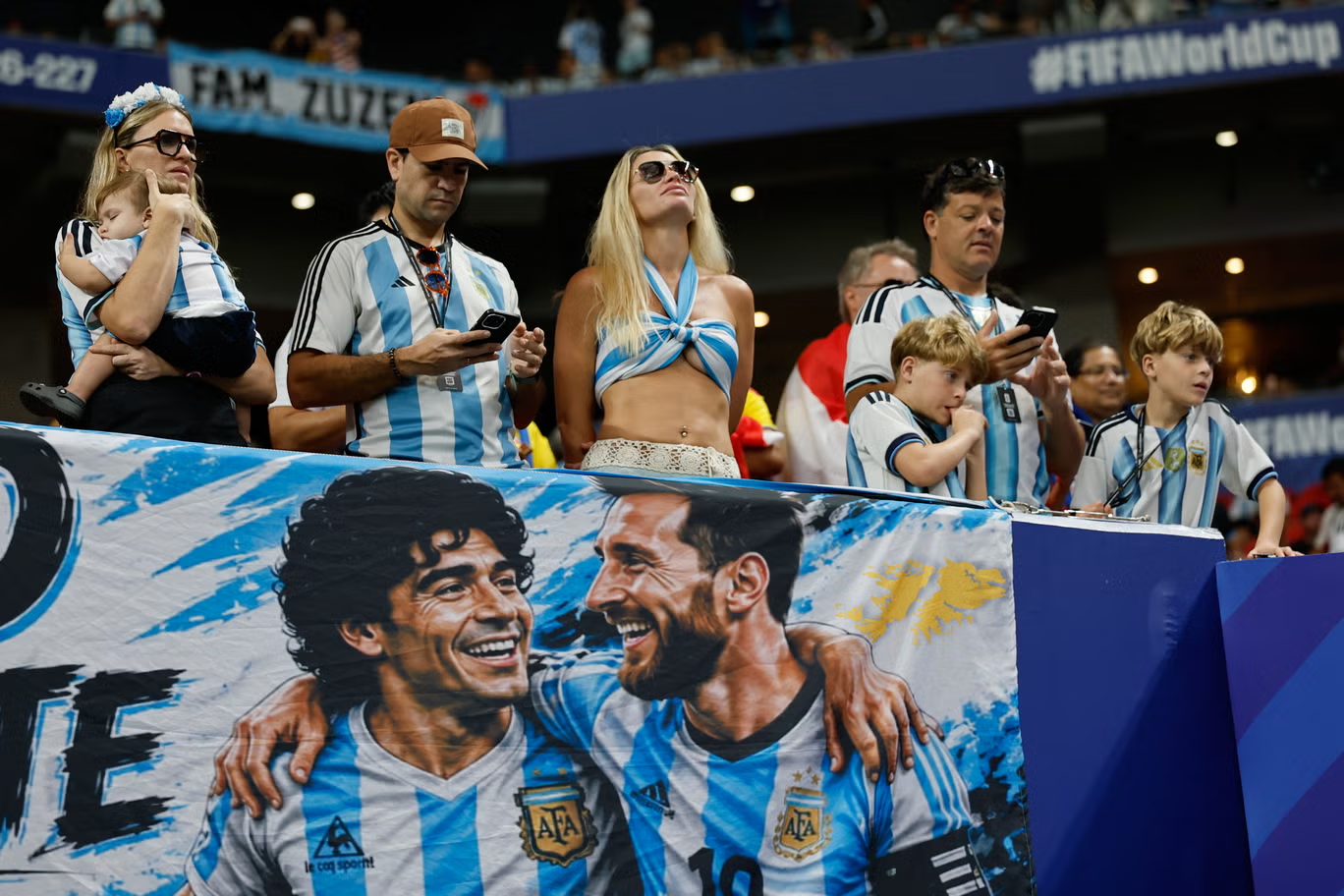
“I am a fan of the national team, I cheer it on with all my heart. We won the third title with Lionel, and we want to be champions once again. And 32 years later, La Scaloneta will avenge the trophy that was taken from the number ten. I want to see the fourth star shining on the jersey. I am Argentine from cradle to grave, for the Malvinas, for Diego, for Leo’s final chapter. Argentina, I want to see you become back-to-back champions.”
Three words stand out: the Malvinas, Diego, and Leo. Three pillars of modern Argentine pride, all packed into a football chant. The Argentine Football Association shared footage of Enzo Fernandez and Cristian Romero singing the song at full volume in the dressing room after the Egypt win. It spread all over the world within hours.
What the Falklands Have to Do With Football
For many people outside Argentina, the mention of the Falklands in the song raised a few eyebrows. For Argentines, it needs no explanation at all.
Argentina calls the islands Las Malvinas. In 1982, Argentina sent troops to seize the islands from British control. A ten-week war followed, which killed 649 Argentine soldiers before British forces reclaimed the territory. Argentina has disputed British ownership ever since. The islands appear as Argentine territory on maps throughout the country. Children are taught in school that they belong to Argentina. Three clubs in the top two Argentine football divisions play in stadiums whose names translate to “the Argentine Falklands Stadium,” even though those grounds are over a thousand miles from Port Stanley. And yet, 99.8% of Falkland Islanders voted to remain British in a 2013 referendum.
None of that changes the emotional truth for Argentines. The Malvinas are a wound that has never fully healed, and football has long been tied up with that grief.
Four years after the Falklands War, Diego Maradona stood on a pitch at the 1986 World Cup in Mexico and punched the ball into the England net. He called it “the Hand of God.” Minutes later, he scored what many still believe is the greatest goal in football history, a 60-yard run past the entire English team. Argentina defeated England by a score of 2-1 to win the tournament. Many Argentines saw that victory as more than sport. It felt like payback for 1982.
Fast forward forty years and Argentina and England are on the same side of the 2026 World Cup draw. They could yet meet in the semi-finals. That prospect has brought all of this history rushing back. Fans at the Atlanta game were heard chanting: “Whoever doesn’t jump is an Englishman.” Even Gary Lineker, speaking on his podcast The Rest is Football, mentioned the “Malvinas” unprompted, saying: “There’s so much history between our nations, isn’t there?”
Football as an Escape From a Country in Crisis
It would be easy to put all of this down to nationalism. But that would miss the bigger picture. The emotion surrounding Argentina’s football team also comes from the very real struggles of everyday life back home.
At least 13 million people in Argentina live below the poverty line. Inflation has been a serious problem for years. The country is deeply divided politically. For many Argentines, Messi’s rise from a working-class kid in Rosario to the greatest footballer in history feels like proof that hard work and talent can overcome tough circumstances. It is the Argentine Dream made real.
Maradona and Messi both came from difficult beginnings and became almost legendary figures in the national mind. Their World Cup victories are, without exaggeration, among the biggest shared experiences in Argentina’s modern history. When everyday life feels difficult, there is always the shirt, the stadium, and the song.
What Happens When Messi Is Gone?
Here is the question that hangs over every Argentina win in 2026. What comes next?
Messi will almost certainly not be at the 2030 World Cup. He is 39 now. Already, he has had to dig deeper than ever just to get Argentina past Cape Verde and Egypt, two games that should not have been half as nerve-wracking as they were. As one viral comment put it: “Argentina are basically the ‘what if we gave Atletico Madrid Lionel Messi?’ experiment.”
There is no clear successor. Nobody else in the squad could carry the team the way Messi has done for twenty years. There are talented players, Romero, Fernandez, Lautaro Martinez, but none who could anchor a side the way Messi does, lifting everyone around him while also producing magic on his own.
The Shadow of Corruption
The lack of a long-term plan is not an accident. For decades, the Argentine Football Association was run by Julio Grondona. Under his leadership, tens of millions of pesos that should have gone into youth football and infrastructure ended up elsewhere, including in Swiss bank accounts. Grondona even became known for reportedly offering Argentina’s World Cup hosting vote to an English football official in exchange for the Falkland Islands, when England were in the frame to host the 2018 World Cup.
That missing money represents a whole generation of coaches, training grounds, academies, and chances that never happened. Finding another Messi or Maradona was always going to be incredibly unlikely. Corruption made it even less likely.
Is Argentina Actually Good Enough to Win?
That is a fair question. Argentina are the defending champions. They have Messi. They have experienced players who know how to win. But they have also been lucky. Needing 120 minutes to beat Cape Verde was a warning sign. Coming back from 2-0 down against Egypt was brilliant, but it also showed a team that can struggle for long stretches and only really click when things get desperate.
Scaloni himself admitted the inconsistency. He said: “Against Cape Verde it was worse, we really looked in trouble. Today, even when it was 0-2, the feeling was that at some point we would get a chance and turn it around.”
The fighting spirit is real. The belief is real. But spirit and belief can only take you so far. Against the best teams left in the tournament, Argentina will need quite a bit more than passion alone.
The Most Emotionally Charged Team on the Planet
Whatever happens from here, whether Argentina win that fourth star or fall heartbreakingly short, one thing is already clear. No team at the 2026 World Cup carries as much into every match.
Not just a badge, not just a flag. A lost legend in Diego Maradona. A living icon in Lionel Messi, playing what is almost certainly his final tournament. A wartime wound that never quite closed. And millions of people back home, many with very little to cheer about in daily life, all pinning their hopes on 23 men in light blue and white.
When Scaloni cried in Atlanta, he was not just crying about football. He was crying about all of it, the sheer weight of carrying a nation that needs this more than the outside world can fully understand.
Watch out for Argentina in 2026. They do not just want to win. They need to.
FAQs
Almost certainly, yes. Messi turned 39 in 2026 and has suggested this is likely his final World Cup. His wife Antonela Roccuzzo posted on Instagram after the Egypt game: “No more words left.” Messi would be 43 years old by the time the 2030 World Cup takes place.
La Cuarta Estrella is Argentina’s unofficial 2026 World Cup anthem. It is produced by Palmito Música and set to the melody of Argentine singer Gilda’s “No me arrepiento de este amor.” The song talks about Messi’s 2022 World Cup title, Diego Maradona’s 1994 expulsion from the USA World Cup, the Malvinas, and the hope of winning a fourth World Cup star. Players including Enzo Fernandez and Cristian Romero were filmed singing it in the dressing room after the Egypt win.
Argentina beat Egypt 3-2 in their round-of-16 match on 7 July 2026 in Atlanta. They were 2-0 down with eleven minutes left before Cristian Romero, Messi, and Enzo Fernandez scored three goals in the closing stages. Earlier in the tournament, Argentina also needed 120 minutes to beat Cape Verde 3-2.
Argentina are scheduled to face Switzerland or Colombia in the quarter-finals in Kansas City.
Yes. The two countries are on the same side of the draw and could meet in the semi-finals if both win their quarter-final matches. That prospect has brought back memories of the 1982 Falklands War, Maradona’s Hand of God in 1986, and the long rivalry between the two nations.



No Comments