

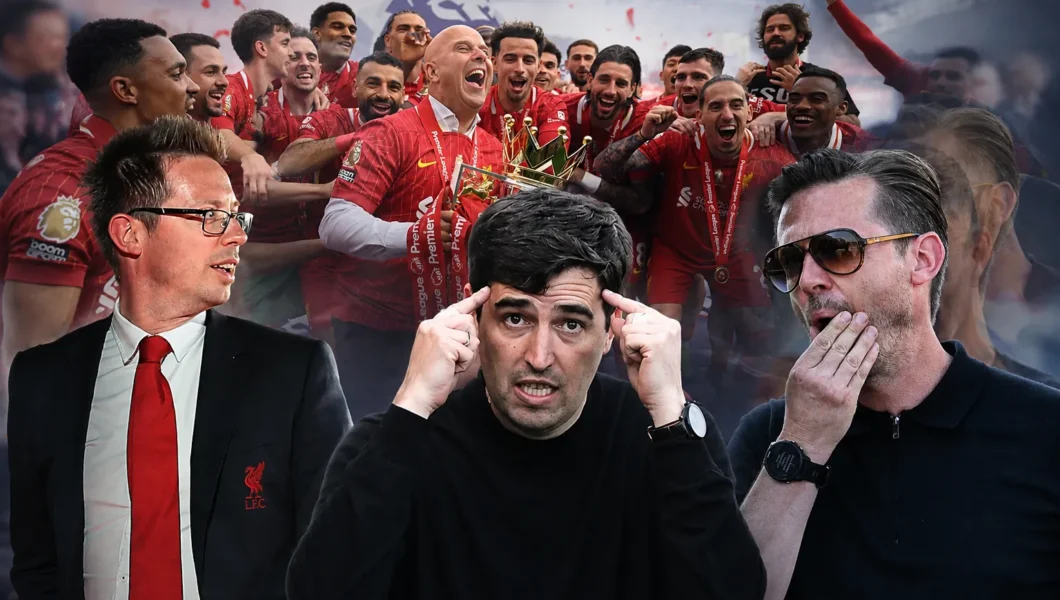
Michael Edwards has left his job as Fenway Sports Group’s CEO of Football, ending his second spell at Liverpool on 10 July 2026. FSG had wanted to buy other clubs but never did, and that was a big reason Edwards decided to go. Sporting director Richard Hughes is also expected to leave, while new boss Andoni Iraola takes charge of a squad that cost nearly £550m to build.
Michael Edwards has left Liverpool for the second time. He is the man many fans credit with turning Liverpool into one of the best-run clubs in Europe. He confirmed his departure on 10 July 2026, leaving his role as FSG’s chief executive of football with a year still left on his deal.
This is a big moment for the club. Edwards leaving is not just about one person going. It points to something bigger: a club going through major changes at the top, dealing with the fallout of a difficult season, and facing real questions about its future leadership. For Liverpool supporters, it is a lot to take in all at once.
Edwards told FSG he wanted to leave back in autumn 2025. He worked out his notice and is not expecting any kind of payout, since the decision was his. FSG wanted him to stay and announced the news publicly on Friday. Now that it is official, two big questions need answering: how did things get to this point, and where does Liverpool go from here?
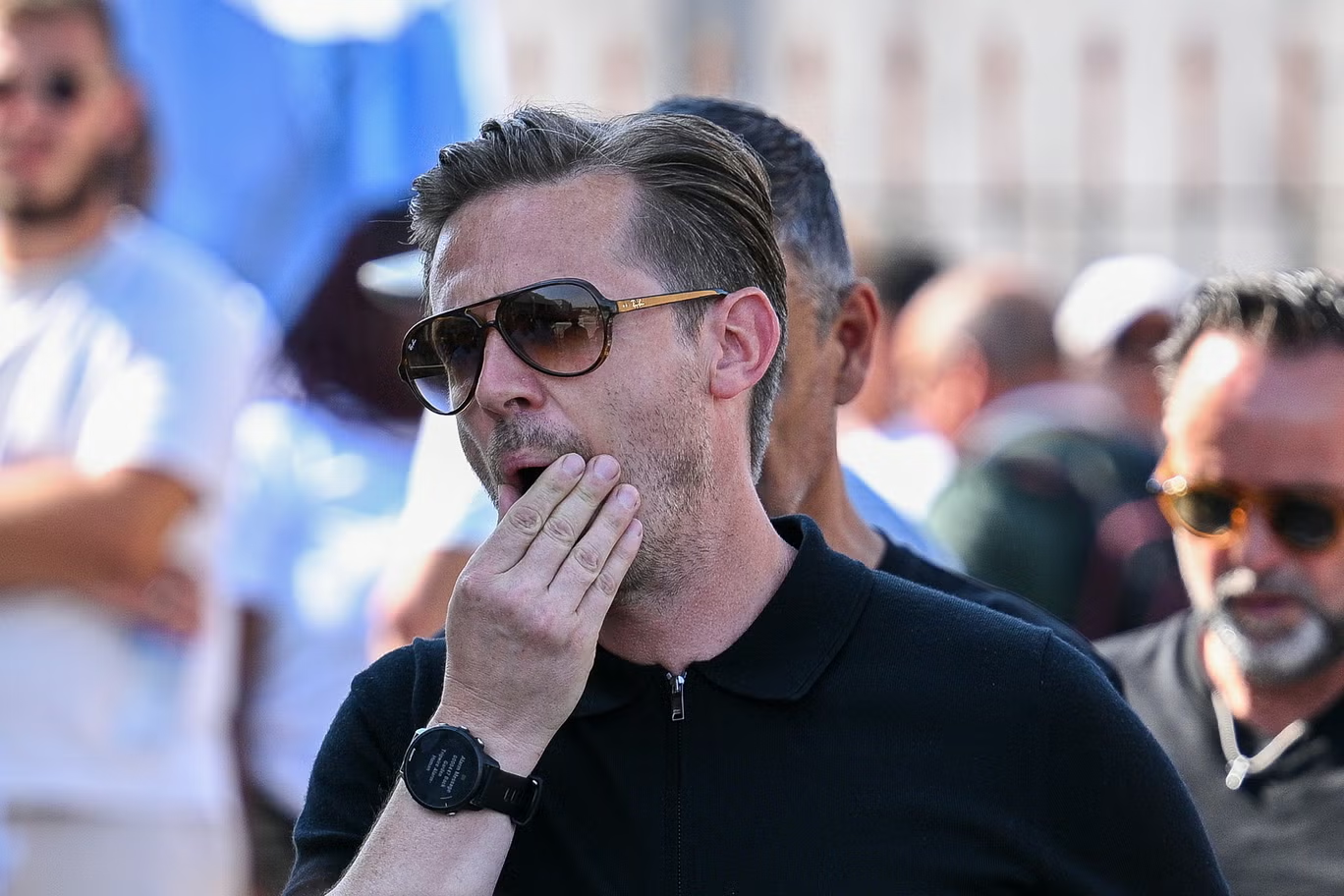
Why Did Michael Edwards Come Back to Liverpool in 2024?
Edwards first joined Liverpool in 2011 and worked as the club’s sporting director from 2016 to 2022. That first spell made his name. He was the man behind the signings of Mohamed Salah, Sadio Mane, Virgil van Dijk, and Alisson Becker. Those players were the foundation of everything Jurgen Klopp achieved at Anfield.
When Edwards left in 2022, most people thought that was the end of his Liverpool story. Then Klopp announced he was leaving in 2024, and FSG got back in touch.
This time, the job was different. Instead of coming back as sporting director, Edwards was brought in as CEO of Football for FSG. It was a bigger, more senior role. The idea was not just to find the next great signing. It was about changing the way FSG ran football as a whole.
The thing that really drew him in was the chance to help FSG buy other clubs and build a multi-club group. That plan, as it turned out, never got off the ground.
What Happened to FSG’s Plan to Buy Other Clubs?
FSG looked at deals for around 25 clubs, according to The Independent. Names like Malaga, Bordeaux, and Getafe were all discussed at some point. But none of those talks led to a deal. FSG eventually decided not to buy any other club, though they have not completely ruled it out for the future.
For Edwards, this was the moment things fell apart. He had taken the role because he wanted to build something much bigger than one club. When that project was dropped, he no longer felt there was enough for him to do. The Guardian reported that FSG’s decision to walk away from the multi-club idea put Edwards’ future in doubt. Not wanting to go back to being a regular sporting director, he chose to move on.
In his own words: “When I returned, I was excited not only by the opportunity to help guide Liverpool through an important period of transition, but also by the chance to help shape FSG’s wider football ambitions. While that broader project ultimately evolved differently to how we had originally envisaged, I am proud of the work our team undertook in presenting ownership with a broad range of thoughtful and well-developed options for the future.”
It is a polite statement, but the message is clear. The multi-club dream was what brought him back. Once it was gone, so was his reason to stay.
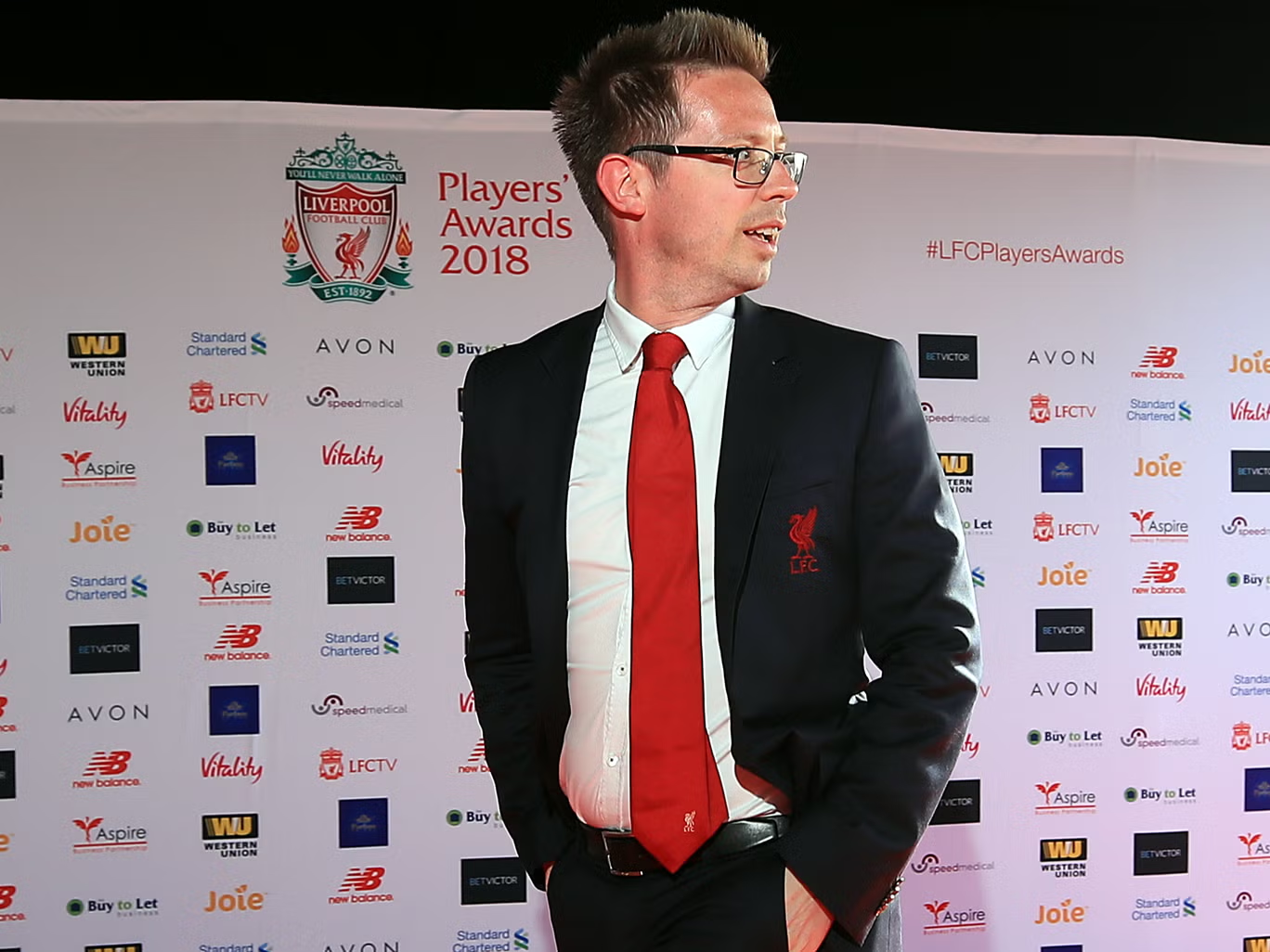
How Does Edwards’ First Spell Compare to His Second?
Looking at both spells side by side, the difference is striking.
In his first spell from 2016 to 2022, Edwards had one clear job: build the best possible squad within Liverpool’s budget. The results were brilliant. Liverpool won the Premier League, the Champions League, the FA Cup, and the League Cup. The signings were spot on, smart, and regularly ahead of what other clubs were doing.
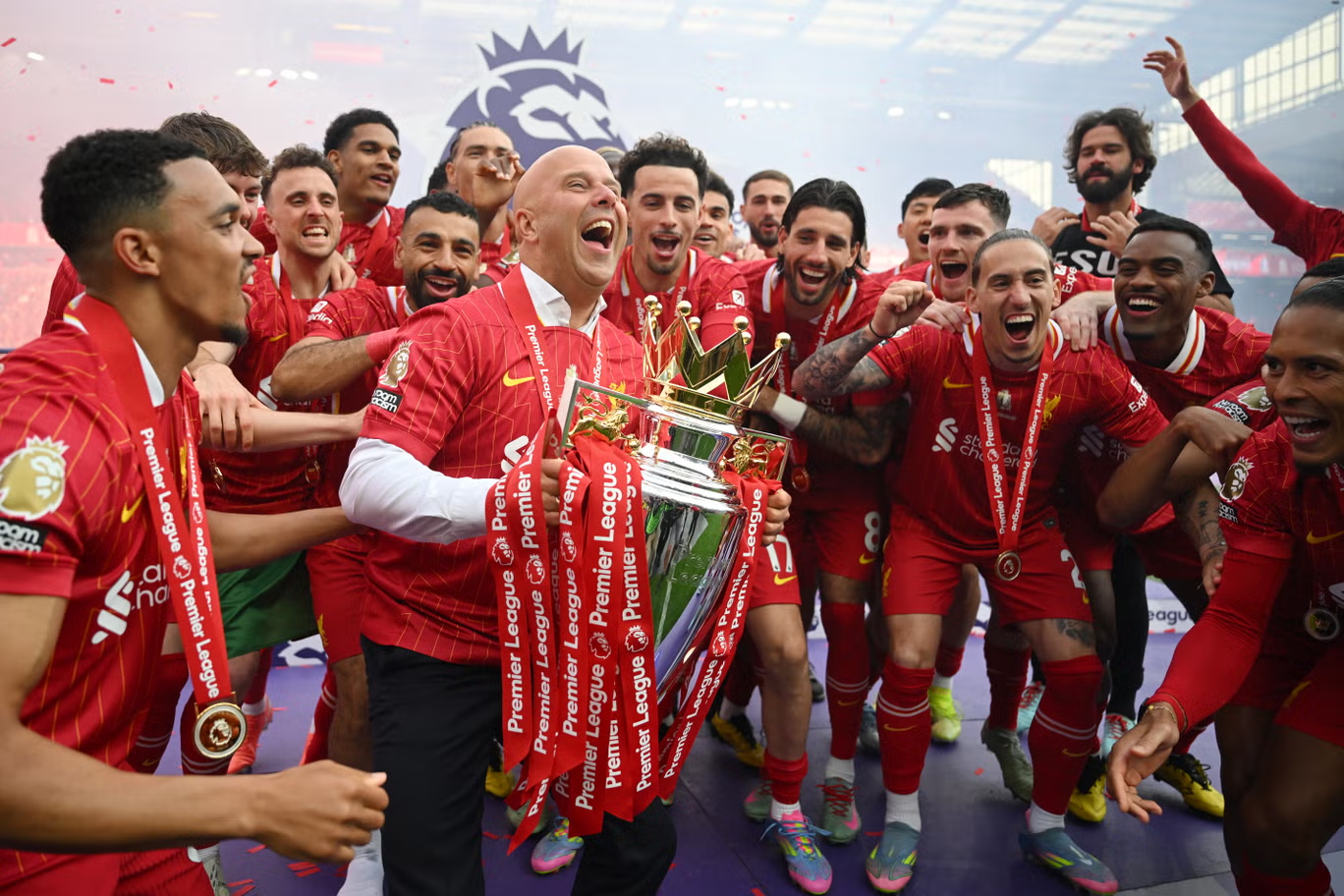
His second spell from March 2024 to July 2026 was much harder to judge. The role was bigger, the expectations were broader, and the situation was more complicated. Liverpool had just lost Klopp and needed a new manager, a new plan, and fresh direction. Edwards helped with all of that. He brought in Arne Slot as manager, oversaw a major squad rebuild, and watched Liverpool win their historic 20th league title in Slot’s first season.
But Slot’s second season went badly wrong. After a poor title defence in 2025 to 2026, both Hughes and Edwards agreed it was time for a change. Slot was sacked. Andoni Iraola came in. And now Edwards has gone too, leaving the club in the middle of yet another transition.
FSG president Mike Gordon thanked Edwards and said he had helped Liverpool “successfully navigate a significant period of transition.” Kind words, but it felt more like a goodbye than a celebration.
Did Liverpool’s £550m Spend Pay Off?
It is a fair question. The transfers under Edwards’ second spell were ambitious, and they cost a lot of money.
Liverpool broke the British transfer record to sign Alexander Isak from Newcastle United for £125m. Add in Florian Wirtz, Hugo Ekitike, Milos Kerkez, Jeremie Frimpong, Giorgi Mamardashvili, and Giovanni Leoni, and the squad was rebuilt from top to bottom. This summer’s new arrivals, Jeremy Jacquet (£60m from Rennes) and Victor Munoz (£34.5m from Newcastle), pushed the total close to £550m according to The Independent.
That is an enormous amount of money for a club that made its name by spending wisely.
Slot’s title win in 2024 to 2025 suggested the money had been well spent. But the season that followed raised serious doubts. Was the squad put together in the right way? Were there key positions left uncovered? Did rebuilding so quickly cause problems on the pitch that were hard to fix?
There are no easy answers yet. Iraola is the one who will have to work it all out, and he is taking over a squad that still has plenty of question marks, despite the huge investment.
Will Richard Hughes Leave Liverpool?
This is where things get even trickier. Edwards is not the only senior figure who might be on the way out.
Richard Hughes, Liverpool’s sporting director, is widely expected to leave when his contract runs out in June 2027. BBC Sport reported on 2 July 2026 that Hughes is unlikely to sign a new deal and is instead expected to join his former Bournemouth colleague Simon Francis at Al-Hilal in the Saudi Pro League.
Both Hughes and Liverpool have said publicly that he is fully focused on the current transfer window and on helping Iraola settle in. That is the professional thing to say, and he may well see things through properly before he goes. But the signs all point in one direction.
If both Edwards and Hughes leave within a short space of time, Liverpool will face a real gap in leadership at the worst possible moment. FSG president Mike Gordon is expected to take a more active role to help fill that gap. It is not yet clear whether anyone will be brought in to replace Edwards directly, since that role was created specifically for him.
What Has Andoni Iraola Walked Into?
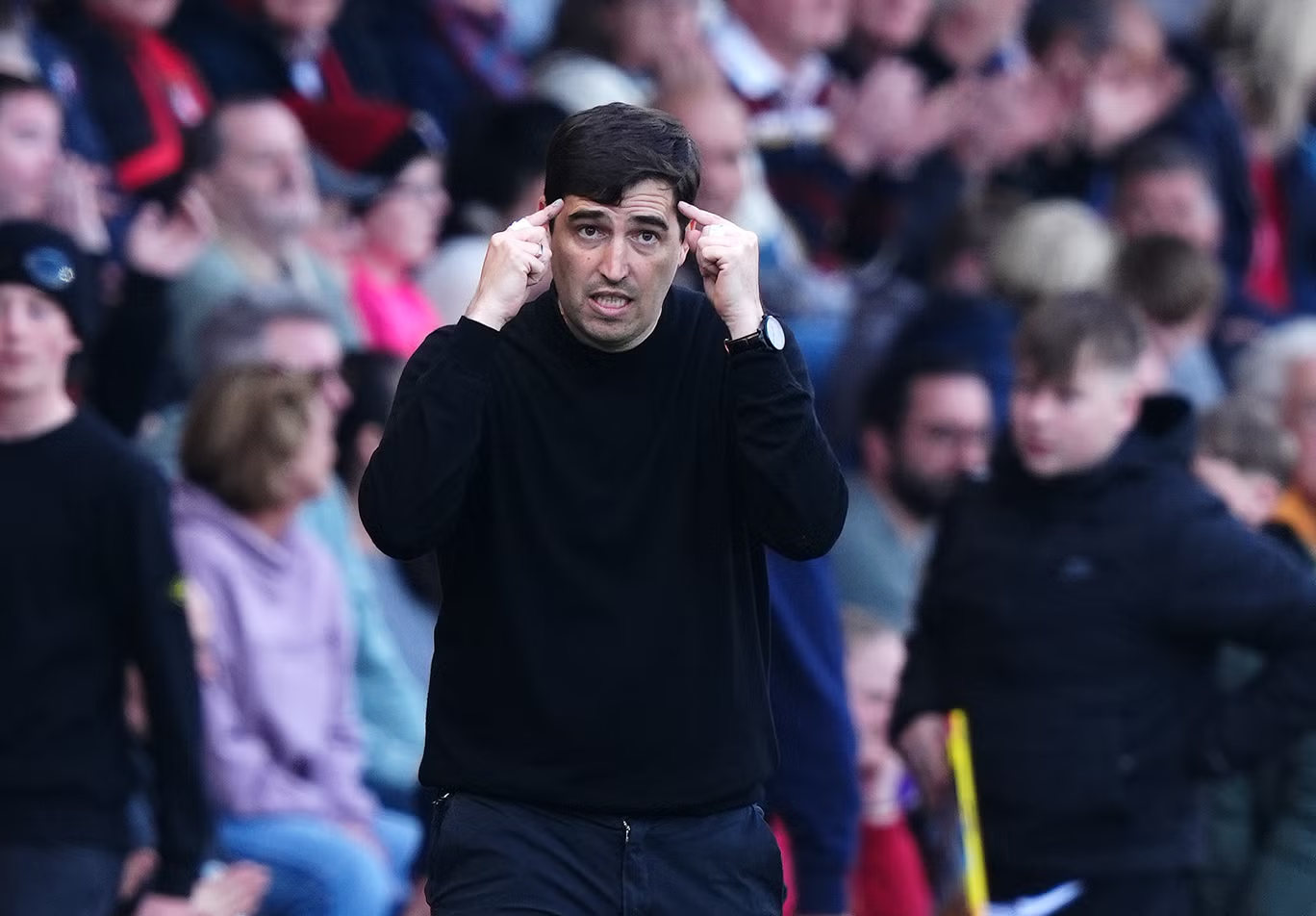
Iraola was confirmed as Liverpool’s new head coach on 4 June 2026. That was just six days after Slot was sacked. At 43, he becomes only the second Spanish manager in the club’s history, following Rafa Benitez.
He signed a two-year deal running to the end of the 2027 to 2028 season. That shorter contract suits how Iraola likes to work. He operated on similar terms at Bournemouth and Rayo Vallecano. Several other big clubs were interested, including Milan, Bayer Leverkusen, and Crystal Palace. But Iraola was clear: Liverpool was the only club he wanted.
On joining, he said: “I understand where I’m coming and what is expected. I’m ready for the challenge.” He also brought his backroom team with him. Assistants Tommy Elphick and Shaun Cooper joined, along with analyst Tom Webber, who spent ten years at Bournemouth, and fitness coach Pablo de la Torre, who has now worked with Iraola at four different clubs.
Hughes and Edwards chose Iraola because Liverpool needed to play a more exciting, attacking style of football. His record at Bournemouth was impressive. He improved the club every season without big resources and built a team known for pressing hard and moving fast. That was exactly what FSG wanted to see at Liverpool.
But Iraola is well aware of what he is inheriting. A squad that cost close to £550m. A sporting director who probably will not be around much longer. A leadership structure that is changing fast. This job calls for a lot more than just good training sessions.
What Is Next for Liverpool and for Michael Edwards?
Liverpool go into the 2026 to 2027 season with a new manager, a heavily overhauled squad, and a leadership setup unlike anything the club has had in recent memory. How Iraola manages the dressing room, gets his ideas across, and builds team spirit will matter enormously in the coming months.
As for Edwards, he leaves without any new job lined up publicly. Given how well respected he is in football, that will not last long. Whether he ends up back at a club as a traditional sporting director, or finds a bigger project that excites him the way the FSG multi-club plan once did, is anyone’s guess.
What is clear is that his second chapter at Liverpool did not have the ending anyone expected. The multi-club plan came to nothing. Slot did not last. And a summer full of change carries on.
Liverpool have come through tough times before. But for supporters who got used to the club being well run and successful, what is happening right now is well worth keeping a close eye on.
FAQs
Michael Edwards left because the multi-club ownership plan that brought him back to the club in 2024 was dropped. FSG looked at around 25 clubs but did not buy any of them. Without that bigger project to work on, Edwards felt the role was not going in the right direction and chose to leave, even though he still had a year left on his contract.
In his first spell from 2016 to 2022, Edwards was Liverpool’s sporting director. He helped the club sign some fantastic players and win the Champions League and Premier League. His second spell from 2024 to 2026 was a broader role as FSG’s CEO of Football. During that time Liverpool won their 20th league title, but it ended with a difficult season, the sacking of Arne Slot, and Edwards choosing to move on.
Andoni Iraola is a 43-year-old Spanish manager who previously led Bournemouth and Rayo Vallecano. Liverpool signed him on a two-year deal on 4 June 2026, just six days after sacking Arne Slot. The club felt Iraola was the right person to bring a more attacking, energetic style to the team. His record of improving clubs without big spending was a key reason for the appointment.
According to BBC Sport, reporting on 2 July 2026, Richard Hughes is not expected to sign a new contract at Liverpool beyond June 2027. He is strongly linked with a move to Al-Hilal in Saudi Arabia, where his former Bournemouth colleague Simon Francis is working. Hughes has said he is focused on Liverpool’s summer transfer activity and on supporting Iraola through his first season.
Liverpool have spent close to £550m on transfers under Edwards and Hughes, according to The Independent. Big signings include Alexander Isak for £125m, a British transfer record, as well as Florian Wirtz, Hugo Ekitike, Milos Kerkez, Jeremie Frimpong, Giorgi Mamardashvili, and Giovanni Leoni. Jeremy Jacquet (£60m) and Victor Munoz (£34.5m) arrived in the summer of 2026.
FSG has not said who, if anyone, will take over from Edwards. The Guardian reported that the club may not fill the role directly, as it was created specifically for him. FSG president Mike Gordon is expected to take a more hands-on approach to running Liverpool’s football operations going forward.


No Comments