

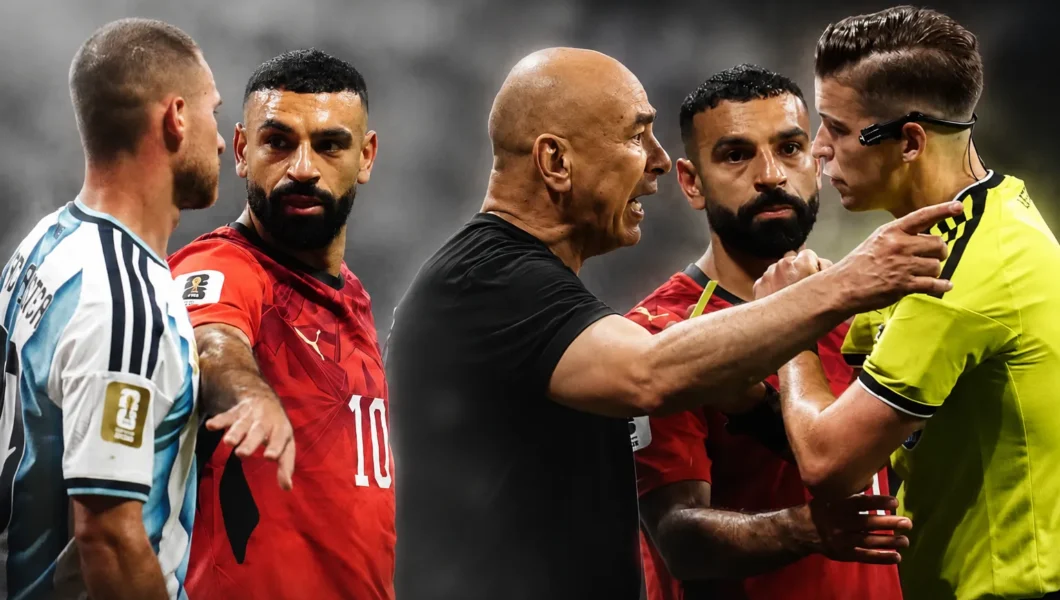
FIFA’s Chief Refereeing Officer Pierluigi Collina defended the match officials after Egypt claimed the governing body had fixed their 3-2 World Cup 2026 last-16 defeat to Argentina. Collina said that “nobody can question the integrity” of FIFA’s referees and that no outside party can influence the refereeing team, not even FIFA President Gianni Infantino.
One of the most dramatic and controversial matches of the 2026 FIFA World Cup did not end when the final whistle blew. Argentina’s stunning 3-2 comeback win over Egypt in the last 16 sparked days of press conferences, formal complaints, and heated statements. The fallout is still going strong.
Egypt were 2-0 up for 79 minutes. Then, in just a few frantic minutes, Argentina turned it all around. Three goals. Three big controversies. And a result that led Egypt’s players, coaching staff, and football association to make some of the most serious claims seen at a major tournament in years. They said the match had been fixed.
FIFA has now responded, and they were not holding back. Here is everything that happened, what everyone said, and what it all means for the rest of the tournament.
What Happened on the Pitch: The Decisions That Started It All
To understand why Egypt reacted so strongly, you need to know what happened inside the stadium. This was not a normal defeat. Egypt played well, arguably better than the world champions for long spells, and looked set for one of the biggest upsets of the tournament.
Then came the disallowed goal.
Egyptian winger Mostafa Ziko put the ball in the net in the second half, a strike that looked like it had put Egypt in a very strong position. VAR stepped in. The goal was ruled out because officials spotted a foul by Marwan Attia on Lisandro Martinez in the build-up to Ziko’s finish. Just like that, a potential 3-0 lead was gone.
After that, Argentina grew in confidence. Cristian Romero headed home from a Messi assist to make it 2-1. Lionel Messi, who went on to score his record 21st all-time World Cup goal, levelled at 2-2 in the 83rd minute after a scramble in the box. Then Enzo Fernandez headed in from close range off a long cross from Lautaro Martinez to complete a brilliant comeback.
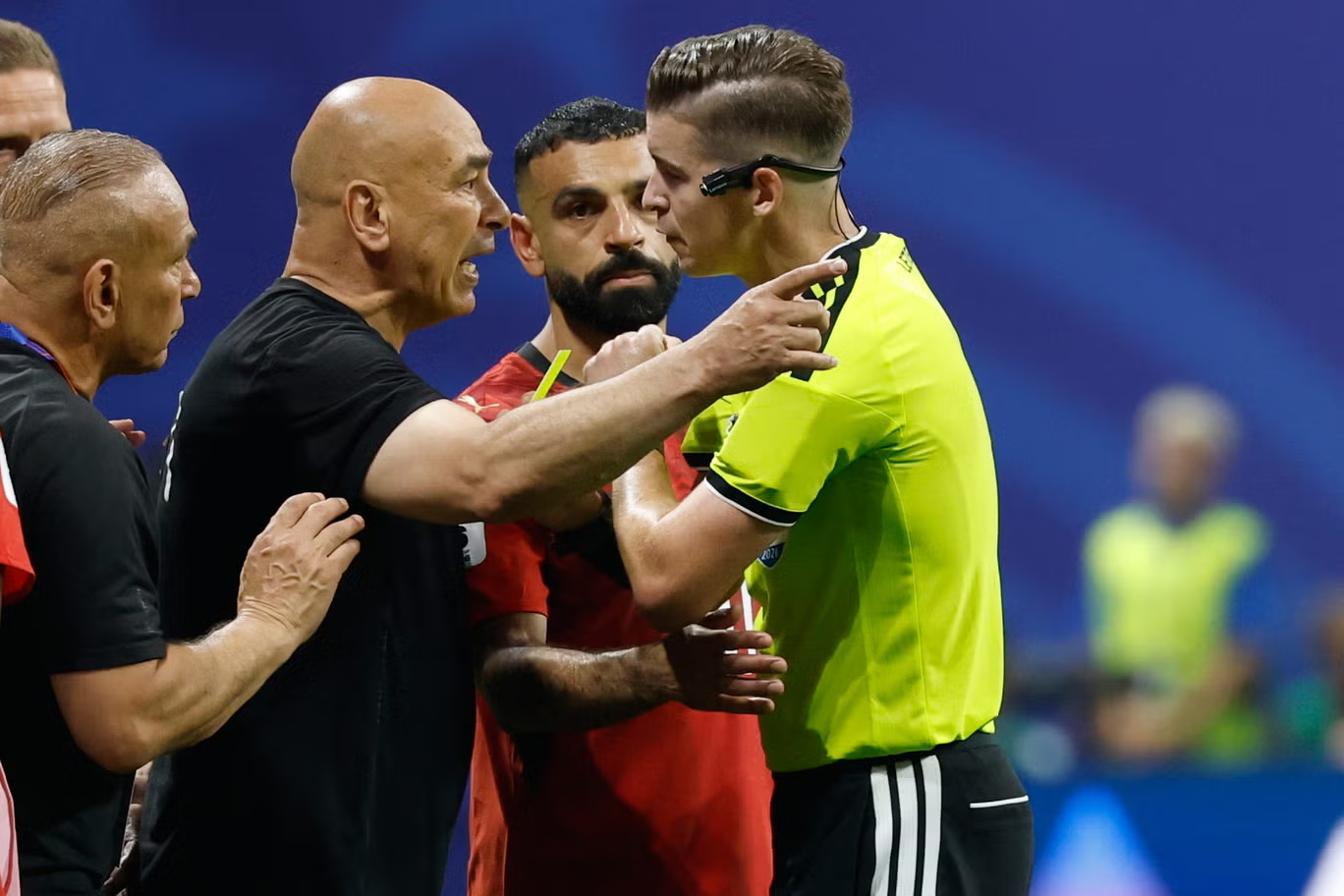
Egypt’s anger did not stop at the disallowed goal. Players and staff were also furious about a perceived foul in the build-up to Fernandez’s winner. Five Egypt players picked up yellow cards. Argentina received none. A member of Egypt’s coaching staff was sent off with a red card. French referee Francois Letexier became the main target of Egypt’s frustration.
How Did Egypt React to the Referee’s Decisions?
The reaction from the Egyptian camp was quick and it grew fast. This was not just a bit of post-match grumbling that would fade away by the next morning.
Striker Mostafa Ziko did not hold back. “There’s been an unfairness right from the start of the match,” he told reporters after the game. “A 2-0 lead isn’t enough to beat Argentina. It is clear this tournament has been fixed.”
Egypt manager Hossam Hassan said much the same thing. “We looked better than the reigning champions in every way, but the result was affected by things happening both on and off the pitch,” Hassan said. He went further, suggesting the result had been shaped to keep Argentina in the tournament. “Perhaps they wanted to keep the world champions in the competition. Perhaps they wanted Messi to carry on. There seem to be pressures from the Argentina side on this outcome.”
The Egyptian Football Association (EFA) then made a formal complaint to FIFA. They called for an investigation into what they described as “double standards” in the refereeing. The EFA also asked for referee Letexier and his team to be removed from the rest of the tournament, calling the alleged inconsistency “discrimination against the Egyptian national team.”
In a public statement, the EFA said: “Several key incidents raised serious concerns and left big questions about the fairness of decisions that directly affected the game. Every player who wears the Egyptian shirt, and every supporter who backs the team, deserves fairness, respect, and equal treatment under the rules of the game.”
The strong feelings were not just coming from Egyptian football circles either. New York City Mayor Zohran Mamdani publicly said Egypt had been “robbed,” which pushed the story well beyond the sports pages.
How Did FIFA Respond to Egypt’s ‘Fix’ Claims?
FIFA’s response came from Pierluigi Collina, the governing body’s Chief Refereeing Officer and one of the most well-known and respected figures in football officiating. Collina gave a detailed interview at the end of the round of 16, talking about the Egypt vs Argentina controversy and the wider performance of referees throughout the expanded 2026 tournament.
His message was simple: claims of match fixing are not acceptable, and FIFA’s referees work free from any outside pressure.
“Of course, constructive discussion about decisions will always be part of football,” Collina said, “but unfounded allegations have no place in our sport. Nobody can question the integrity of the FIFA World Cup match officials. When this happens, it may provoke reactions that lead to threats against them and their families. This is not right.”
On whether even senior FIFA figures could influence referees, Collina was just as firm. “Nobody can claim that FIFA Refereeing can be influenced by anyone, not even by the FIFA President,” he said. “He has always shown his full support for FIFA Team One while trusting us to work with complete independence. Match officials make honest decisions and, just like players and coaches, they always try to do their best.”
Collina also recognised that the 2026 World Cup, which has far more matches than previous tournaments, puts extra pressure on officials. “We have now played 50% more matches than at the FIFA World Cup Qatar 2022, and there are still eight more huge games to be played. Overall, we are happy. However, with such a high number of matches played in a relatively short period of time, it is normal that some things do not go as expected.”
Why Was Mostafa Ziko’s Goal Disallowed? Collina Explains
On the decision that caused the most anger, Ziko’s disallowed goal, Collina walked through how VAR works under FIFA’s rules.
“After every goal is scored, the VAR checks the attacking possession phase,” Collina explained. “If a foul is identified in the build-up and is deemed to have had an impact on the goal, the VAR will recommend an on-field review. There is no defined limit regarding either the distance from goal or the amount of time between the incident and the goal.”
He also made the key point at the centre of the debate: “We believe that a foul is a foul. Regardless of whether the foul appears ‘obvious’, if the referee did not see it on the field of play, the VAR can intervene.”
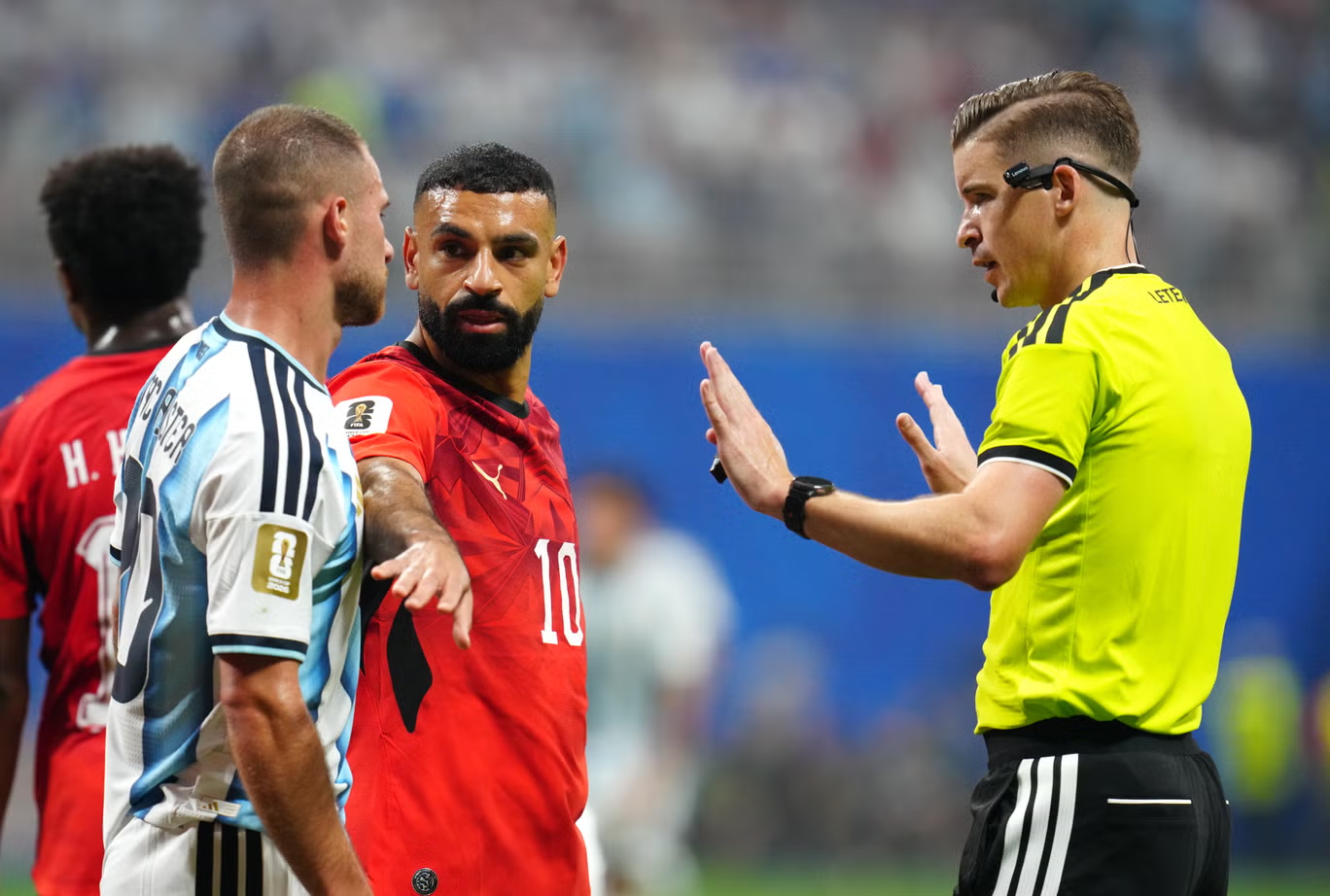
Collina also spoke about a separate incident involving Mohamed Salah and Julian Alvarez late in the game. He said the referee and VAR both judged it to be “normal football contact” because the defender played the ball first.
The explanation may not satisfy everyone, and it has certainly not satisfied Egypt. But it does set out FIFA’s official position on the key decisions clearly.
Is This Part of a Bigger Problem at World Cup 2026?
The Egypt vs Argentina row did not come out of nowhere. The 2026 World Cup has seen a number of refereeing controversies build up over the course of the tournament.
A separate and widely talked-about incident saw a red card shown to a United States player later overturned. That sparked its own accusations of political interference, with some critics pointing to the involvement of US President Donald Trump and FIFA President Gianni Infantino. That case has since been referred to the International Olympic Committee following a formal complaint about “political neutrality.”
There have also been questions about Argentina’s place in the tournament bracket, with some critics suggesting the reigning champions have had an easier path through the draw. When you place Egypt’s defeat alongside these other incidents, it is easier to understand why Collina felt he needed to address the growing sense of suspicion at his post-round-of-16 briefing.
It is also worth noting that Argentina’s win stretched their World Cup unbeaten run to 11 matches and set up a quarter-final against Switzerland in Kansas City. Messi, now scoring in a record nine consecutive World Cup matches, led the Golden Boot standings with eight goals in the tournament.
What Does All This Mean for FIFA’s Reputation?
FIFA is in familiar but tricky territory here. Collina’s response was careful and detailed, much more so than a simple denial. His explanation of the VAR rules gives fans and analysts a clear framework for judging the disallowed Egypt goal, and his rejection of any outside influence is on the record.
That said, trust is built over time and cannot be fixed with one press statement. The build-up of controversies at this tournament, the overturned red card, the bracket questions, and now the Egypt complaints, all feed into a bigger story about transparency and governance that has followed FIFA for years.
Collina is right that debating refereeing decisions is a normal part of football. It always has been. The difference between fair criticism and damaging conspiracy theories matters a great deal, and FIFA is right to make that point clearly. Whether the football world is ready to accept it is a different matter altogether.
FAQs
Mostafa Ziko, Egypt’s winger, said after the 3-2 loss to Argentina that “this tournament has been fixed” and that referee Francois Letexier “was really not fair.” His comments were some of the strongest made by any player at World Cup 2026.
According to FIFA’s Chief Refereeing Officer Pierluigi Collina, VAR spotted a foul by Marwan Attia on Lisandro Martinez during the attacking build-up that led to Mostafa Ziko’s goal. Under FIFA’s rules, there is no set time limit or distance limit on how far back VAR can look in the lead-up to a goal.
Collina said that “unfounded allegations have no place in our sport” and that “nobody can question the integrity of the FIFA World Cup match officials.” He also firmly rejected any suggestion that FIFA’s refereeing team is influenced by outside parties, including FIFA President Gianni Infantino.
Yes. The Egyptian Football Association (EFA) filed a formal complaint with FIFA, describing the officiating as “double standards,” and asked for referee Francois Letexier and his team to be removed from the rest of the tournament.
Argentina came back from 2-0 down in the dying minutes to win 3-2. Cristian Romero, Lionel Messi and Enzo Fernandez were all on target to complete the comeback, with Messi scoring his 21st all-time World Cup goal in the process.



No Comments