

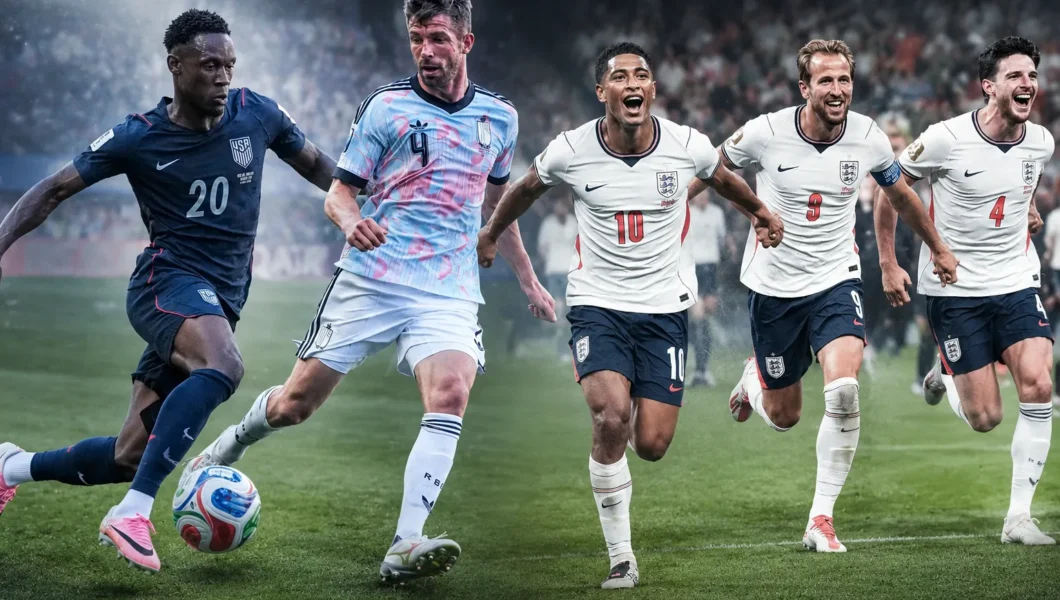
England’s 3-2 win over Mexico at World Cup 2026 was watched by around 44.842 million people in the United States across Fox, Telemundo, and Peacock. That makes it the most-watched football match ever on US telly, beating the 42 million who tuned in for USA vs Belgium. That game had its own controversy, with Donald Trump getting involved in FIFA’s decision over Folarin Balogun’s red card ban.
The numbers are pretty remarkable, aren’t they? England’s last-16 victory over Mexico on 6 July 2026 didn’t just set a new record. It showed just how much Americans care about the World Cup, even when their own team isn’t playing. Nearly 45 million viewers for a match with no US involvement? That’s something special.
This article looks at what happened, what the figures actually mean, and what it all says about football’s growing popularity in America. We’ll also cover the Balogun controversy and the huge TV rights deal on the horizon for 2030.
What Were the Viewing Figures for England vs Mexico at World Cup 2026?
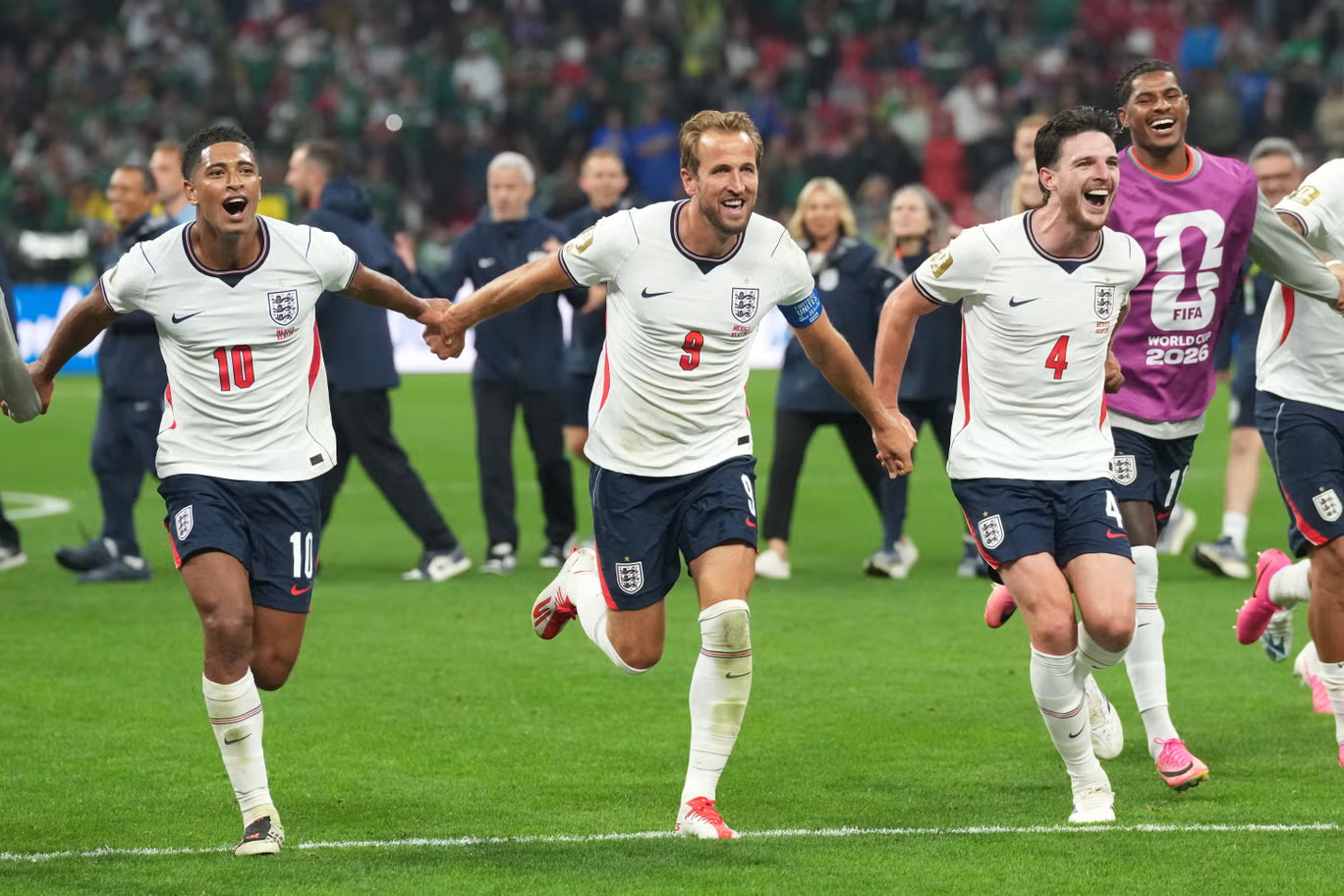
England’s 3-2 win over Mexico brought in 44.842 million viewers across US television on 6 July 2026. Of those, 23.1 million watched on Telemundo and Peacock, while 21.742 million tuned in on Fox. It is officially the most-watched football match in US television history.
That’s quite something. It wasn’t a US team. It wasn’t the final. It was a last-16 tie at the iconic Azteca Stadium in Mexico City, and nearly 45 million Americans decided to watch it. Brilliant!
It helps that Mexico has one of the biggest and most passionate supporter communities in the United States. Spanish-language networks, especially Telemundo, have consistently pulled in big numbers when Mexico plays. The split between Spanish-language platforms (23.1 million) and Fox’s English-language broadcast (21.742 million) shows just how big that audience is. But England brought its fair share of viewers too. The Premier League has been building a huge American fan base for years, and Sunday night showed that investment is paying off.
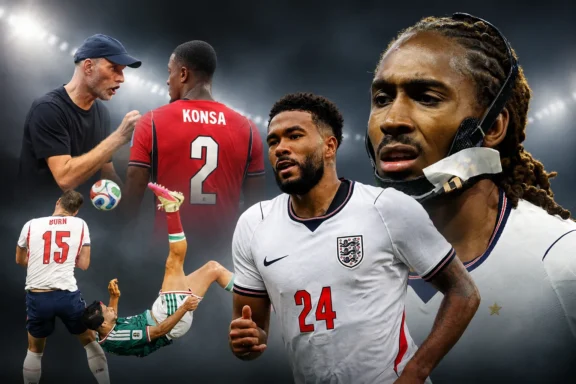
The match itself was a cracker as well. A 3-2 scoreline, a packed Azteca, and Thomas Tuchel’s England winning in dramatic style gave every casual viewer a reason to stay glued to their screen until the final whistle.
How Did USA vs Belgium’s Viewing Figures Compare, and Why Was That Match So Controversial?
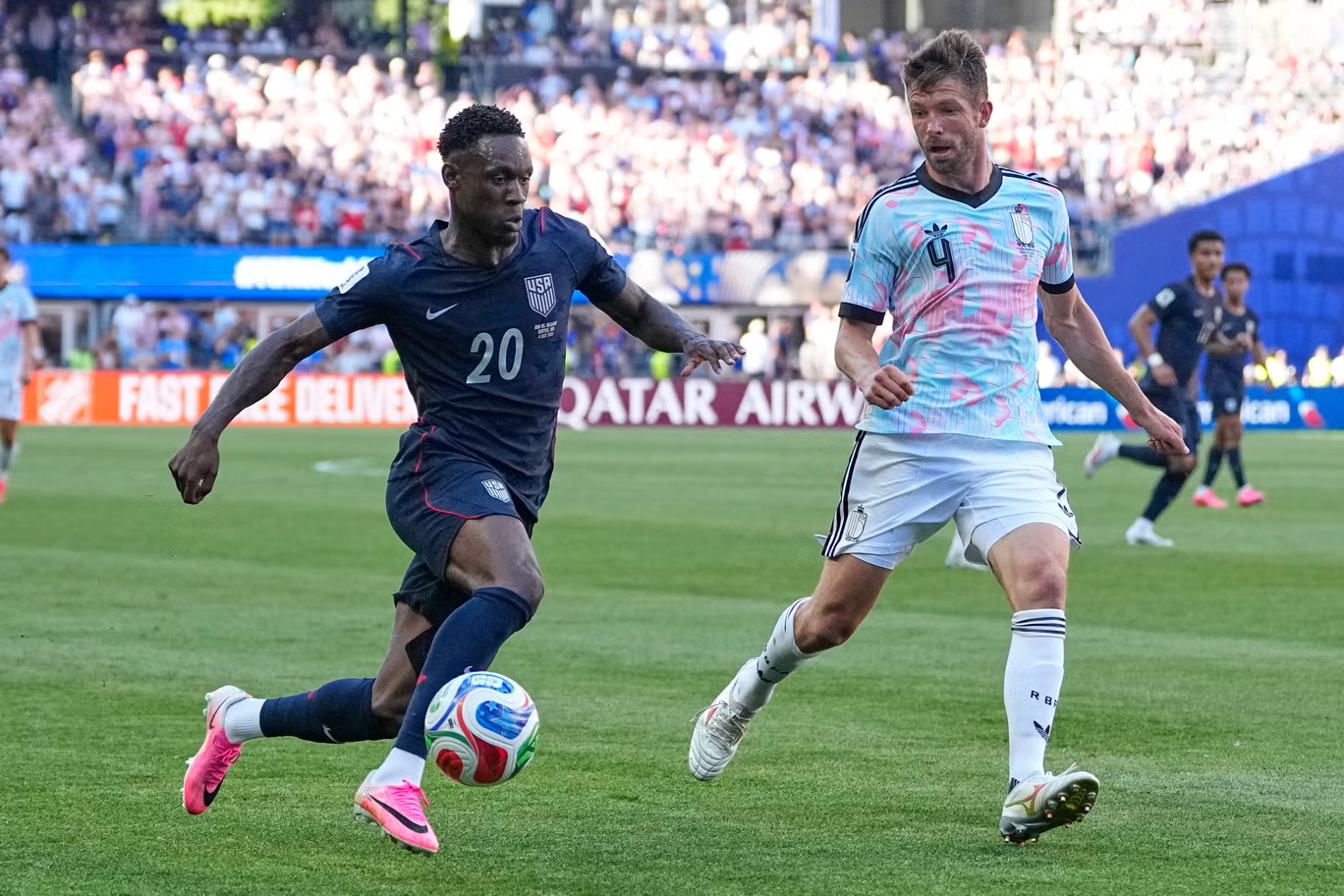
The day before England faced Mexico, the United States took on Belgium in what many expected to be a defining moment for American football. Around 42 million viewers watched on US television. That’s a massive number by any measure, but it still fell short of the England vs Mexico record.
The viewing figures, though, were almost overshadowed by the drama surrounding the match.
Folarin Balogun, the USA’s top scorer at the tournament with three goals heading into the knockout stages, had been shown a red card during the USA’s 2-0 win over Bosnia and Herzegovina on 1 July. Referee Raphael Claus sent him off for stepping on the ankle of Bosnian defender Tarik Muharemovic. That should have meant an automatic one-match ban. Balogun should not have played against Belgium.
But he did play. And the story behind that decision dominated the headlines all week.
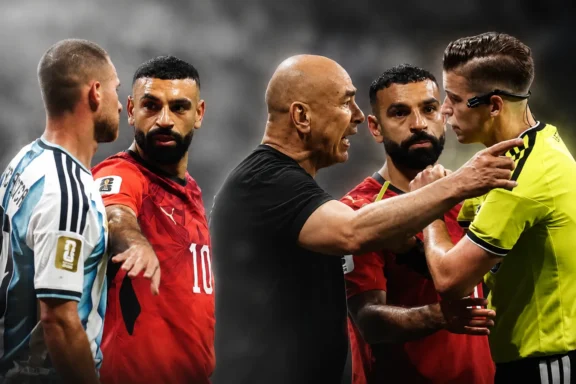
President Donald Trump rang FIFA president Gianni Infantino directly and asked him to look again at the red card. Trump later spoke about the call from the Oval Office, saying: “I saw the play. And I’m a person that loves sports and was a good athlete. I understand sports really well, really well. And that wasn’t a foul. That wasn’t even an infraction.” FIFA’s disciplinary committee then used Article 27 of its disciplinary code to lift the ban. It was the first time since the 1962 World Cup in Chile that a red card had not resulted in a suspension.
The reaction was sharp and immediate. UEFA called the decision “unprecedented, incomprehensible and unjustifiable.” The Royal Belgian Football Association said it was “astonished.” Former FIFA president Sepp Blatter wrote: “Red cards are not overturned by political phone calls.” England boss Thomas Tuchel, who had just seen his own defender Jarell Quansah sent off in the Mexico match, asked: “Who overturns this decision then, and when? And on what grounds?”
Despite all the fuss, and despite Balogun being allowed to play, the USA lost 4-1. Belgium went through. Belgian players were later spotted appearing to mock Trump in their post-match celebrations.
Why Did England Attract So Many US Viewers Without the USA Playing?
This is the really interesting question, isn’t it? How does a match between England and Mexico pull in nearly 45 million US viewers when no American team is involved?
A few things help explain it. Mexico’s huge supporter base in the United States is the most obvious factor. There are over 36 million people of Mexican origin in the US, according to US Census Bureau figures, and Spanish-language viewing has grown steadily throughout this tournament.
England’s appeal is a different story altogether. The Premier League has spent years building an American audience through NBC Sports and Peacock, which shows matches every week. Players like Harry Kane, Jude Bellingham, and Bukayo Saka are well known beyond just football fans. England’s games, broadcast in English with familiar pundits and a cultural context that travels well, connect with American viewers who follow the Premier League but perhaps don’t watch international football as closely.
There’s also a much simpler reason. The match was brilliant! A 3-2 result at the Azteca, with big stakes and a tournament that had already served up weeks of exciting football, pulled in viewers who just wanted to watch something dramatic. Regardless of which team they were cheering for.
How Do World Cup 2026 Viewing Figures Compare to the NFL?
The NFL playoffs are the benchmark for big television audiences in the United States. AFC and NFC Championship games, the ones that decide which teams go to the Super Bowl, average around 47 million viewers.
England vs Mexico drew 44.842 million. USA vs Belgium drew around 42 million. Both figures are right in that same bracket.
That’s not a fluke. This World Cup, hosted across the United States, Canada, and Mexico, has pushed football’s audience into territory that was once thought to belong exclusively to American football. When Portugal vs Croatia attracted more than 11 million Fox viewers to become the most-watched non-final, non-US game in US history, it made clear that this tournament has an audience reaching well beyond home nation loyalty.
The NFL’s grip on US television isn’t going anywhere. But for the first time, the comparison is being made seriously, and the numbers back it up.
How Is FIFA Using the World Cup to Grow Football in America?
FIFA has been very deliberate about this. Giving the 2026 World Cup to the USA, Mexico, and Canada was never just about convenience. It was a calculated move to tap into the world’s biggest advertising and media market.
So far, the signs are very positive. US viewership records have been broken several times during this tournament. Sponsorship revenues are up. Stadiums across US host cities have been well attended. The conversation around football, its stars, its drama, its tactics, has broken into mainstream American sports talk in a way that earlier World Cups only managed to do occasionally.
FIFA’s bigger goal is to build a permanent, year-round football culture in the US to match what exists in Europe, South America, and Africa. The 2026 World Cup is the starting point, not the finish line.
What Happens to World Cup Viewership Now That the USA and Mexico Are Out?
This is the real test. England vs Mexico drew 44.842 million viewers partly because Mexico was playing and Mexico has a massive supporter base in the US. USA vs Belgium drew 42 million because the home nation was involved.
Both are now out. Canada, the third host nation, is also eliminated. So what keeps the viewers watching through the quarter-finals, semi-finals, and final?
England still being in the tournament helps a great deal. France, Brazil, and Argentina are all globally popular teams with existing US followings. But it would be unrealistic to expect viewing figures to stay at 44 million for a match that doesn’t involve a North American side.
The more interesting question is whether casual viewers who tuned in for USA vs Belgium or England vs Mexico will stay connected to the tournament. Social media, highlight clips, and the sheer drama of knockout football all play a part. If the remaining games are as exciting as the last-16 round, audiences could hold up better than you might expect.
What Does the £2 Billion 2030 World Cup TV Rights Deal Mean for Football in America?
The viewing figures have not gone unnoticed by the big media companies. According to a CNBC report from 7 July 2026, Netflix, Disney, YouTube, Amazon, and Apple are all interested in the broadcast rights for the 2030 and 2034 World Cups. Media executives are reportedly budgeting between 1.5 billion and 2 billion dollars per tournament for US rights.
To put that in context, Fox paid 485 million dollars for English-language US rights to the 2026 World Cup. NBCUniversal’s Telemundo paid 600 million dollars for Spanish-language rights. Together, that’s around 1.085 billion dollars. The 2030 deal could comfortably double that, even before any competitive bidding begins.
FIFA has also hinted at a change in how it will sell rights going forward. English and Spanish-language packages are likely to be sold together for 2030, rather than separately as they have been before. That could push prices even higher and may effectively price out Telemundo, which already spends heavily on the NFL, NBA, and other sports.
The 2030 World Cup does come with challenges. It will be held in Morocco, Portugal, and Spain, which puts it five to six hours ahead of the US Eastern time zone. The 2034 tournament in Saudi Arabia will be even harder for live US viewership. Those factors will affect bids. But the 2026 ratings have given FIFA a very strong hand to play regardless.
The Record Stands, and the World Cup Is Just Getting Started
England vs Mexico, watched by 44.842 million Americans, is the most-viewed football match in US television history. That record might not survive the rest of this tournament. A deep England run, a final with a team that has a big US following, or simply another breathtaking match could push those numbers even higher.
What’s certain is that the 2026 World Cup has delivered on every promise FIFA made when it pushed for a North American host. The ratings are there. The interest is there. The moment is here, and the broadcasters, streaming platforms, and rights holders are all watching very closely.
Whether you’re hoping to see England lift the trophy or keeping an eye on the next big broadcast deal, World Cup 2026 has already proved one thing: football has well and truly arrived in America, and it’s not going anywhere.
FAQs
Around 44.842 million people in the United States watched England’s 3-2 win over Mexico on 6 July 2026. Of those, 23.1 million watched on Telemundo and Peacock, while 21.742 million tuned into Fox. It is the most-watched football match in US television history.
USA vs Belgium was watched by around 42 million viewers on US television. That’s a record-breaking number in its own right, but it was beaten by England vs Mexico the very next day.
A few things helped. Mexico’s huge supporter base in the US drove strong numbers on Spanish-language platforms. England draws a large US audience thanks to the Premier League’s popularity on American streaming services. The match itself, a thrilling 3-2 result at the Azteca, also pulled in casual viewers who simply wanted to watch something exciting.
According to CNBC, media companies including Netflix, Disney, YouTube, Amazon, and Apple are budgeting between 1.5 billion and 2 billion dollars for US rights to the 2030 and 2034 World Cups. By comparison, Fox paid 485 million dollars and Telemundo paid 600 million dollars for rights to the 2026 tournament, a combined total of around 1.085 billion dollars.
It’s a fair question. A lot of the big numbers were driven by home nation support. With both the USA and Mexico out, audiences are likely to dip a little. That said, England are still in it, and teams like France, Brazil, and Argentina have big US followings too. If the remaining matches are as exciting as the last-16 round, the figures may hold up better than expected.



No Comments